Custom Embroidered Patches vs. Other Decorative Patches: Differences & Selection Guide
When it comes to custom decorative patches, there are countless options to choose from—custom embroidered patches, printed patches, woven labels, metal badges, and more. Each type has its own unique materials, craftsmanship, advantages, and use cases. Many people confuse these patch types, but choosing the right one depends on your needs: durability, style, budget, and the scenario where you’ll use the patch. Before you order custom embroidered patches, understanding how they compare to other decorative patches will help you make the best choice for your project.
This guide compares custom embroidered patches with three of the most popular alternative decorative options: printed patches, woven labels (weaved patches), and metal badges. We’ll break down their key differences in material, craftsmanship, durability, appearance, cost, and ideal use cases—so you can pick the perfect patch type for your personal, team, or business needs.
1. Custom Embroidered Patches: The Classic, Versatile Choice
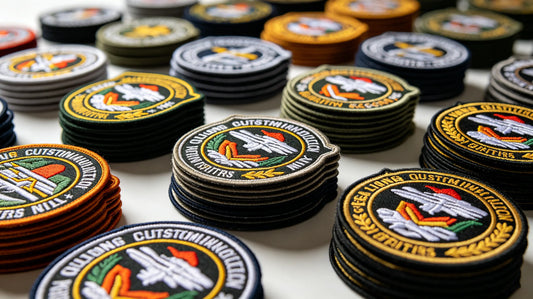
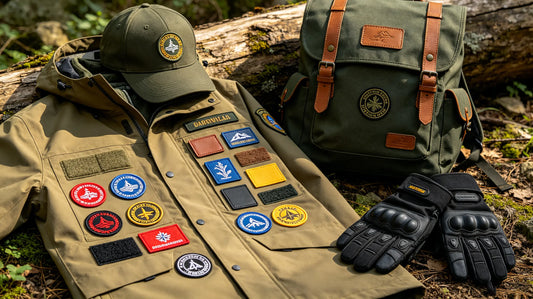
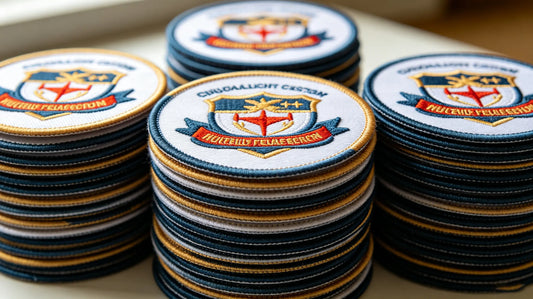
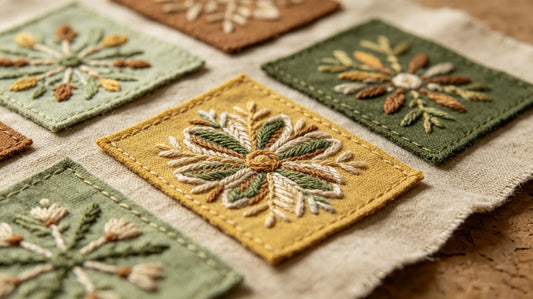
Custom embroidered patches are made by stitching threads onto a backing material (cotton, polyester, or felt) to create a 3D, textured design. They’re the most popular decorative patch type, known for their durability, versatility, and high-end appearance. Available in 2D flat, 3D puff, chenille, and metallic thread styles, they suit almost all scenarios from daily wear to team uniforms.
Key Features: 3D textured appearance, color-fast threads, durable (withstands frequent washing), versatile backing options (iron-on, sew-on, hook & loop), and customizable with complex designs. Ideal for: Daily wear, team uniforms, enterprise logos, gifts, and keepsakes. When youcustom embroidered patches, you get a balance of style, durability, and customization that’s hard to beat.

2. Embroidered Patches vs. Printed Patches: Texture vs. Precision
Printed patches (also called heat transfer patches) are made by printing a design directly onto a fabric backing, then applying a heat seal adhesive. They’re a popular alternative to embroidered patches, especially for designs with fine details, gradients, or photo-realistic images that are hard to replicate with stitching.
Key Differences: • Appearance: Embroidered patches have a 3D, textured look; printed patches are flat with a smooth surface. • Detail: Printed patches handle fine details, gradients, and photos better; embroidered patches excel at bold, classic designs. • Durability: Embroidered patches are more wear-resistant and hold up better to frequent washing; printed patches may fade or peel over time (especially with harsh washing). • Cost: Printed patches are cheaper for small orders or complex designs; embroidered patches are more cost-effective for large orders with simple designs.
Ideal for Printed Patches: Photo designs, gradients, fine text, and temporary or low-budget projects. When you need bold texture and long-lasting durability, order custom patches in embroidered style instead.

3. Embroidered Patches vs. Woven Labels (Weaved Patches): Decoration vs. Identification
Woven labels (or weaved patches) are made by weaving threads into a thin, flat label, often used for brand identification, size tags, or subtle decoration. They’re similar to embroidered patches but have a flatter, more delicate appearance, with threads woven tightly together to create a smooth design.
Key Differences: • Thickness: Embroidered patches are thicker (especially 3D puff styles); woven labels are thin and lightweight. • Purpose: Embroidered patches are for decoration and brand expression; woven labels are mainly for identification (brand names, sizes, care instructions). • Durability: Both are durable, but embroidered patches are more resistant to fraying; woven labels may fray at the edges if not sealed. • Design: Embroidered patches can handle larger, bolder designs; woven labels are better for small, delicate text or logos.
Ideal for Woven Labels: Clothing tags, brand identification, and subtle decoration. For eye-catching decoration or morale patches, custom embroidered patches are the better choice.

4. Embroidered Patches vs. Metal Badges: Fabric vs. Hardware
Metal badges (often made of zinc alloy, brass, or stainless steel) are hard, metallic decorative pieces, usually used for formal uniforms, military insignia, or high-end brand accents. They’re very different from fabric-based embroidered patches, offering a sleek, professional look.
Key Differences: • Material: Embroidered patches are fabric-based (threads + backing); metal badges are hardware-based (metal alloy). • Weight: Embroidered patches are lightweight; metal badges are heavier and may feel bulky on light fabrics. • Durability: Metal badges are extremely durable (resistant to wear, fading, and water); embroidered patches are durable but can fray or fade with extreme use. • Style: Embroidered patches are casual to semi-formal; metal badges are formal, sleek, and ideal for professional settings. • Cost: Metal badges are more expensive (especially for custom designs); embroidered patches are more affordable and customizable.
Ideal for Metal Badges: Formal uniforms, military insignia, and high-end brand accents. For casual wear, team gear, or DIY projects,custom patches in embroidered style are more practical and versatile.

5. Quick Comparison Table: All Patch Types at a Glance
To make your selection easier, here’s a quick comparison of the four patch types:
• Embroidered Patches: 3D texture, durable, versatile, mid-range cost, ideal for most daily and team scenarios. • Printed Patches: Flat, fine details, low cost for small orders, less durable, ideal for photos/gradients. • Woven Labels: Thin, delicate, for identification, durable, ideal for clothing tags. • Metal Badges: Sleek, formal, extremely durable, high cost, ideal for formal uniforms.

6. How to Choose the Right Patch Type for Your Needs
Follow these tips to pick the perfect patch type for your project:
• If you want texture, versatility, and durability: Choose custom embroidered patches (the most versatile option). • If you have a photo, gradient, or fine-detail design: Choose printed patches. • If you need clothing tags or subtle identification: Choose woven labels. • If you need a formal, high-end accent for uniforms: Choose metal badges. • If you’re on a budget with simple designs: Embroidered patches (large orders) or printed patches (small orders). • If you need frequent washing or heavy wear: Embroidered patches or metal badges.
Final Thoughts
Custom embroidered patches, printed patches, woven labels, and metal badges all have their own strengths—there’s no “best” option, only the right one for your needs. Embroidered patches stand out for their balance of style, durability, and versatility, making them the go-to choice for most personal, team, and business projects. They offer a classic, textured look that works in casual and semi-formal settings, and their customizable designs let you express your personality or brand.
When you’re ready to choose your custom patches, consider your design, budget, and usage scenario. If you’re looking for versatility, texture, and long-lasting durability, order custom embroidered patches from a reputable provider—they’ll help you create a patch that fits your needs and stands the test of time. For specific use cases like photo designs or formal uniforms, printed patches or metal badges may be a better fit—but embroidered patches remain the most popular choice for a reason.
FAQ
Q:Are embroidered patches more durable than printed patches?
A:Yes, custom embroidered patches are generally more durable than printed patches. Embroidered patches use color-fast threads stitched onto a durable backing, which can withstand frequent washing and wear without fading or peeling. Printed patches may fade over time, especially with harsh washing. When you order custom embroidered patches, you get a longer-lasting decorative option.
Q:Can woven labels be used as decorative patches?
A:While woven labels can be used for subtle decoration, they are primarily designed for identification (brand names, sizes, care instructions). They are thin and flat, lacking the 3D texture of embroidered patches, so they are less eye-catching for decorative purposes. For bold decoration, custom embroidered patches are better.
Q:Are metal badges more expensive than embroidered patches?
A:Yes, metal badges are typically more expensive than custom embroidered patches, especially for custom designs. Metal badges require casting or stamping, which adds to the cost, while embroidered patches are more affordable and cost-effective for most orders. When you custom patches on a budget, embroidered styles are the better choice.
Q:Which patch type is best for team uniforms?
A:Custom embroidered patches are the best choice for team uniforms. They are durable, versatile, and have a bold, textured look that enhances team identity. They can be attached via sew-on or hook & loop backing, and their customizable designs let you create a unique team logo. For formal team uniforms, metal badges may also be an option, but embroidered patches are more practical for daily wear.
Q:Can embroidered patches handle complex designs with fine details?
A:Embroidered patches can handle most designs, but they are better suited for bold, simple designs. For complex designs with fine details, gradients, or photos, printed patches are a better choice—they can replicate fine details more accurately. When you order custom embroidered patches, opt for simpler designs to ensure the stitching is clear and high-quality.
Tags:
Previous
Best Occasions to Use Custom Embroidered Patches in Daily Life
Next
Custom Embroidered Patch Design Tips: From Sketch to Finished Product