Custom Motorcycle & Biker‑Themed Patches 2026|Ultimate Guide for Jackets, Vests, Clubs & Riding Gear
Custom motorcycle and biker‑themed patches hold deep‑rooted tradition within the riding community. For decades, riders have decorated leather vests, denim jackets, riding bags and helmet accessories to represent club membership, celebrate road trips, show loyalty, honor fallen brothers and showcase personal riding‑lifestyle artwork.
Unlike ordinary decorative patches, motorcycle gear faces extreme outdoor conditions: highway wind, blazing sun, rain, road dust, vibration, and constant friction against leather. Long‑term durability, colorfastness, and correct vest etiquette are essential when ordering custom biker patches. This complete 2026 guide walks you through heavy‑duty material choices, traditional sizing standards, classic vest layout rules, safety tips, popular artwork themes and long‑term maintenance for your riding apparel.

1. Heavy‑Duty Materials for Motorcycle & Biker Patches
Each material carries a distinct look and level of durability built for life on the open road.
High‑Density Embroidered Biker Patches (#1 Community Standard)
Embroidered patches remain the timeless favorite for motorcycle clubs. Thick, saturated polyester thread creates rich, bold artwork for skulls, eagles, flames, bikes and club logos. Wide merrow‑locked borders seal edges completely to stop fraying after years of highway travel. Flat embroidery works perfectly for large back‑panel emblems, while subtle 3D puff embroidery adds depth to smaller chest and sleeve badges.
PVC Rubber Motorcycle Patches
Waterproof, scuff‑resistant flexible PVC rubber is ideal for helmets, riding backpacks and textile riding jackets. It will never absorb rainwater, and dirt can simply be wiped away after long rides. Hook‑and‑loop PVC patches allow riders to swap morale slogans without permanently modifying expensive leather vests. PVC is less common for large traditional back patches.
Woven Motorcycle Patches
Ultra‑flat high‑definition woven patches excel at fine‑text rocker banners, location names, mile marker text and small name tags. Their thin profile sits flush against leather without creating uncomfortable raised bumps. Woven patches are frequently used alongside large embroidered center emblems as top and bottom rockers.
Sublimation Printed Biker Patches
Sublimation is best suited for full‑color road‑trip souvenir patches and complex gradient artwork, such as scenic mountain highway illustrations. Lightweight and soft, sublimation patches are recommended for denim jackets and fabric bags, rather than high‑friction leather vest back panels.
Leather Motorcycle Patches
Laser‑engraved leather patches deliver a vintage, rugged aesthetic for smaller chest emblems. Real leather patches age beautifully and develop a unique patina over years of riding exposure. Avoid huge leather back‑patches, as they are heavy and prone to water damage.

2. Traditional Motorcycle Patch Sizing Guide
Motorcycle vest patches follow well‑known community sizing conventions:
- Large Center Back Patch (Main Club Emblem): 8″‑ 12″ wide
- Top & Bottom Rocker Banner Patches: 10″‑ 14″ wide
- Chest Individual Member Name Patch: 2.5″‑ 3.5″
- Sleeve Road‑Trip Achievement Patch: 3″‑ 4″
- Helmet / Tank‑Bag Small Accent Patch: 2″‑ 2.75″
- Souvenir Travel Destination Patch: 3.5″‑ 4.5″
Large back emblems require careful measurement of your vest’s usable back space before ordering. Always leave fabric seam clearance to prevent patch lifting when the rider sits on a motorcycle.
3. Classic Vest Layout & Placement Etiquette
Vest patch placement carries long‑standing meaning within biker culture. While this guide covers layout suggestions, always follow your own club’s internal rules first.
Vest Back Panel
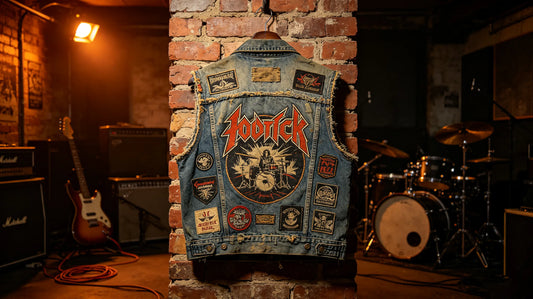
The large main emblem sits dead‑center on the vest back. Curved top‑rocker banners arc above the logo, and bottom rocker patches curve underneath. This three‑piece layout is the most recognizable traditional arrangement.
Left‑Chest Area
Individual member‑name patches, small club insignia, and personal badges are commonly placed on the left‑chest section of your biker vest.
Sleeve Panels
Road‑trip milestone patches, event souvenir badges and charity‑ride commemorative patches are arranged along the upper‑sleeve region. Many riders build a timeline of their riding journeys across both sleeves.
Helmet & Riding Luggage
Small hook‑and‑loop patches can be attached to helmet loop panels, saddle bags and motorcycle tank bags. Never glue or sew patches directly onto helmet outer‑shell surfaces that could compromise safety.

4. Backing Options for Biker Gear
Sew‑On (Traditional Vest Standard)
Industrial‑grade sew‑on backing is the most respected, permanent installation method for leather‑vest club patches. Secure perimeter stitching keeps heavy large‑size patches firmly attached during high‑speed rides.
Hook‑and‑Loop
Hook‑and‑loop backing is excellent for morale patches, temporary‑event badges and gear where you wish to rotate designs. It is not widely used for official permanent club emblems.
Iron‑On
Iron‑on backing is not recommended for thick leather vests. Household heat cannot penetrate leather to activate adhesive, and highway vibration will quickly peel the patch away. Iron‑on can work for lightweight denim jackets.
5. Popular 2026 Biker Patch Design Themes
Classic Club Emblem Artwork
Eagles, skull graphics, crossed pistols, wolves, motorcycles and shield‑shaped logos remain ever‑popular for official club branding.
Highway Road‑Trip Souvenir Patches
Custom artwork celebrating famous routes, mountain passes, coastal highways and cross‑country riding adventures.
Memorial & Tribute Patches
Respectful commemorative patches to honor lost riding friends, veterans and community members.
Morale & Lifestyle Slogan Patches
Light‑hearted riding‑culture slogans for backpacks, saddle bags and textile jackets.
Vintage Retro Biker Aesthetic
Distressed colors, old‑school border shapes and 1970s‑inspired artwork for retro‑style riders.

6. Pro Tips & Safety Advice
- Confirm your club’s artwork rules before producing official club patches.
- Use rounded corners on large back patches; sharp square corners catch wind and vibrate loose at highway speeds.
- Avoid heavy 3D puff embroidery on huge back emblems, since raised stitching catches wind during long rides.
- Do not attach patches to the impact‑absorbing shell of your safety helmet.
- Always test fit large back‑patch templates against your vest before approving final production.
7. Care Tips for Biker Patches
- Leather vests with embroidered patches should be spot‑cleaned; never machine‑wash full leather riding gear.
- Wipe PVC rubber helmet patches with a damp cloth to remove road grime.
- Store your patched vest indoors away from direct sunlight, to slow long‑term thread fading.
- Inspect stitching on large back patches periodically, tightening loose threads after cross‑country trips.

Final Thoughts
Custom motorcycle and biker‑themed patches are far more than decorative accessories. They are wearable symbols of community, adventure, loyalty and shared miles traveled on the highway. High‑density embroidered patches remain the gold‑standard choice for traditional leather‑vest club emblems, while flexible PVC, woven and sublimation options deliver creative solutions for helmets, travel bags, denim jackets and road‑trip souvenirs.
When sized correctly, stitched securely and placed with respect for community traditions, your custom biker patches will travel countless highway miles alongside you.
FAQ
Q: What material is best for large motorcycle vest back patches?
A: High‑density embroidered patches with merrow locked borders are the classic, most durable selection.
Q: Can I iron‑on patches to my leather biker vest?
A: Iron‑on adhesive will not bond reliably to leather. Sew‑on backing is strongly recommended.
Q: What is the standard width for a motorcycle club back patch?
A: Most main back emblems range between 8 inches and 12 inches wide, depending on your vest size.
Q: Are hook‑and‑loop patches safe to use on a motorcycle helmet?
A: You can attach hook‑and‑loop patches only to fabric comfort liners. Never sew or stick patches onto the hard outer safety shell.
Q: What are rocker patches?
A: Rockers are curved banner‑shaped patches, typically placed above and below the main center emblem on the rear of a biker vest.
Tags:
Previous
Custom Fitness & Gym Patches 2026|Complete Guide for Workout Wear, Activewear & Fitness Branding
Next
Custom School & Student Patches 2026|Complete Guide for Jackets, Backpacks, Clubs, Sports Teams & Graduation