Hook & Loop Patches Guide: Benefits, Uses, Installation & Maintenance
Among the three mainstream patch backing types—iron-on, sew-on, and hook & loop (Velcro)—velcro patches are the most flexible and functional option. Unlike fixed iron-on or sew-on patches that are permanently attached to fabrics, hook and loop patches support free removal, replacement, and rearrangement, making them the top choice for tactical gear, outdoor equipment, backpacks, hats, and seasonal outfit matching. Many users only know velcro patches are detachable but ignore their installation rules, maintenance skills, and scenario limitations, leading to weakened adhesion, fluff accumulation, and shortened service life. Before you order custom embroidered patches with velcro backing, read this ultimate guide to maximize their practicality and durability.
Hook & loop patches consist of two matching parts: a hook side covered with tiny rigid hooks and a loop side made of soft woven fibers. The two sides fasten tightly when pressed together and peel apart easily when pulled, enabling thousands of repeated open-and-close cycles without damaging fabrics or patches. Based on practical customization experience and daily usage feedback, we have sorted out a full set of velcro patch knowledge, covering core advantages, applicable scenarios, step-by-step installation, daily maintenance, and mistake avoidance.
1. What Are Hook & Loop Velcro Patches?
Hook & loop patches are reusable custom embroidered patches equipped with professional velcro backing. Most custom velcro patches come with a finished hook side on the patch back, paired with a separate loop side that can be sewn or pasted on target fabrics and equipment. This modular design realizes completely flexible assembly and disassembly, solving the biggest pain points of traditional fixed patches: single style, non-replaceable patterns, and irreversible damage to clothing after pasting.
Different from one-time fixed iron-on patches and permanently stitched sew-on patches, velcro patches are typical multi-scene reusable accessories. They can be switched freely between multiple outfits and equipment, realizing one-piece multi-use and greatly improving the cost performance of custom patches. They are widely used in tactical industries, outdoor sports, personalized DIY, team identification, and brand decoration scenarios.

2. Core Advantages of Velcro Hook & Loop Patches
Velcro patches have unique competitive advantages that iron-on and sew-on patches cannot replace, becoming the mainstream choice for functional and trendy customization in recent years.
Free Replacement & Style Switching
The biggest advantage is replaceability. Users can freely switch different pattern patches according to seasons, activities, moods, and team needs without changing clothes or equipment. For example, tactical enthusiasts can replace morale patches for different training scenarios, and students can switch personalized patterns for daily and party styles, achieving diverse styling with a single piece of clothing.
No Fabric Damage & Zero Residue
Iron-on patches will leave residual glue and damage fabric fibers after removal, while sew-on patches will leave pin holes after unpicking stitches. Velcro patches cause no damage to the base fabric at all. The loop base fixed on the fabric is flat and soft, and the disassembly process leaves no residue or holes, perfectly protecting high-value outdoor jackets, tactical uniforms, and brand merchandise fabrics.
Excellent Reusability & Long Service Life
High-quality hook & loop structures support thousands of repeated sticking and peeling operations. With correct maintenance, the adhesion will not weaken significantly, realizing long-term reusable use. Compared with iron-on patches that are prone to glue failure after multiple washes and sew-on patches that are difficult to replace, velcro patches have far higher comprehensive cost performance.
Strong Adaptability for Multi-Scene Use
Velcro patches are not limited to clothing. They can be stably fixed on backpacks, tactical vests, hats, shoe surfaces, glove cuffs, and various fabric equipment surfaces, with extremely wide application range and strong environmental adaptability.
Pro Tip: If you need frequent pattern replacement or multi-scene matching, velcro patches are the most cost-effective option. When you custom patches for tactical and outdoor use, hook & loop backing is always the priority recommendation.
3. Best Application Scenarios for Velcro Patches
Velcro patches have obvious scenario specificity. They perform best in functional and replaceable decoration scenarios, and we have sorted out the most suitable usage fields for zero-mistake matching.
Tactical & Outdoor Gear (Core Scenario)
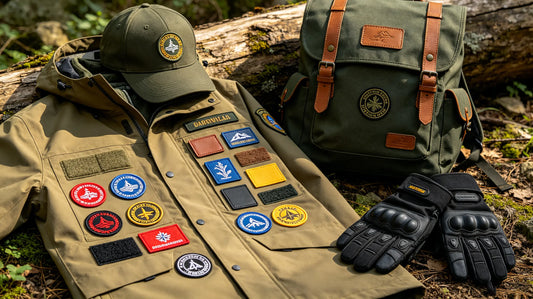
Tactical uniforms, military training vests, outdoor assault backpacks, and hiking equipment are the most classic application scenarios for velcro patches. Morale patches, team identity patches, and safety identification patches can be replaced according to mission types and team adjustments, meeting the functional identification needs of professional tactical scenarios.
Personalized Daily DIY Decoration
Suitable for trendy streetwear matching, backpack patch collages, hat decorative patches, and casual jacket styling. Users can freely combine different styles of patches to create exclusive personalized outfits, avoiding the single and fixed style of traditional fixed patches.
Team & Event Temporary Identification
For corporate team building, school club activities, volunteer services, and short-term competitions, velcro patches are the best choice. They can be uniformly installed during activities and disassembled for storage after the event, without affecting the daily use of clothing and equipment, and can be reused in subsequent activities.
Children’s Clothing & Toy Decoration
Velcro patches are safe and convenient, no sharp edges, no fabric damage. They are very suitable for children's clothing, schoolbags, and plush toy decoration. Children can independently replace favorite patterns to exercise hands-on ability while ensuring wearing safety.

4. Step-by-Step Correct Installation Method
Standard installation directly determines the firmness and flatness of velcro patches. Many users encounter tilting, warping, and weak adhesion due to irregular installation.
Step 1: Clean the Installation Surface
Wipe and clean the target fabric surface to remove dust, floating hair, oil stains, and sundries. Ensure the surface is dry and flat, without wrinkles or sundries, to avoid affecting the fitting degree of the loop base.
Step 2: Fix the Loop Base
For long-term fixed use, sew the loop side on the clean fabric surface with flat and neat stitches. For temporary use, choose self-adhesive loop backing for quick pasting and positioning. Smooth the base completely to avoid bubbles and wrinkles.
Step 3: Align and Press the Patch
Align the hook side of the custom patch with the fixed loop base, press firmly and evenly for 3-5 seconds to ensure full fitting of the hook and loop fibers. Avoid partial pressing to prevent local unfixed gaps.
Step 4: Check Firmness
Gently pull the patch edge to check the fixing effect. If there is no loose peeling, the installation is completed. It can be normally worn and used after standing for a short time.
5. Daily Cleaning & Professional Maintenance Skills
Velcro patches have unique maintenance rules different from iron-on and sew-on patches. The biggest enemy of velcro is accumulated fluff and debris, which will cause adhesion attenuation.
Must-Detach Before Washing
This is the most core maintenance rule. Never wash the patch together with clothes. Before machine washing or hand washing, completely detach the velcro patch and store it separately. Washing with clothes will cause a large amount of cotton fluff, hair, and fiber debris to be adsorbed on the hook and loop surface, blocking the buckle structure and leading to permanent adhesion weakening.
Regular Debris Cleaning
Clean the velcro surface regularly according to usage frequency. Use a sticky lint roller, tweezers, or small soft brush to clean adsorbed fluff and sundries, restore the hook and loop bite gap, and keep the adhesion stable. Timely cleaning can completely avoid the problem of patch falling off due to weak viscosity.
Water Washing & Drying Rules
If the patch is stained, wipe it gently with a damp cloth or wash it lightly with cold water and neutral detergent. Do not soak for a long time or scrub violently. After cleaning, place it in a cool and ventilated place to dry naturally, avoiding high-temperature baking and long-term sunlight exposure, which will age the velcro material and reduce toughness.
Long-Term Storage Method
During long-term storage, stick the hook and loop sides tightly together to avoid dust falling into the gap. Place it in a dry and tidy storage bag, away from humid and high-temperature environments, to prevent mildew and material aging.
Pro Tip: Adhesion maintenance determines the service life of velcro patches. Daily regular cleaning can maintain 95% of the original viscosity. When you custom embroidered patches with velcro backing, master detachable washing to extend service life.

6. Velcro Patches vs Iron-On & Sew-On Patches
We sort out the core differences between the three backings to help users quickly select according to usage needs.
Velcro Hook & Loop Patches
Advantages: Reusable, detachable and replaceable, no fabric damage, multi-scene adaptation Disadvantages: Slightly thicker than printing patches, need regular cleaning and maintenance Best for: Tactical gear, frequent style replacement, temporary activities, multi-equipment matching
Iron-On Heat Seal Patches
Advantages: Easy installation, flat fitting, low cost, no sewing required Disadvantages: Non-replaceable, easy to peel after multiple washes, residual glue after removal Best for: Short-term daily decoration, fixed simple styling
Sew-On Patches
Advantages: Ultra-durable, wash-resistant, firm fixation, no falling off Disadvantages: Permanent fixation, cannot be replaced, installation is time-consuming Best for: Long-term uniforms, high-frequency washing clothing, fixed logo decoration
7. Common Mistakes & Fixes for Velcro Patches
Most velcro patch failures are caused by incorrect usage habits. We summarize 5 high-frequency mistakes and targeted solutions.
Mistake 1: Washing Without Detaching
Consequence: A large amount of fluff accumulates on the velcro surface, adhesion drops sharply, and the patch is easy to fall off. Fix: Develop the habit of detaching patches before washing, and clean debris regularly.
Mistake 2: Installation on Wrinkled & Dirty Surfaces
Consequence: The loop base is not flat, the patch fits loosely, and it is easy to warp and peel off. Fix: Clean and smooth the fabric surface before installation to ensure flat fitting.
Mistake 3: Long-Term High-Temperature Exposure
Consequence: Velcro material ages and hardens, toughness decreases, and the buckle structure fails. Fix: Avoid high-temperature drying, ironing, and long-term sunlight exposure.
Mistake 4: Random Pulling & Violent Tearing
Consequence: Local velcro breaks, hooks fall off, and partial adhesion is lost. Fix: Tear off slowly and evenly along the edge to avoid violent local pulling.
Mistake 5: Mixing Storage with Sundries
Consequence: Dust and debris enter the velcro gap, causing hidden danger of adhesion attenuation. Fix: Close the velcro tightly and store it separately in a clean and dry environment.

Final Thoughts
Hook & loop velcro patches are the most flexible and practical customizable patch type, perfectly solving the pain points of fixed and non-replaceable traditional patches. With the advantages of free disassembly and replacement, zero fabric damage, reusable use, and multi-scene adaptation, they have become the mainstream choice for tactical outdoor, personalized DIY, and temporary team activity decoration.
The service life and adhesion stability of velcro patches depend on standardized installation and daily maintenance. Detaching before washing, regular debris cleaning, and avoiding high-temperature aging can maintain long-term stable performance. For users who pursue diversified styling, frequent pattern replacement, and multi-equipment matching, velcro patches have irreplaceable cost performance and practical value. When you prepare to custom embroidered patches, choose hook & loop velcro backing for flexible and durable personalized decoration.

FAQ
Q:Are velcro hook & loop patches durable?
A:Yes, high-quality velcro patches are extremely durable. Standard hook and loop structures support thousands of repeated sticking and peeling cycles. With correct maintenance (detach before washing, clean fluff regularly), they can be used for years without adhesion failure. They are far more reusable than iron-on patches. When you custom embroidered patches with velcro backing, you get long-term reusable decorative accessories.
Q:Can I wash clothes with velcro patches on?
A:It is not recommended. Washing with patches attached will cause a lot of fabric fluff and hair to adhere to the velcro gap, blocking the hook structure and weakening adhesion. Always detach the velcro patches before machine washing or hand washing to protect their viscosity and performance.
Q:Do velcro patches damage clothes?
A:No. Velcro patches are the most fabric-friendly option among all patch backings. They leave no residual glue, no pin holes, and no fiber damage after disassembly. The soft loop base fits the fabric flatly and will not scratch or wear the clothing surface during use.
Q:Why do my velcro patches keep falling off?
A:The main reasons are accumulated fluff and debris on the velcro surface, unfixed wrinkled loop base, or long-term high-temperature aging of the velcro material. Regularly clean surface sundries, re-flatten the base, and avoid high-temperature environments to restore stable adhesion.
Q:Are velcro patches better than iron-on patches?
A:It depends on usage needs. Velcro patches excel in reusability and flexibility, suitable for frequent pattern replacement and multi-scene use. Iron-on patches are better for one-time fixed styling with simpler installation. For long-term, diverse, and reusable customization, velcro patches are definitely a better choice. When you custom patches for flexible use, prioritize velcro hook & loop backing.
Tags:
Previous
Embroidered vs Printed Patches: Which Is Better for Customization in 2026?
Next
4 Types of Custom Patch Backings: Full Comparison & How to Choose (2026)