Complete Beginner’s Guide to Custom 3D Puff Embroidered Patches (2026 Updated)
For first-time buyers and DIY enthusiasts, customizing 3D puff embroidered patches often feels confusing. Faced with various craft options, size standards, backing types and fabric matching rules, beginners easily make wrong choices, resulting in blurred patterns, poor fitting effect, unbalanced proportions or wasted budget.
This 2026 ultimate beginner’s guide integrates all core customization knowledge from the previous professional tutorials. It summarizes every key step from pre-order preparation, parameter selection, proof confirmation, installation to daily maintenance. Whether for personal DIY, team uniform customization or commercial merchandise production, this guide helps you complete zero-defect 3D patch customization. Professional custom 3D embroidered patches can perfectly present your design ideas with correct operation and parameter matching.
1. Basic Understanding: What Are 3D Puff Embroidered Patches
3D puff embroidered patches are high-grade stereo embroidery accessories different from traditional flat patches. They adopt elastic EVA foam as the inner support layer, covered with dense polyester embroidery threads, forming raised three-dimensional outlines and layered texture.
Compared with flat embroidery, 3D puff patches have stronger visual impact, richer light and shadow layering and higher handcraft texture. They are the most popular decorative patches for streetwear, hats, tactical gear, team uniforms and brand merchandise in 2026.
Core features: lightweight, flexible, washable, durable, highly customizable in shape, size and style.

2. Pre-Order Preparation: Design File Rules (Most Critical Step)
File error is the #1 reason for defective custom patches. Beginners must master standard file requirements:
Standard Qualified Files
Vector files including AI, EPS, SVG, PDF are the best choices. These files support infinite zoom without blurring, ensuring clear line restoration for 3D puff embroidered patches.
Unqualified Files to Avoid
Screenshots, compressed JPG, PNG pictures and low-resolution raster images are not recommended. Tiny lines will merge, text will blur, and pattern details will be lost during digitizing.
Beginner File Tips
If you do not have vector files, provide the clearest high-definition original image. Professional designers can redraw vector drafts for you to ensure production accuracy. Avoid overly dense ultra-fine lines to prevent poor 3D molding effect.
3. Standard Size Selection by Usage Scenario
Improper size leads to awkward proportion and ruined aesthetics. Follow these universal beginner-friendly size standards:
- Hat patches: 6cm – 9cm (7.5cm is the most balanced universal size)
- Chest logo patches: 4cm – 7cm, delicate and not obtrusive
- Jacket back & hood patches: 12cm – 20cm, strong visual impact
- Uniform sleeve badges: 5cm – 8cm, formal and standardized
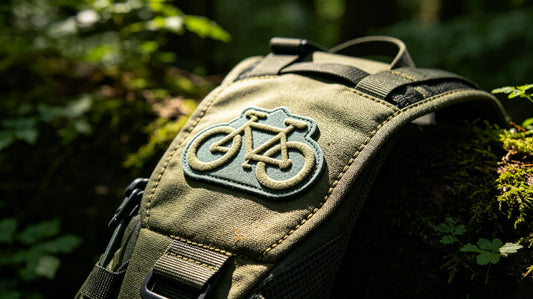
- Backpack & gear patches: 7cm – 12cm, balanced and practical
Avoid oversized patches on curved surfaces and undersized patches with complex patterns.

4. Fabric Matching Rules for Beginners
Different fabrics determine the fitting effect and durability of 3D patches:
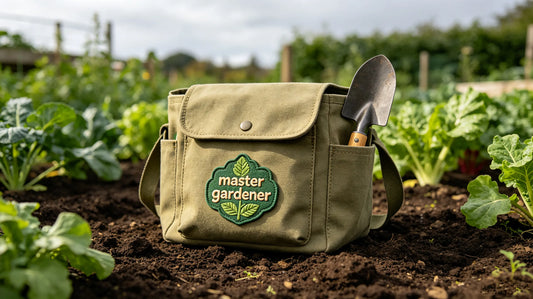
- Best matching fabrics: Cotton, denim, canvas, tactical cloth. These medium and thick fabrics provide stable support, perfect stereo presentation and firm adhesion.
- Not recommended fabrics: Ultra-thin silk, chiffon, super lightweight lining and over-elastic tight sportswear. These materials cause easy deformation, peeling and uneven bulging.
Beginners can prioritize cotton and denim carriers, which have the highest compatibility and zero failure rate.
5. Backing Type Selection Guide (Simplified for Beginners)
Three mainstream backing types with clear applicable scenarios, no more confusion:
Iron-On Backing
Best for personal DIY, temporary decoration, hats and daily casual clothes. Fast installation, no tools needed, easy to reposition.
Sew-On Backing
Best for commercial merchandise, long-term uniforms, frequently washed clothes. Ultra-firm, wash-resistant, permanent fixation with zero falling risk.
Velcro Backing
Best for tactical gear, outdoor equipment, multi-style matching. Support free disassembly and replacement, flexible for style iteration.

6. Shape & Craft Selection Tips
Shape Choice
Regular shapes (round, oval, square, shield): formal, stable, suitable for brand logos and team badges.
Irregular custom shapes: personalized, unique, suitable for streetwear, mascot patterns and limited merch.
Craft Choice
- Pure 3D puff: full stereo effect, bold outlines, trendy street style
- Hybrid flat + 3D craft: 3D for main outline, flat for tiny details, balanced effect with both stereo sense and clear details
- Flat embroidery: suitable for ultra-fine text and miniature logos
7. Proof Checking Key Points (Avoid Finished Product Deviation)
After submitting the order, always check the digital proof carefully before mass production. Focus on 4 key points:
- Color tone consistency, no obvious color deviation from original design
- Pattern proportion and text correctness, no missing or distorted details
- Outline and size accuracy, conforming to customized data
- Stereo height uniformity, no partial collapse or uneven design
Only confirm production after 100% satisfaction to avoid customized failure.

8. Beginner-Friendly Installation Methods
Iron-On Installation
Place the patch in the correct position, cover with a thin cloth, heat with a household iron for 15–25 seconds, press evenly, cool naturally, and the fixation is completed. Simple and fast for beginners.
Sew-On Installation
Use simple edge wrapping stitching, fix the patch circle by circle, neat and firm, suitable for long-term use.
Velcro Installation
Stick the hook and loop surface directly, no tools required, easy to replace at any time.
9. Daily Cleaning & Maintenance Guide
To prolong the service life of 3D puff embroidered patches, follow simple maintenance rules:
- Adopt low-temperature gentle washing, avoid high-temperature boiling and strong bleach
- Clean dust regularly with a soft brush, aim at gap dirt
- Avoid violent scrubbing and long-term sun exposure
- Air dry in cool and ventilated place, prevent long-term extrusion deformation
Correct maintenance keeps patches bright and stereo for 3–5 years.

10. Most Common Beginner Mistakes to Avoid
- Uploading blurry pictures leading to fuzzy patch details
- Blindly pursuing oversized or ultra-thick 3D effect causing bulky appearance
- Mismatched backing type affecting daily use experience
- Skipping proof checking resulting in pattern and color errors
- Applying 3D patches on ultra-thin fabrics leading to poor fitting
- Unreasonable size proportion destroying overall outfit aesthetics
Avoiding these mistakes can solve 99% of customization failures.
Final Complete Customization Process Summary
- Prepare clear vector design files
- Confirm usage scenario and select standard size
- Match suitable backing, shape and craft
- Check digital proof carefully and confirm modification
- Mass production and quality inspection
- Standard installation and daily maintenance
Following this complete process allows every beginner to get high-quality, high-match and high-end 3D puff embroidered patches. Whether for personal dressing upgrading, team image building or commercial product profit improvement, standardized customization methods can maximize patch decorative value and practical value.
Frequently Asked Questions
Q1: Is 3D puff patch customization friendly for beginners?
A: Very friendly. With standard size and process rules, zero failure customization can be realized.
Q2: Do I need professional design files to customize patches?
A: Vector files are best. Clear high-definition images can also be redrawn for production.
Q3: Which is the safest patch option for first-time orders?
A: 7.5cm round 3D puff patch with iron-on backing, universal and error-free.
Q4: How to ensure the finished patch is 100% consistent with design?
A: Carefully check and confirm the digital proof before production to avoid all deviations.
Tags:
Previous
Pros and Cons of 3D Puff Embroidery Patches for Commercial Merchandise
Next
Best Color Combinations for Custom 3D Puff Patches (Trendy & Classic)