Custom 3D Puff Embroidery Patches for Workwear, Uniforms & Industrial Staff Apparel | Brand Guide
Corporate teams, security personnel, factory workers and mechanics rely on durable uniforms that carry consistent brand identification. Workwear endures extreme operating conditions: continuous rubbing against equipment, exposure to sunlight, dirt, grease, and frequent commercial laundry cycles. Traditional printing methods degrade rapidly; basic flat embroidery struggles to stand out on thick canvas and twill work fabrics. Flimsy badges easily tear during labour operations.
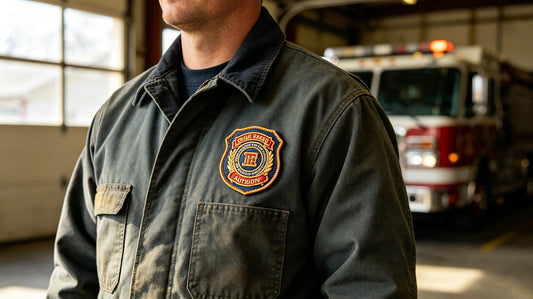
Heavy-duty 3D puff embroidery patches are the reliable branding solution for industrial and service uniforms. High tensile abrasion-proof polyester thread fully encapsulates dense compression-resistant foam to create prominent, firm logos. Clients can customise company insignia, security team crests, department lettering, safety identifiers and mechanic workshop emblems. The finished patch holds shape against repeated friction and washing. Widely applied on jacket chests, shoulder epaulets, overall sleeves and work vest back panels, balancing rugged durability, clear visual branding and comfort for all-day shifts.
For uniform suppliers, enterprise procurement managers and security service companies, wear resistance and colour stability are core evaluation standards. Low-quality 3D patches deform, fade or fray after short-term industrial use. This guide covers key advantages, workwear tailored design standards, heavy-duty material specifications and bulk custom guidelines for industrial 3D embroidery patches.

Part 1: Why Workwear Adopts Heavy-Duty 3D Puff Embroidery Patches
1.1 Highly Visible Branding On Thick Work Fabrics
Solid raised structure ensures logos stand out clearly on dark canvas, thick twill and heavy workwear textiles, far easier to identify than flat embroidery.
1.2 Abrasion & Compression Resistant For Labour Scenarios
Fully wrapped stitching locks foam firmly, resisting friction from machinery, tools and daily work activity, not easy to flatten or tear.
1.3 Stable Colour Under Industrial Washing
Premium colourfast polyester thread withstands repeated commercial laundry, resisting fading caused by industrial detergents and high-temperature washing.
1.4 Compatible With Multiple Heavy Textiles
Works reliably on canvas jackets, cotton overalls, blended security polos, polyester safety vests and thick service uniforms. Multiple backing choices support permanent installation.
1.5 Flexible MOQ For Small Businesses & Large Enterprises
Support mass orders for group corporate uniforms, as well as small-batch customisation for small workshops, security teams and local service crews.
Part 2: Industrial Workwear-Grade 3D Embroidery Design Specifications
2.1 Workwear Patch Digitisation Guidelines
Work uniform patches prioritise thick outlines and structural stability:
- Minimum letter height: 6mm for standard 2mm foam; avoid overly thin fonts prone to abrasion damage
- Reinforce outer borders with thick stitching to prevent thread wear under constant friction
- Simplify overly intricate graphics; keep logos bold and legible even from distance
2.2 Size Matching For Workwear Positions
- Small shoulder & epaulet patches: 3cm–6cm, suitable for security shoulder marks and sleeve department labels
- Medium chest main logos: 7cm–11cm, standard size for work jacket chest corporate emblems
- Large back identification patches: 12cm–20cm, used on safety vests and work jacket rear panels
2.3 Workwear Colour Matching Recommendations
Choose high-visibility industrial colour schemes: black & silver, navy & orange, dark grey & yellow, forest green & white. High contrast ensures logos remain readable in dim workshop environments.
2.4 Mandatory Edge Sealing Standards
All industrial uniform patches require full perimeter foam wrapping. Exposed edges collect dust and grease and accelerate foam ageing. Merrow wrapped edges or laser heat-sealed edges are compulsory production standards.

Part 3: Heavy-Duty Material Selection for Workwear 3D Patches
Embroidery Thread
Abrasion-resistant colourfast industrial polyester thread, anti-fray, resistant to repeated commercial washing and long-term friction.
Base Fabric
High-density tear-proof polyester twill, stable structure, resistant to stretching and abrasion on thick workwear.
3D Core: Compression Resistant Dense EVA Foam
Workwear dedicated tough foam:
- 2mm foam: Universal choice for chest logos, shoulder epaulets on daily staff uniforms
- 3mm foam: Ideal for large rear identification patches on safety vests and heavy work jackets
Backing Options for Workwear
✅ Sew-On Backing (Top Recommendation) Maximum tensile strength, anti-peeling, withstands industrial washing and heavy friction, standard for official enterprise uniforms. ✅ Iron-On Backing Convenient for quick uniform modification; not recommended for high-friction mechanic and factory workwear. ⚠️ Hook & Loop Backing Perfect for seasonal staff rotations, interchangeable safety vests and temporary service teams.
Edge Finishing Options
- Merrow Stitched Border Heavy-duty anti-wear wrapped edge, widely adopted by security companies and large enterprise uniform suppliers.
- Laser Cut Sealed Edge Sharp custom irregular outlines, suitable for unique corporate logo shapes.
- Hot Cut Edge Only for sample testing, not applicable to long-term industrial work uniforms.
Part 4: Production Standards for Workwear 3D Embroidery Patches
Professional 3D Puff Embroidery Digitising
- Optimise stitch density to balance firm stereo lift and abrasion resistance
- Full foam encapsulation stitching to block dust, grease and moisture
- Add edge reinforcement stitching to cope with continuous friction during work shifts
Physical Sample Confirmation Before Bulk Manufacturing
Digital mockups cannot simulate wear performance on thick canvas workwear. All bulk uniform orders must confirm physical samples before mass production.
Batch Colour Consistency
Unified thread batches to eliminate colour difference across all patches, ensuring consistent branding for all staff uniforms.

Part 5: Application & Workwear Care Guidance
- Sew patches evenly around borders with high-strength polyester thread.
- Avoid installing large patches on high-flex zones such as elbow joints and waistlines.
- Wash work uniforms inside out; avoid strong corrosive industrial detergents where possible.
- Air dry away from prolonged direct sunlight to prevent colour fading.
- Never apply high-temperature iron directly onto raised 3D embroidery.
Part 6: Common Defects & Practical Solutions
- Patch colour fades after repeated industrial laundry Cause: Low-grade thread without colourfast treatment Solution: Adopt industrial-grade abrasion-resistant colourfast polyester thread
- 3D raised profile flattens rapidly Cause: Low-density soft foam or excessive stitch compression Solution: Select compression-resistant workwear foam and adjust digitising stitch density
- Patch edges wear and fray easily Cause: Insufficient edge reinforcement and incomplete sealing Solution: Full-circle wrapping stitching plus reinforced border technology
- Foam detaches from embroidery Cause: Discontinuous encapsulation stitching during production Solution: Strictly implement full foam wrapping production specifications

Part 7: Maintenance Rules For Workwear With 3D Patches
- Turn work uniforms inside out before washing to reduce surface embroidery friction
- Avoid direct contact with oil, solvents and industrial chemicals
- Do not place heavy sharp tools pressing against embroidered patches during storage
- Regularly inspect stitching for security and mechanic uniforms used daily
Part 8: 2026 Industry Trend For Workwear Embroidery Patches
Enterprises and security service providers are gradually replacing screen printing with robust 3D puff embroidery patches. High visibility contrast logos and durable merrow-edge construction dominate orders. Sew-on patches remain the mainstream choice for permanent staff uniforms, while hook-and-loop styles gain popularity for temporary teams and seasonal staff. Wear resistance and long-term colour retention become core purchasing indicators.
Final Summary Core Rule
Fully encapsulated heavy-duty 3D raised embroidery patches deliver lasting, clear corporate branding on canvas work jackets, security uniforms, mechanic overalls and safety vests. Abrasion-resistant materials withstand tough working environments and repeated industrial washing. Sew-on backing offers stable permanent attachment for official staff uniforms. Strict industrial-grade production standards retain vivid colour and firm stereo texture, helping enterprises and security teams build unified professional visual identity.

Frequently Asked Questions
Q1: Which backing is best for mechanic factory work jackets? A: Sew-on backing delivers the strongest anti-peeling performance under continuous friction and industrial washing.
Q2: Can company logos, security crests and safety markings be made as 3D puff patches? A: Yes. Graphics with thick continuous outlines achieve stable long-term effects; overly delicate tiny details need proper simplification.
Q3: Will patches fall off during heavy manual labour? A: Properly sewn patches with full perimeter wrapping stitching remain stable under normal labour activity.
Q4: What foam thickness is recommended for work jacket chest logos? A: 2mm foam offers balanced visibility without excessive bulk, suitable for daily staff workwear.
Tags:
Previous
Custom 3D Puff Embroidery Patches for Kids Clothing, Toddler Outfits & Children’s Apparel | Brand Guide
Next
Custom 3D Puff Embroidery Patches for Outdoor Gear, Camping Equipment & Adventure Apparel | Brand Guide