Custom 3D Raised Embroidery Patches for Military, Tactical & Law Enforcement Uniforms | Brand Guide
Operators, military units and law enforcement professionals rely on uniform insignia that performs reliably in demanding field conditions. Gear is exposed to repeated friction, mud, rain, sunlight and heavy physical activity. Most common marking solutions fail to meet operational standards: heat transfer prints degrade rapidly under UV exposure and abrasion; hard PVC and rubber patches catch on webbing, harnesses and equipment; standard flat embroidery lacks definition and can be hard to distinguish in low-light environments.
3D foam raised embroidery has become a trusted choice for tactical and official uniform insignia. High-density polyester stitching fully encases closed-cell foam to form crisp, sculpted emblems. The pliable structure conforms to tactical fabrics, MOLLE webbing and uniform material without creating rigid edges that catch or rub against skin. The raised profile improves visual recognition while matte thread options reduce unwanted glare. Perfect for tactical plate carriers, uniforms, duty headwear, training team gear and unit morale patches, foam embroidery balances professional appearance and extreme field durability.
For tactical procurement officers and uniform designers, insignia must satisfy two core requirements: clear identification and long service life. Inferior decorations wear out quickly and reflect poorly on team professionalism. This guide outlines the advantages of 3D embroidered patches for tactical and public safety use, tactical-focused design standards, material specifications and practical guidance for bulk orders.

Part 1: Why Tactical & Law Enforcement Teams Choose 3D Raised Embroidery Patches
1.1 Crisp Raised Profile for Fast Visual Recognition
Sculpted foam creates distinct shadow contrast. Unlike flat embroidery that blends into dark uniform fabrics, 3D patches remain identifiable under shaded, overcast and low-light operational conditions. The textured surface also aids tactile recognition when visibility is limited.
1.2 Flexible Structure Compatible With Tactical Fabrics
3D foam embroidery stays soft and conformable. It works seamlessly on nylon tactical fabric, ripstop uniforms, canvas duty gear and lightweight plate carriers. Unlike rigid plastic patches, it will not snag webbing, equipment straps or protective gear during movement.
1.3 Abrasion & Weather Resistance for Continuous Field Use
Fully sealed perimeter stitching locks foam securely within the embroidery. Industrial grade colourfast polyester threads resist fading from sunlight, moisture and repeated wet-dry cycles. This rugged performance matches the lifespan of professional tactical equipment and reduces replacement costs for uniform insignia.
1.4 Broad Custom Shape Options for Unit & Morale Graphics
Teams can commission custom silhouettes: unit crests, tactical skull motifs, rank markings, department logos, national symbols and morale artwork. Laser-cut irregular shapes support creative insignia designs beyond standard rectangular and shield formats.
1.5 Flexible Minimum Order Quantities for Small Units & Large Agencies
Small tactical teams, local law enforcement divisions and military detachments often require custom insignia in limited runs. 3D embroidered patch production supports low minimum orders, while scaling efficiently for large department-wide uniform rollouts.
Part 2: Tactical-Focused Design Specifications for 3D Embroidery Patches
2.1 Graphic Digitisation Guidelines for Official & Morale Artwork
Tactical and military graphics typically feature sharp outlines, official crests, bold lettering and symbolic imagery. Optimise artwork during digitisation for stable foam embroidery:
- Minimum uppercase letter height: 6mm for standard 2mm foam; 8mm for thick 3mm high-relief foam
- Thin border lines and fine symbolic details require moderate thickening to prevent foam exposure
- Thick outer outlines deliver better durability; avoid overly dense micro-details that cannot stitch clearly
2.2 Size Matching for Common Tactical Gear
- Small cap & shoulder patches: 3cm–6cm, suitable for duty caps, shoulder epaulets and collar insignia
- Medium chest & vest patches: 7cm–11cm, standard size for tactical vests and uniform chest panels
- Large rear statement patches: 12cm–24cm, for plate carrier back panels and team identification markings
2.3 Tactical Colour Matching Recommendations
Select abrasion-resistant colourfast polyester threads. Popular tactical colour schemes: black & charcoal grey, olive drab & coyote brown, navy & stone grey, multicam matched earth tones. Matte thread finishes are preferred to minimise reflection in operational environments.
2.4 Mandatory Edge Sealing Requirements
All custom irregular shapes must use complete perimeter wrapping stitching. Unsealed edges allow dirt and moisture to penetrate foam, leading to internal degradation and patch deformation after prolonged field use. Merrow borders or sealed laser-cut edges are required for production.

Part 3: Material Selection for Tactical-Grade 3D Embroidery Patches
Embroidery Thread
High tensile, colourfast polyester thread. Matte variants are strongly recommended for low-glare operational use. Avoid cotton thread, which absorbs moisture and wears quickly under heavy friction.
Base Fabric
Medium-weight stable polyester twill, resistant to stretching after repeated wetting and drying, offering consistent support for dense foam stitching.
3D Core: Closed-Cell EVA Foam
Medium-soft closed-cell foam as standard.
- 2mm foam: Universal choice for cap insignia, shoulder patches and daily uniform markings
- 3mm foam: Used for large vest back panels and high-visibility morale patches
Backing Options for Tactical Equipment
✅ Hook & Loop Backing (Top Recommendation) Enables quick interchangeable patches on MOLLE webbing and tactical vests; no permanent damage to high-value tactical gear. The standard choice for military and operator gear. ✅ Sew-On Backing Maximum long-term durability for permanent uniform insignia; zero risk of adhesive failure in wet or hot operational environments. ⚠️ Iron-On Backing Only suitable for temporary samples; heat and moisture cause adhesive separation, not approved for field duty gear.
Edge Finishing Options
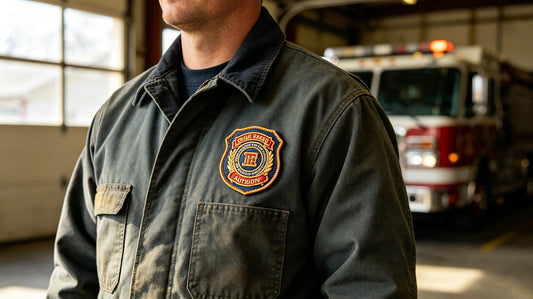
- Merrow Stitched Border Heavy wrapped edge, excellent abrasion resistance, widely adopted for official unit crests and law enforcement insignia.
- Laser Cut Sealed Edge Ideal for asymmetrical morale patches and custom unit silhouettes. Must be paired with full foam wrapping stitching.
- Hot Cut Edge Only for lightweight souvenir patches; insufficient durability for continuous tactical field use.
Part 4: Production Standards for Tactical Patches
Professional 3D Embroidery Digitising
- Balance stitch density to avoid excessive compression flattening foam relief
- Enforce full perimeter foam wrapping stitching to fully cover foam material
- Add surrounding stabilising running stitches to minimise edge curling after repeated abrasion and moisture exposure
Physical Sample Approval Before Bulk Manufacturing
Digital mockups cannot replicate foam thickness, matte finish and colour performance under variable lighting. All tactical and agency orders must approve physical samples before mass production to verify appearance on ripstop uniforms and tactical nylon fabrics.
Batch Colour Consistency
All patches within one production batch use identical thread lots to eliminate colour variation, ensuring uniform insignia across full team uniform sets.

Part 5: Application & Gear Care Guidance
- Use heavy-duty polyester sewing thread when attaching sew-on patches to ripstop uniforms and tactical fabric to prevent stitching failure under constant movement.
- Avoid placing large thick patches on high-flex joint areas to reduce continuous compression and wear.
- Clean tactical gear with mild neutral detergent; harsh chemicals accelerate thread fading and foam deterioration.
- Air dry equipment in shaded locations; prolonged direct sunlight will gradually compress foam layers over time.
- Never apply high-temperature iron directly onto raised embroidery surfaces.
Part 6: Common Defects & Practical Solutions
- Thread colour fades rapidly during field use Cause: Low-grade thread lacking UV and abrasion resistance Solution: Specify Grade 4 colourfast polyester embroidery thread for all tactical patches
- Raised 3D shape permanently flattens Cause: Over-compressed stitch density or overly soft foam Solution: Optimise digitising parameters and select medium-density closed-cell foam
- Foam visible at patch edges Cause: Incomplete perimeter wrapping stitching Solution: Implement full perimeter foam wrapping and sealed edge finishing as mandatory production rule
- Iron-on patches detach after exposure to sweat and rain Cause: Inferior hot melt adhesive sensitive to moisture and temperature fluctuation Solution: Choose sew-on or hook & loop backing for all operational duty gear
- Patch edges curl after long-term wear Cause: Insufficient stabilising stitches or thin base twill Solution: Upgrade base fabric weight and add reinforcing stabilising stitches

Part 7: Maintenance Guidance for Gear With 3D Embroidery Patches
- Rinse dirt, grit and sweat from patches regularly to reduce abrasive surface wear
- Avoid prolonged direct sunlight storage to slow thread fading
- Do not stack heavy equipment pressing onto patches during storage to preserve three-dimensional form
- Limit prolonged soaking in standing water to protect internal foam structure
Part 8: 2026 Industry Trend for Tactical 3D Embroidery Patches
Military and tactical buyers increasingly shift away from rubber PVC patches toward matte foam 3D embroidery for premium uniform sets. Low-profile unit crests, coyote earth tone colour schemes and interchangeable hook & loop morale patches continue growing in demand. Procurement teams associate dense, textured embroidery with professional, long-lasting insignia, separating official uniform markings from low-cost novelty merchandise. Hook & loop laser-cut patches dominate tactical vest applications, while sew-on merrow edge patches remain standard for permanent law enforcement uniform insignia.
Final Summary Core Rule
Genuine fully sealed foam wrapped 3D raised embroidery patches deliver tough, high-visibility tactical insignia unavailable with flat prints, basic embroidery and rigid rubber patches. Flexible, weather-resistant construction works across ripstop uniforms, nylon tactical vests and canvas duty gear. Hook & loop backing offers maximum versatility for MOLLE equipment, while sew-on sealed edge construction delivers ultimate longevity for permanent uniform markings. Production must adhere to full foam wrapping standards and use high-grade colourfast thread. Optimised digitising ensures patches retain crisp sculpted shape and consistent colour after years of field operations, helping military, tactical and law enforcement teams obtain professional, reliable uniform identification.

Frequently Asked Questions
Q1: Which backing is best for tactical vest MOLLE patches? A: Hook & loop backing is the industry standard, allowing fast swapping of insignia without damaging tactical gear.
Q2: Can official unit crests and department logos be made into 3D embroidered patches? A: Yes. Fine emblem details require careful thickening during digitisation to achieve consistent foam wrapping and sharp graphic presentation.
Q3: Will 3D embroidery patches survive daily tactical field use and exposure to rain? A: Properly manufactured patches with fully sealed edges and premium polyester thread maintain quality through repeated wetting, drying and abrasion.
Q4: What foam thickness works best for large back plate carrier patches? A: 3mm medium-soft closed-cell foam creates bold raised texture without excessive stiffness that restricts movement.
Tags:
Previous
Custom 3D Raised Embroidery Patches for Outdoor Camping & Adventure Gear | Brand Guide
Next
Custom 3D Raised Embroidery Patches for Motorcycle Clubs & Biker Apparel | Brand Guide