Custom Backpack Patches: Styles, Sizes & Complete Customization Guide
Backpacks are essential items for students, commuters, outdoor enthusiasts and travelers. Most standard backpacks look identical, while custom patches are an affordable and creative way to add personality, mark belongings and showcase hobbies. Whether you want to decorate a school bag, upgrade an outdoor hiking backpack or make a unique travel bag, well-matched patches can instantly transform a plain backpack into a one-of-a-kind accessory.
Backpacks feature different fabric materials, curved surfaces, frequent friction and heavy load-bearing, which set special requirements for patch size, thickness, craftsmanship and fixation methods. Many users encounter problems such as oversized patches affecting usage, edges peeling after rubbing, or thick patches causing discomfort on shoulder straps.
This full guide focuses on backpack patches, covering universal size standards for different positions, mainstream design styles, recommended materials, backing selection, installation skills and matching tips for different types of bags. It suits personal decoration, team customization, club merchandise and travel souvenir demands. Custom 3D embroidered patches offers tailored patches for all backpack styles, balancing beauty, durability and practicality.

Why Choose Patches to Personalize Backpacks
-
Strong Practicality & DurabilityPatches resist daily friction, extrusion and outdoor wind and rain. They will not fade or fall off easily even with long-term use, far more durable than stickers and direct printing.
-
Flexible Combination & Free MatchingYou can mix multiple patches of different sizes and styles according to personal preferences. It is easy to update the look by adding or replacing patches anytime.
-
Wide Fabric CompatibilityFit canvas, nylon, polyester, oxford cloth and other common backpack materials, without damaging the original bag structure.
-
Clear Identity MarkingExclusive custom patterns, names and team logos effectively distinguish personal belongings, ideal for students and group members to avoid loss.
-
Cost-Effective for Bulk OrdersAffordable unit price and favorable bulk discounts, perfect for class, club, travel group and outdoor team unified customization.
Standard Sizes for Different Backpack Positions
Different positions on a backpack have varying available space and usage frequency. Follow these industry standard sizes for the best visual effect and comfort.
1. Front Main Panel (Largest Display Area)
This is the most popular position for core patterns, logos and large themed designs.
- Regular school & casual backpacks: 6cm – 9cm
- Large outdoor & travel backpacks: 8cm – 11cm
- Note: Do not cover zippers, pockets or folding areas to avoid affecting normal use.
2. Side Pockets & Side Panels
For auxiliary patterns, small letters, icons and simple slogans. The space is narrow, so keep patches compact.
- Recommended size: 4cm – 6cm
- Suggest shapes: Round, small square, strip and mini irregular silhouettes.
3. Shoulder Straps & Back Panel
These areas are in direct contact with the body and bear constant friction. Prioritize thin and small patches.
- Shoulder straps: 3cm – 4.5cm, ultra-thin crafts only. Thick patches will cause rubbing discomfort.
- Back panel: 4cm – 6cm, avoid oversized raised patches that affect back comfort.
4. Top Handle & Small Decorative Areas
Used for tiny logos, name tags and cute decorative patterns.
- Recommended size: 2.5cm – 4cm, focus on delicacy rather than visual impact.

Recommended Crafts by Backpack Type
Choose materials based on backpack usage scenarios, fabric and wear frequency to balance texture and durability.
1. Flat Embroidered Patches (Universal Choice)
Best for: Student school bags, daily casual backpacks, commuter bags
Advantages: Moderate thickness, soft texture, excellent friction resistance and color fastness. Clear thread details, diverse style options, cost-effective for bulk orders. Suitable for long-term daily use.
Tip: Choose high-density embroidery to prevent loose threads after repeated rubbing.
2. PVC Rubber Patches (Top Pick for Outdoor & Tactical Bags)
Best for: Hiking backpacks, tactical bags, travel backpacks
Advantages: Fully waterproof, dustproof and wear-resistant, adapt to harsh outdoor environments. Supports full-color complex patterns and 3D raised designs, bright and vivid colors. Flexible material fits curved surfaces well.
Tip: Avoid extra-thick PVC for shoulder strap positions to prevent discomfort.
3. 3D Puff Embroidered Patches (For Fashion & Trendy Bags)
Best for: Street style backpacks, youth fashion bags, event souvenir bags
Advantages: Obvious three-dimensional layering, strong visual appeal, upgrades the overall grade of the backpack.
Tip: Not recommended for outdoor bags and shoulder straps. The raised part is easy to wear down after long friction.
4. Woven Patches (For Minimalist & High-End Bags)
Best for: Lightweight fashion backpacks, business casual bags, minimalist style bags
Advantages: Ultra-thin and flat, almost no protrusion. Excellent performance for tiny text and fine lines, soft and comfortable to carry.
Tip: Perfect for name tags, brand logos and subtle decorative details.
5. Leather Patches (For Retro & Vintage Style Bags)
Best for: Retro canvas backpacks, vintage fashion bags
Advantages: Unique leather texture, elegant retro temperament.
Tip: Poor water resistance, not suitable for outdoor activities and frequent washing.
Popular Design Styles for Backpack Patches
1. Youth & Cartoon Style (Student Backpacks)
Main elements: Cute cartoons, anime characters, animal patterns, colorful letters and fun slogans. Bright and lively color matching, diverse combinations, deeply loved by students of all ages. Can mix multiple small patches for a rich layered look.
2. Letter & Minimalist Style (Daily Commuter Bags)
Main elements: Initials, simple English words, geometric patterns and abstract icons. Clean layout, low-saturation color matching, simple and versatile, matching all casual outfits.
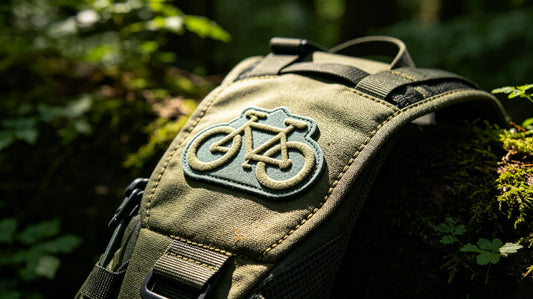
3. Outdoor & Adventure Style (Hiking & Travel Bags)
Main elements: Mountain, compass, camp, wilderness elements, national flags and travel slogans. Tough lines, earth tone color system, with a sense of freedom and exploration. Morale patches are widely used in this category.
4. Team & Club Style (Group Unified Customization)
Main elements: Team name, club logo, group totem and establishment year. Unified size, style and color, highlighting group identity and cohesion. Regular shapes such as shield, round and square are the first choices.
5. Retro & Vintage Style (Retro Canvas Bags)
Main elements: Retro patterns, old-style fonts, classic totems. Match with leather or merrow border, create a nostalgic and elegant atmosphere.

Backing Selection & Installation Guide
Backing directly determines whether the patch can stay firm under long-term friction and extrusion. Select according to backpack material and usage habits.
1. Sew-On Backing (Most Durable, First Choice for Most Backpacks)
- Advantages: Extremely firm, never falls off even after years of friction, extrusion and occasional washing. Compatible with all backpack fabrics.
- Suitable for: Student bags, outdoor bags, frequently used daily backpacks.
- Installation tips: Use durable polyester thread matching the patch color, stitch evenly along the edge. For thick oxford cloth, use a thicker needle for easier operation.
2. Iron-On Backing (Convenient for Temporary Decoration)
- Advantages: Easy installation without sewing tools, flat and neat after pasting.
- Suitable for: Canvas and cotton backpacks with low friction frequency, short-term decorative use.
- Installation tips: Use medium temperature iron, lay a protective cloth, press repeatedly for sufficient time to ensure the glue fits tightly.
- Note: Not recommended for nylon and high-friction positions; edges are easy to curl after long-term use.
3. Velcro Backing (For Detachable & Replaceable Patches)
- Advantages: Freely disassemble and replace patches, change styles at will. No damage to the backpack surface.
- Suitable for: Tactical backpacks, collection lovers and users who often switch decorative styles.
- Tip: Choose thin velcro to reduce bulging and friction.
4. Self-Adhesive Backing (Only for Temporary Display)
Strong adhesion is hard to maintain on fabric surfaces. Easy to peel off after slight rubbing, not recommended for daily carrying backpacks.
Position Matching & Layout Tips
- Single Large Patch: Place it in the center of the front panel for a concise and atmospheric effect, suitable for logo and themed designs.
- Combination of Multiple Patches: Arrange large patches as the main body, and match small patches on the side or corner. Keep the layout balanced, avoid messy stacking.
- Shoulder Strap Decoration: Only use ultra-small and ultra-thin patches, and stick to the edge position to reduce contact with the body.
- Avoid Key Functional Areas: Do not paste patches on zippers, buckles, folding parts and elastic bands, so as not to affect normal use.

Maintenance Tips for Backpack Patches
- When cleaning the backpack, try hand washing or gentle machine washing. Do not scrub the patch area vigorously to prevent thread loosening and edge curling.
- Avoid long-term exposure to strong sunlight to prevent color fading.
- For velcro patches, clean lint regularly to keep adhesion.
- If the edge of the iron-on patch curls, reheat and press it in time for reinforcement.
Common Customization Mistakes to Avoid
- Choosing oversized patches for narrow side panels and shoulder straps, causing bulging and affecting use.
- Using thick 3D and PVC patches on shoulder straps, leading to rubbing discomfort.
- Relying solely on iron-on backing for outdoor backpacks with high friction, resulting in frequent peeling.
- Designing too many tiny details on large patches, which look messy and lose focus.
- Covering functional structures such as zippers and pockets with patches, hindering daily use.

Final Backpack Patch Customization Summary
The core of backpack patch customization is appropriate size, durable fixation and position rationality. Sew-on backing is the safest choice for long-term use, while iron-on is convenient for temporary decoration.
Flat embroidery and PVC are the two most mainstream crafts, corresponding to daily leisure and outdoor scenarios respectively. Match different design styles according to the attributes of the backpack: lively cartoon styles for students, tough outdoor elements for hiking bags, and minimalist designs for commuter bags.
Reasonable layout and material selection can make custom patches both beautiful and practical, making your backpack unique in crowds and accompanying you for a long time.
Frequently Asked Questions
Q1: What is the best size for the main patch on a regular backpack front?
A: 6cm to 9cm is the most versatile size.
Q2: Which backing is most durable for backpack patches?
A: Sew-on backing works best against long-term friction.
Q3: Are PVC patches suitable for outdoor backpacks?
A: Yes, PVC is waterproof and wear-resistant, ideal for outdoor use.
Q4: Can I put patches on backpack shoulder straps?
A: Yes, choose patches smaller than 4.5cm with thin crafts to avoid discomfort.
Tags:
Previous
Custom Hat Patches: Design Ideas, Sizes & Full Customization Guide
Next
Morale Patches 101: History, Meanings & Custom Design Guide