Embroidered Patches vs Woven Patches: Key Differences & Best Uses
When customizing personalized patches, most customers face a core choice: embroidered patches or woven patches. Both are classic, high-quality patch types widely used for uniforms, fashion apparel, brand logos and souvenir decorations. However, their production techniques, visual textures, detail performance, durability and applicable scenarios are completely different.
Many users blindly choose embroidered patches only to find tiny text blurry, or pick woven patches and lose the classic three-dimensional embroidered texture. Choosing the wrong type will greatly reduce the grade and presentation effect of custom patches.
This comprehensive guide thoroughly compares embroidered patches and woven patches from production principle, visual effect, detail limit, durability, price and applicable crowds. After reading this article, you can accurately select the most suitable patch type for every custom demand. Reliable custom 3D embroidered patches provides both embroidered and woven patch customization to meet different high-precision and three-dimensional texture needs.

Basic Definition & Production Principle Difference
Embroidered Patches
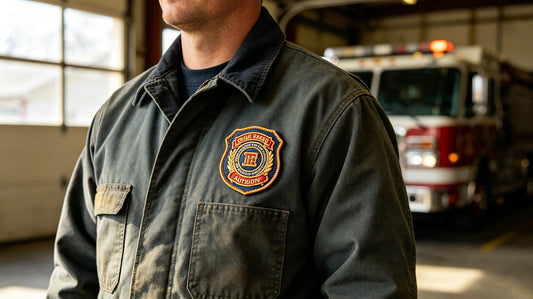
Embroidered patches are the most traditional and popular patch style. They use computer embroidery machines to stitch colored threads layer by layer on the base fabric to cover the pattern. The pattern is formed by stacked embroidery threads, with obvious thread traces and layered raised texture.
Embroidery relies on thread stacking to present colors and patterns. The thicker the thread layers, the stronger the three-dimensional sense. Ordinary flat embroidered patches have subtle uneven texture, while 3D puff embroidered patches form obvious raised stereo effects through foam lining.
Woven Patches
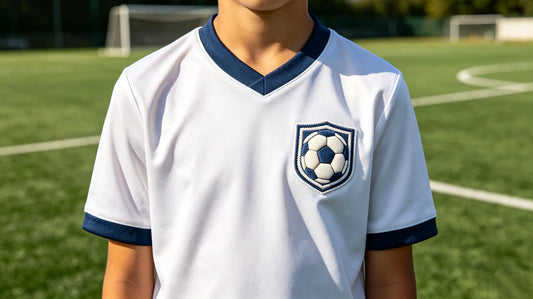
Woven patches adopt professional high-density weaving technology. Instead of stitching threads on the surface, they weave different colored fibers directly into the base fabric. The pattern and the base fabric are integrated, with no raised thread layers on the surface.
Woven patches are completely flat and smooth. The fiber density is extremely high, which can realize ultra-fine pattern performance that embroidery cannot achieve. It is a high-precision patch type designed for delicate details and tiny text.
Visual Texture & Aesthetic Difference
The biggest intuitive difference between the two patch types lies in surface texture.
Embroidered patches have a distinct handmade textured feel. The staggered thread arrangement forms a unique classic embroidery luster and layered sense. The overall look is retro, formal, thick and premium. Even flat embroidery has subtle uneven texture, and 3D puff embroidery has strong three-dimensional stereo vision. This texture is irreplaceable for team emblems, military morale patches and honor badges.
Woven patches present a smooth, flat and ultra-fine high-end texture. The surface is uniform without thread bumps, similar to woven label texture of high-end clothing. The lines are extremely neat, the color transition is delicate, and the overall style is minimalist, fashionable and advanced. It is very suitable for brand logos and trendy clothing with high requirements for flatness.

Detail Performance & Pattern Restoration Ability
Detail restoration is the core advantage distinction between the two patches.
Embroidered patches are limited by thread thickness. They cannot restore ultra-fine lines, tiny text and dense complex textures. The minimum line thickness and text height have strict limits. Too many tiny details will be simplified or blurred during embroidery. Embroidery is more suitable for bold outlines, large color blocks and recognizable pattern designs.
Woven patches excel in detail performance. Ultra-high density weaving can perfectly restore micro text, thin lines, complex logos and delicate textures that embroidery cannot make. Even tiny letters of 2–3mm can be clearly identified without sticking or blurring. For brand logos with complex lines and precise graphic proportions, woven patches are the best choice.
Color Restoration & Layering Effect
In terms of color presentation, embroidered patches have strong color saturation. The stacked colored threads make the color full and three-dimensional, with strong visual impact. The color layering is obvious, and the contrast between light and dark is stronger, which is more suitable for vivid and bold pattern designs.
Woven patches have softer and more delicate color transition. The color is uniform and smooth without thread grain. It can restore low-saturation, high-grade neutral color matching and gradient-like visual effects (solid color simulation). The overall color texture is more in line with high-end fashion brand positioning.
Durability, Washing Resistance & Service Life
Both patch types have excellent durability, but their damage forms are different.
Embroidered patches are composed of stacked stitching threads. The threads are locked tightly on the base fabric, with strong anti-friction and anti-tearing ability. They can withstand long-term outdoor friction and repeated washing. The only aging problem is loose individual threads after long-term use. 3D puff embroidered patches maintain stereo shape stably and are not easy to deform.
Woven patches are integrated weaving structure with no loose threads. The overall structure is more stable, not easy to hook threads or drop threads. It has super washing resistance and will not deform after long-term use. The only disadvantage is that it has no three-dimensional layering and relies entirely on flat pattern display.

Price & Customization Cost Difference
In terms of unit price, conventional embroidered patches are more cost-effective with lower production cost and wider applicability. The production process is mature, suitable for large-batch affordable customization.
High-density woven patches require professional high-precision weaving equipment and fine manual debugging. The production efficiency is lower and the unit price is slightly higher than ordinary embroidered patches. It belongs to high-grade customized patch type.
For simple large-pattern customization, embroidered patches have higher cost performance; for high-precision logo customization requiring ultra-fine details, woven patches are worth the premium.
Best Usage Scenarios for Embroidered Patches
Choose embroidered patches if you need classic texture and three-dimensional layering:
- Team uniforms, work uniforms, school uniforms and official identity badges
- Military tactical morale patches and outdoor activity patches
- Honor commemorative patches, championship patches and celebration emblems
- Casual jackets, denim clothes and backpack decorations pursuing retro texture
- 3D puff stereo customized patches needing raised three-dimensional effect
Embroidered patches are the mainstream choice for formal, ceremonial and outdoor durable scenarios.
Best Usage Scenarios for Woven Patches
Choose woven patches if you need ultra-fine details and flat high-end texture:
- High-end fashion brand logo patches and clothing label decorations
- Tiny text logos, precise icon patterns and minimalist brand identification
- Thin close-fitting T-shirts and knitted clothes requiring flat and zero-bulge effect
- Complex line patterns and high-precision graphic designs that cannot be embroidered
- Commercial merchandise and boutique gifts pursuing delicate and advanced texture
Woven patches are the first choice for high-detail, high-grade fashion customization.

Can Embroidered and Woven Patches Use the Same Backing & Border?
Both patch types support all conventional processes and accessories.
In terms of borders, both can choose merrow border and heat cut border. Regular shapes are suitable for merrow border to increase formality; irregular creative shapes adopt heat cut border.
In terms of backing, iron-on, sew-on and velcro backings are all fully compatible. Woven patches are more suitable for iron-on backing due to their flat and thin features, fitting clothes more perfectly. Embroidered patches, especially 3D puff styles, are more recommended for sew-on and velcro backing for firmer fixation.
How to Choose Correctly for Your Order
Choose Embroidered Patches If:
You want three-dimensional texture, classic embroidery sense, thick and full patch layering; your design has bold outlines, large color blocks and no tiny text; you need durable outdoor use and formal team image display.
Choose Woven Patches If:
Your design contains tiny text, thin lines and complex logos; you need ultra-flat, thin and high-end effect; you customize fashion brand merchandise with high detail requirements; you need zero bulge decoration for thin clothes.
Common Selection Mistakes to Avoid
- Using embroidered patches for ultra-fine micro-text logos, resulting in blurred and unrecognizable details.
- Choosing woven patches for team honor badges, lacking three-dimensional ritual sense and formal texture.
- Customizing 3D stereo effect with woven patches, unable to achieve raised layering.
- Matching thick embroidered patches on ultra-thin close-fitting clothes, causing bulging and poor comfort.
- Ignoring detail limits and forcing complex fine patterns on ordinary embroidery.

Final Comparison Summary
Embroidered patches and woven patches have their own irreplaceable advantages. Embroidered patches focus on three-dimensional texture, classic stitching sense and cost performance, suitable for formal teams, outdoor equipment and stereo creative designs. Woven patches focus on ultra-fine detail, flat smoothness and high-grade fashion sense, suitable for brand logos and high-precision pattern customization.
There is no absolute good or bad between the two patch types. The best choice depends on your design complexity, usage scenario and texture pursuit. Correct matching can maximize the beauty and practicability of custom 3D puff embroidered patches and woven patches.
Frequently Asked Questions
Q1: Which is more durable, embroidered or woven patches?
A: Both are durable; woven patches prevent loose threads, while embroidered patches have stronger three-dimensional structure.
Q2: Which is better for tiny text logos?
A: Woven patches are far better for ultra-small text and fine line details.
Q3: Can woven patches make 3D puff effects?
A: No, 3D stereo effects only support embroidered patch craftsmanship.
Q4: Which patch looks more high-end for fashion clothing?
A: Woven patches present flatter, finer and more minimalist high-end fashion texture.
Tags:
Previous
Custom Patch Artwork Guidelines: File Formats, Size & Design Rules
Next
Tactical Morale Patches Guide: History, Meaning & Custom Ideas