Embroidered vs Woven vs PVC Patches: Which Is Best for Your 2026 Project?
Choosing the right patch material is the most critical step in custom patch design and ordering. Many unsatisfactory customization results—such as blurry tiny text, stiff fabric fit, insufficient durability, or mismatched texture—stem from incorrect material selection, rather than poor craftsmanship. Three types of custom patches dominate the 2026 customization market: embroidered patches, woven patches, and PVC patches. Each material has unique textures, technical advantages, durability limits, and applicable scenarios.
Embroidered, woven, and PVC patches differ greatly in detail restoration, three-dimensional sense, softness, wash resistance, and pricing. For team uniforms, brand merchandise, tactical gear, daily apparel decoration, and promotional gifts, the best material choice varies completely. Understanding the core differences between the three mainstream materials can help you avoid customization mistakes and maximize cost performance. For standard high-quality material craftsmanship and diverse style options, start with professional custom embroidered patches and matching material solutions for your projects.
In this 2026 ultimate guide, we conduct a comprehensive comparison of embroidered, woven, and PVC patches from six core dimensions: texture & appearance, detail performance, durability & wash resistance, softness & fit, pricing, and best use cases, helping you make a 100% accurate material decision.
1. Core Feature Overview of Three Mainstream Patch Materials
Before in-depth comparison, mastering the core positioning of each material can quickly lock the preliminary selection range. Embroidered patches focus on classic three-dimensional texture and traditional high-end sense; woven patches excel in ultra-fine detail restoration and thin and soft fit; PVC patches are famous for waterproof, wear-resistant, tactical rugged performance and modern stereoscopic rubber texture.
Different from single-style customized products, formal custom patch suppliers support full-process material customization, covering classic embroidery, fine weaving, and functional PVC craftsmanship. You can match exclusive materials according to design complexity and usage scenarios. High-standard production technology ensures that embroidered patches, woven patches, and PVC patches all reach industry-leading quality standards.

2. Embroidered Patches: Classic Textured Choice for Traditional & Fashion Scenarios
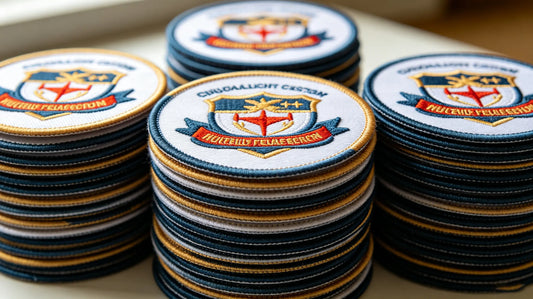
Embroidered patches are the most classic and widely used custom patch type, favored by most teams, brands, and uniform customization projects. Relying on high-density polyester color-fast threads and multi-head precision embroidery machines, they form rich thread texture and unique three-dimensional layering, with strong wearable art sense.
Pros of Embroidered Patches
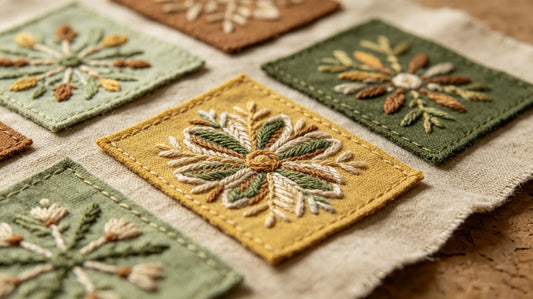
First, diverse craftsmanship options. It supports 2D flat embroidery with 50%, 75%, and 100% thread coverage for neat and flat classic logos, as well as 3D puff embroidery with foam padding for raised stereoscopic effects, and vintage chenille embroidery for soft towel-like collegiate texture, covering almost all fashion and formal styles. Second, excellent color fastness. Adopting eco-friendly color-fast threads, the patches resist fading, bleeding, and thread loosening after repeated machine washing. Third, strong versatility, suitable for daily apparel, team uniforms, hats, jackets, and various conventional decorative scenarios.
Cons of Embroidered Patches
The physical thickness of embroidery threads limits the restoration of ultra-fine details. Tiny text below 4mm and ultra-complex thin lines are prone to blurring and cannot be perfectly presented. In addition, full-coverage high-density embroidery is slightly thicker than woven patches, with weaker softness on ultra-thin close-fitting fabrics.
Best Use Cases: Corporate brand logos, sports team crests, varsity jackets, streetwear decoration, hat patches, daily casual apparel, and medium and long-term wearable customized scenarios. Most classic and timeless custom styles are completed by high-quality custom embroidered patches.
3. Woven Patches: Ultra-Thin & Ultra-Fine for Complex Tiny Details
Woven patches are made of ultra-fine woven threads, with ultra-thin flat texture and no thread protrusion. Their biggest advantage is breaking through the detail limit of embroidery technology, capable of restoring tiny text, miniature patterns, and complex line details that cannot be presented by embroidered patches.
Pros of Woven Patches
Superior detail restoration ability. Ultra-fine weaving technology accurately restores 1–2mm tiny text and dense complex lines, with clear edges and no fuzzy burrs. Second, ultra-thin and soft fit. The flat woven structure is thin and lightweight, perfectly fitting ultra-thin hoodies, close-fitting T-shirts, and delicate fabrics without bulging or unevenness. Third, uniform color transition, natural gradient effect, and delicate overall texture, suitable for high-precision brand logo restoration.
Cons of Woven Patches
Woven patches can only present flat 2D effects, unable to create 3D puff stereoscopic layering and plush texture, lacking the three-dimensional sense and hierarchy of embroidered patches. In addition, the wear resistance is weaker than PVC patches, not suitable for high-frequency friction and extreme outdoor environments.
Best Use Cases: High-precision brand logos, tiny text labels, delicate garment accessories, thin fabric decoration, formal high-end business uniforms, and customized designs with complex fine details.

4. PVC Patches: Rugged Functional Choice for Tactical & Outdoor Scenarios
PVC patches are made of high-quality soft rubber materials, with integrated molding technology, presenting smooth rubber texture and modern three-dimensional sense. Different from fabric patches, PVC patches focus on functionality and environmental adaptability, and are the mainstream choice for tactical and outdoor extreme scenarios.
Pros of PVC Patches
Extreme durability and environmental resistance. PVC material is waterproof, windproof, wear-resistant, anti-ultraviolet, and crack-resistant, adapting to high-temperature, low-temperature, rainy, and dusty extreme outdoor environments, with no fading or deformation after long-term use. Second, strong three-dimensional rubber texture, fashionable and tough, in line with tactical and military style aesthetics. Third, easy to clean, washable and wipeable, no thread falling or fuzzy problems.
Cons of PVC Patches
PVC patches are hard and thick compared with fabric patches, poor in softness and air permeability, slightly bulky for daily thin casual clothes, and not suitable for lightweight daily matching. In addition, the color texture is relatively single, lacking the natural thread texture and retro sense of embroidered patches.
Best Use Cases: Tactical gear, military morale patches, outdoor adventure equipment, fire department and police uniforms, sports protective gear, and high-friction extreme environment scenarios.
5. 2026 Core Dimension Full Comparison Table
Detail Restoration: Woven Patches > Embroidered Patches > PVC Patches 3D Stereo Texture: Embroidered 3D Puff > PVC > Woven Softness & Thin Fit: Woven Patches > Embroidered Patches > PVC Patches Wear & Water Resistance: PVC Patches > Embroidered Patches > Woven Patches Fashion Versatility: Embroidered Patches > Woven > PVC Unit Price Cost Performance: Embroidered (Bulk) > Woven > PVC

6. How to Choose the Right Patch Material in 2026 (Scenario-Based Guide)
Choose Embroidered Patches If: You need classic texture, diverse craftsmanship, and versatile matching effects. Suitable for most team uniforms, brand merchandise, streetwear, and daily decoration scenarios. It is the most balanced and error-free choice for 90% of customized projects. Rich craft options make custom embroidered patches adaptable to almost all conventional customization needs.
Choose Woven Patches If: Your design contains tiny text, ultra-fine complex lines, and high-precision logo details, or you need ultra-thin soft fit for delicate and close-fitting fabrics.
Choose PVC Patches If: The patches are used for tactical gear, outdoor extreme equipment, high-friction work scenarios, and need waterproof, wear-resistant, and anti-aging long-term durability.

Final Thoughts
There is no absolute best patch material, only the most suitable one for your scenario. Embroidered patches dominate mainstream customization with balanced texture, diverse craftsmanship, and strong versatility; woven patches solve the detail pain points of ultra-fine design customization; PVC patches undertake high-intensity functional scenario needs. In 2026, scientific material matching is the premise of high-quality customized patches.
Before placing an order, confirm your design detail complexity, wearing fabric type, usage environment, and service life requirements, so as to accurately select embroidered, woven, or PVC materials, completely avoiding texture mismatch, detail blurring, insufficient durability, and other problems. Reasonable material selection can maximize the cost performance of customized patches and present the best visual and wearing effect.

FAQ
A:Embroidered patches offer classic thread texture and 3D layered effects for versatile daily and team use. Woven patches feature ultra-thin bodies and superior tiny detail restoration. PVC patches provide waterproof, rugged durability for tactical outdoor scenarios. You can get standard material matching for any project when you order custom embroidered patches and other patch types.
Q:Which is better, embroidered or woven patches?
A:It depends on your design. Choose embroidered patches for three-dimensional texture, diverse styles, and versatile outfits. Choose woven patches if your design has tiny text and complex fine lines that require ultra-high precision restoration.
Q:Are PVC patches more durable than embroidered patches?
A:PVC patches have better waterproof, wear-resistant, and anti-ultraviolet performance, suitable for extreme outdoor environments. High-quality embroidered patches with color-fast threads still offer excellent wash resistance for daily and conventional uniform use.
Q:Which patch material is best for team uniforms?
A:Embroidered patches are the most ideal choice for most team uniforms, balancing texture, durability, and fashion sense. For ultra-thin uniform fabrics, choose woven patches; for tactical and outdoor team uniforms, choose durable PVC patches.
Q:Do woven patches fade easily?
A:High-quality woven patches adopt color-fast weaving threads with stable color rendering. They are not easy to fade in daily washing, but their wear resistance is slightly weaker than embroidered and PVC patches.
Tags:
Previous
2026 Bulk Custom Patches Guide: Best Cost-Saving & Error-Free Ordering Tips
Next
How to Apply & Care for Iron-On Patches: Ultimate Step-by-Step Guide 2026