Custom Patch Materials Guide: Embroidered vs Woven vs PVC vs Chenille & More (2026)
Material selection is the core foundation that determines a patch’s texture, durability, fineness, wearing comfort, and overall grade. Many customization failures stem from mismatched patch materials: intricate logos turn blurry on thick embroidered patches, outdoor patches fade and wear out on soft chenille materials, and thin woven patches look feeble for tactical gear styling.
Each custom patch material has exclusive characteristics in texture precision, waterproof performance, wash resistance, three-dimensional sense, and cost. There is no universal best material—only the most scenario-matched one. Whether you need delicate brand logos, heavy-duty outdoor decorations, trendy streetwear embellishments, or soft aesthetic accessories, accurate material matching can maximize customization value. Before you order custom embroidered patches, master this full material comparison guide to avoid wrong material selection and wasted budget.
In this ultimate guide, we comprehensively analyze the 6 most popular custom patch materials in 2026, covering their core advantages, limitations, visual texture, durability, cost range, and exclusive application scenarios, helping you make zero-mistake material decisions for every order.
1. Embroidered Patches (Most Popular All-Round Material)
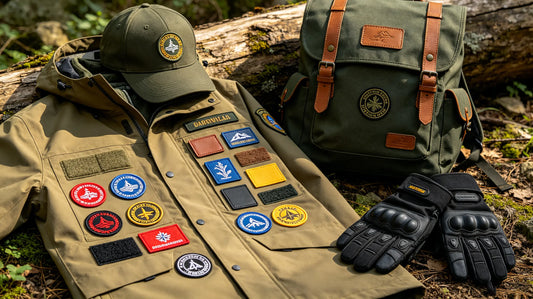
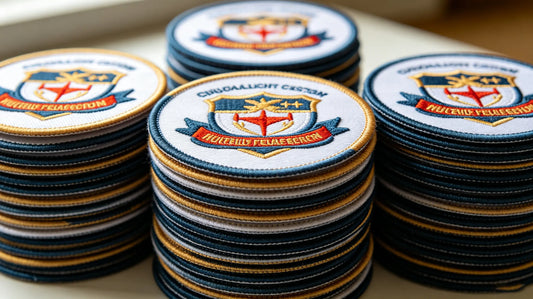
Embroidered patches are the most classic and mainstream custom patch material, widely recognized for their balanced texture, moderate hardness, and strong adaptability. Made of high-quality polyester embroidery threads stitched on durable twill fabric, they combine traditional craftsmanship with modern high-density stitching technology, suitable for almost all daily and commercial scenarios.
Core Advantages
First, it delivers excellent comprehensive performance. High-density embroidered patches feature clear lines, full texture, and outstanding wash resistance, able to withstand long-term repeated machine washing without thread loosening or fading. Second, it supports diverse craft upgrades, compatible with flat embroidery, 3D puff embroidery, laser cutting, and various border styles, realizing flat or three-dimensional visual effects. Third, it boasts ultra-high versatility, matching casual clothes, uniforms, backpacks, and tactical gear perfectly. Additionally, embroidered patches have moderate cost with high cost performance, ideal for both personal customization and bulk team orders.
Limitations
It cannot restore ultra-fine tiny details as perfectly as woven patches. Excessively small text and intricate lines may appear slightly fuzzy on high-density embroidered patches. Compared with PVC patches, it has weaker waterproof and dustproof performance for extreme outdoor environments.
Best Application Scenarios
Daily casual clothing, corporate uniforms, team identification patches, conventional outdoor decorations, and most bulk customized orders. It is the safest and most versatile all-round patch material in the industry.

2. Woven Patches (Best for Ultra-Fine Detailed Logos)
Woven patches are crafted through high-precision weaving technology with ultra-fine yarns, featuring ultra-thin, flat, and delicate texture. Different from embroidered patches that stack threads to form patterns, woven patches integrate patterns and fabrics as a whole, achieving pixel-level detail restoration without protruding thread layers.
Core Advantages
Its biggest strength is ultra-high detail restoration capability. It can perfectly restore tiny text, intricate lines, complex brand logos, and subtle pattern layers that embroidered patches cannot present. The overall texture is ultra-thin and flat without bulging, perfectly fitting thin close-fitting garments without affecting wearing comfort. It has accurate color calibration, natural color transition, and high-grade delicate visual effect, widely used for high-end brand identification customization.
Limitations
Woven patches cannot realize 3D three-dimensional effects, with single flat visual presentation. The texture is softer and less stereoscopic than embroidered patches, lacking a strong sense of hierarchy. It is not suitable for large-area bold pattern designs and trendy three-dimensional decorative needs.
Best Application Scenarios
High-end brand fine logos, luxury product labels, collar and cuff subtle embellishments, thin fashion garments, and formal business uniform identification patches. It is the top choice for delicate and low-key high-end customization.
3. PVC Rubber Patches (Heavy-Duty Waterproof & Durable)
PVC rubber patches are made of environmentally friendly soft rubber materials, formed by one-piece die-casting. They are famous for their excellent waterproof, dustproof, wear-resistant, and anti-aging performance, belonging to heavy-duty industrial-grade patch materials.
Core Advantages
PVC patches have extreme durability, resistant to rainwater soaking, sunlight exposure, friction, and high and low temperature changes, never fading or deforming in extreme outdoor environments. The one-piece rubber structure is tight and firm, with no thread loosening or peeling risks. It supports rich three-dimensional concave-convex textures, clear pattern layering, and tough and stereoscopic visual effect. Besides, the surface is easy to clean, just wipe with a damp cloth to remove stains, suitable for long-term high-frequency use.
Limitations
PVC material has certain hardness and thickness, slightly bulky on ultra-thin casual clothes, affecting soft fitting effect. The cost is higher than conventional embroidered and woven patches, not suitable for low-budget large-batch ordinary decoration.
Best Application Scenarios
Tactical military gear, outdoor adventure equipment, helmet and backpack identification, work safety uniforms, and extreme environment decorative patches. It is the exclusive heavy-duty durable material for outdoor and tactical scenarios.
4. Chenille Patches (Fluffy Aesthetic & Trendy Texture)
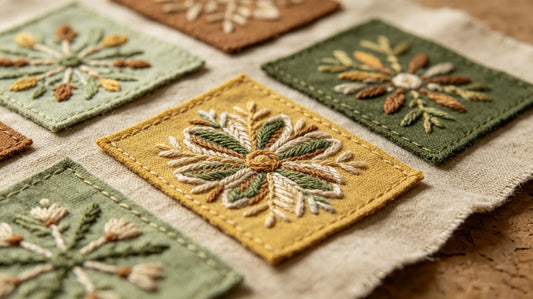
Chenille patches are popular trendy materials in recent years, made of high-quality chenille plush yarns, with unique fluffy and soft plush texture. Breaking the tough texture of traditional patch materials, they represent gentle aesthetic and casual fashion styles.
Core Advantages
Chenille patches have a super soft fluffy plush surface, warm and delicate touch, and strong visual texture sense, easily improving the overall grade of clothing matching. The color saturation is high, the color is full and bright, and the three-dimensional fluffy effect is prominent. The material is lightweight and skin-friendly, suitable for close-fitting wearing without irritation. It is the most popular aesthetic patch material for streetwear and daily trendy matching in 2026.
Limitations
The plush texture is easy to accumulate dust and fluff, requiring regular cleaning. It has poor resistance to high-intensity friction and long-term soaking, not suitable for frequent machine washing and extreme outdoor use. It cannot restore ultra-fine details, only suitable for large-area pattern and letter designs.
Best Application Scenarios
Fashion hoodies, casual jackets, canvas bags, student daily matching, aesthetic gift customization, and trendy brand merchandise. It focuses on fashion texture rather than heavy-duty durability.
5. Leather Patches (Premium Luxury & Vintage Texture)
Leather patches adopt genuine leather or high-quality PU leather materials, processed by laser engraving, embossing, and hollow-out craftsmanship. They feature unique retro luxury texture and tough leather luster, belonging to high-end customized patch materials.
Core Advantages
Leather patches have an irreplaceable high-grade retro texture, tough and delicate leather surface, and natural matte luster, perfectly matching vintage and streetwear styles. They support laser engraving, embossing, and debossing processes, with clear and wear-resistant patterns that will not fade easily. The material has good shaping performance, not easy to deform, and has a long service life under normal use.
Limitations
Leather patches cannot be washed frequently, and long-term water soaking will cause leather hardening, peeling, and aging. The cost is relatively high, not suitable for large-batch low-budget orders. The pattern restoration fineness is limited, not suitable for ultra-fine complex designs.
Best Application Scenarios
Vintage denim jackets, leather vests, high-end trendy brand clothing, luxury customized gifts, and retro style merchandise decoration. It is dedicated to high-end retro luxury styling.

6. Metallic Patches (Shiny High-End & Eye-Catching)
Metallic patches are made of metal foil or alloy materials, with electroplating and polishing processes, presenting dazzling metallic luster. They are niche high-end decorative materials, used for highlighting luxury and unique styling.
Core Advantages
Metallic patches have unique shiny metallic texture, extremely high recognition and eye-catching effect, instantly improving the luxury and fashion sense of outfits. The metal material is wear-resistant, pressure-resistant, and not easy to deform, with stable color and no fading. The fine carving process can present delicate pattern details, suitable for high-end customized logo decoration.
Limitations
Metallic patches are hard and slightly heavy, poor in wearing comfort, not suitable for large-area full-body clothing decoration. The cost is the highest among all patch materials, only suitable for high-end niche customization, not for bulk daily orders.
Best Application Scenarios
High-end fashion show outfits, luxury brand limited-edition merchandise, exclusive customized gifts, and local shiny decorative embellishments.
7. 2026 Full Patch Material Comparison Chart (Quick Selection)
We sorted out an intuitive all-dimensional comparison of mainstream patch materials to help you quickly screen the optimal option:
Detail Restoration: Woven > Embroidered > PVC > Leather > Chenille > Metallic
Durability & Wash Resistance: PVC > Embroidered > Leather > Woven > Metallic > Chenille
3D Stereoscopic Texture: PVC > Embroidered (3D puff) > Chenille > Leather > Woven
Soft Wearing Comfort: Woven > Chenille > Embroidered > Leather > PVC > Metallic
Fashion Aesthetic Sense: Chenille > Leather > Metallic > Embroidered > Woven > PVC
Cost Performance: Embroidered > Woven > PVC > Chenille > Leather > Metallic

8. Scenario-Based Zero-Mistake Material Selection Rules
Match materials according to usage scenarios, design requirements, and wearing environments to avoid all mismatched defects:
Choose Embroidered Patches If: You need balanced performance, cost-effective bulk orders, daily wearing, and versatile matching for uniforms and casual clothes. It is the most reliable universal choice for most customization needs.
Choose Woven Patches If: Your design contains ultra-fine logos, tiny text, and complex lines, and you pursue flat, delicate, and low-key high-end effects for thin garments and brand identification.
Choose PVC Patches If: Patches are used for outdoor tactical gear, frequently washed workwear, and extreme environments, requiring waterproof, wear-resistant, and anti-aging heavy-duty durability.
Choose Chenille Patches If: You pursue trendy fluffy texture, soft aesthetic style, and daily streetwear matching, focusing on visual fashion sense rather than extreme durability.
Choose Leather Patches If: You need retro luxury texture, vintage outfit matching, and high-end brand merchandise customization with unique tactile and visual grade.
Choose Metallic Patches If: You need shiny eye-catching local embellishment, high-end luxury styling, and niche exclusive customized decoration.
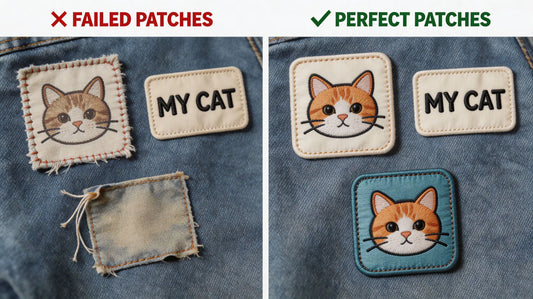
9. High-Frequency Material Mismatch Mistakes & Fixes
Most unsatisfactory patch effects come from material mismatch. We summarize common mistakes and targeted solutions:
Mistake 1: Using chenille patches for frequent washing workwear
Consequence: Chenille plush is easy to knot, shed hair, and deform after repeated washing, losing fluffy texture quickly. Fix: Replace with high-density embroidered or waterproof PVC patches for high-frequency washing scenarios.
Mistake 2: Choosing embroidered patches for ultra-fine brand logos
Consequence: Tiny lines and small text are stacked by threads, resulting in blurry details and unrecognizable patterns. Fix: Upgrade to high-precision woven patches to restore every subtle detail perfectly.
Mistake 3: Using rigid PVC patches for thin close-fitting clothes
Consequence: PVC thickness and hardness make the patch bulky, affecting garment fitting and wearing comfort. Fix: Choose ultra-thin woven or soft embroidered patches for lightweight close-fitting outfits.
Mistake 4: Matching leather patches for daily machine washing clothes
Consequence: Machine washing causes leather water absorption, hardening, and edge peeling, greatly shortening service life. Fix: Use water-resistant embroidered patches for daily washable garments.
Pro Tip: Material selection determines the upper limit of patch quality and usage effect. When you custom embroidered patches, confirm your design fineness, wearing environment, and washing frequency first to select the most suitable material.

Final Thoughts
2026 custom patch customization focuses more on scenario matching and material refinement. Different patch materials have their exclusive advantages and positioning: embroidered patches are universal and cost-effective, woven patches excel in fine details, PVC patches dominate heavy-duty durability, chenille patches lead aesthetic fashion, leather patches highlight retro luxury, and metallic patches create high-end shiny effects.
Blindly pursuing high-end materials or cheap low-cost options will lead to unsatisfactory customization results. Only by combining your design complexity, wearing scenarios, washing frequency, and aesthetic needs can you select the most matching patch material, maximizing the practicality, durability, and fashion sense of customized works.
Mastering this full material comparison guide helps you eliminate material mismatch risks in personal DIY and bulk commercial orders, ensuring every custom patch achieves the best visual texture and service life in its exclusive scenario.
FAQ
Q:What is the best material for custom patches?
A:There is no one-size-fits-all best material. Embroidered patches are the best all-round option for daily and bulk orders; woven patches suit fine detailed logos; PVC patches are ideal for outdoor durable use; chenille patches fit trendy aesthetic matching. You can get matched materials when you order custom embroidered patches.
Q:Which is better, embroidered or woven patches?
A:Embroidered patches have better three-dimensional texture and durability for daily and casual use. Woven patches are thinner, flatter, and more precise, perfect for ultra-fine logos and thin garments. Choose based on your design detail requirements.
Q:Are PVC patches better than embroidered patches?
A:PVC patches outperform embroidered patches in waterproof, dustproof, and outdoor wear resistance, ideal for tactical and extreme environments. But embroidered patches are softer, more comfortable, and more versatile for daily wearing scenarios.
Q:Are chenille patches durable for daily use?
A:Chenille patches are durable for normal daily wearing and gentle hand washing, but not suitable for frequent machine washing and high-friction outdoor use. They focus more on trendy fluffy texture than heavy-duty durability.
Q:What material is best for fine logo patches?
A:High-precision woven patches are the top choice for fine logos, tiny text, and complex line details, delivering ultra-flat and clear restoration effects that other materials cannot match.
Tags:
Previous
2026 Custom Patch Trends: Hottest Designs, Colors & Styles for Apparel & Gear
Next
Custom Patch Care & Washing Guide: How to Clean, Wash & Maintain Patches (2026)