2026 Custom Patch Mistakes to Avoid: Complete Beginner’s Ordering Guide
Most custom patch disappointments are not caused by poor factory craftsmanship, but by avoidable customer-side mistakes. Wrong size selection, mismatched materials, improper backing choices, overcomplicated designs, and incorrect aftercare can turn a perfect custom patch into a peeling, blurry, bulky, or unusable accessory.
For beginners and even bulk team buyers, it is easy to fall into common patch customization traps without professional experience. These errors lead to wasted budgets, delayed orders, unsatisfactory wearing effects, and repeated rework. To help you achieve zero-failure customization, we summarize the most frequent custom patch mistakes in 2026, covering design, size, material, backing, installation, washing, and ordering processes. Before you order custom embroidered patches, master this full avoidance guide to ensure every order delivers flawless results.
This comprehensive breakdown covers every high-risk customization link, with detailed mistake consequences and targeted solutions, suitable for personal DIY, team uniform batches, and commercial brand customization. Knowing these pitfalls will help you get premium custom embroidered patches that fit your outfits perfectly and last for years.
1. Common Patch Design Mistakes (Affects Clarity & Aesthetics)
Design is the foundation of patch presentation. Small design errors will directly cause blurry patterns, messy details, and low-grade visual effects, which cannot be fixed by post-production craftsmanship. Many low-quality looking custom items stem from poor artwork planning, even when you purchase professionally crafted embroidered patches.
Mistake 1: Overcrowding Too Many Elements
Many beginners pursue rich content and stack excessive text, icons, lines, and patterns on limited patch space. Crowded designs make details squeeze together, resulting in blurry embroidery, indistinguishable text, and messy overall layout.
Solution: Simplify redundant elements and retain only core logos, slogans, or totems. Follow the 2026 minimalist trend, reserve appropriate blank space, and ensure every detail is clearly displayed without stacking.
Mistake 2: Ultra-Small Text & Tiny Complex Lines
Using miniature text (below 4mm) and ultra-fine complex lines on embroidered patches is a typical beginner error. Embroidery threads have physical thickness, and overly tiny details cannot be restored clearly, turning into fuzzy thread clusters after production.
Solution: Enlarge small text properly or switch to high-precision woven patches for ultra-fine detail restoration. Avoid overly complicated line designs on small-sized patches to keep your custom embroidered patches sharp and legible.
Mistake 3: Unmatched Color Contrast
Using similar colors for patterns and backgrounds leads to low visual recognition, making the patch look dull and indistinct. High-saturation gaudy color matching also reduces the advanced sense and easily becomes outdated.
Solution: Adopt moderate color contrast to highlight core patterns. Follow 2026 mainstream low-saturation color schemes, avoid excessive color types, and control the total number of colors within 6 for cleaner presentation.
Mistake 4: Ignoring Border Matching
Randomly selecting border styles regardless of design style causes inconsistent overall texture. For example, sharp laser borders for retro vintage patches and thick merrow borders for minimalist delicate patches destroy aesthetic unity.
Solution: Match borders according to patch style: merrow borders for classic embroidered patches, laser cut borders for minimalist and irregular shaped patches.

2. Patch Size & Shape Mistakes (Affects Wearing Fit)
Improper size selection is one of the most common and wasteful mistakes. Unsuitable sizes make patches either obtrusive or inconspicuous, completely ruining the outfit matching effect.
Mistake 1: Blindly Oversized Patches
Pursuing large-area decoration blindly leads to oversized patches that bulge and wrinkle on thin clothes, affecting wearing comfort and making the overall styling bulky and heavy.
Solution: Match size according to wearing position: 2–3 inches for hats and cuffs, 3–4 inches for chest decoration, 4–6 inches for back large-area decoration. Prioritize lightweight and fitting effects for daily outfits.
Mistake 2: Too Tiny Patches for Core Logo Identification
Excessively small patches for team logos and brand identifiers make patterns unrecognizable, losing identification and decorative functions, resulting in ineffective customization.
Solution: Ensure the minimum size of identification patches is above 2.5 inches, guaranteeing clear pattern display and recognizable visual effects.
Mistake 3: Ignoring Shape Adaptability
Using regular square or circular shapes for irregular creative patterns leads to large blank edges, wasting customization space and reducing design fluency.
Solution: Adopt custom irregular laser cutting shapes that fit the pattern contour, removing redundant blank areas and improving overall delicacy and coordination.
3. Material & Backing Mismatch Mistakes (Most Damaging & Costly)
Material and backing mismatch is the primary cause of patch peeling, fading, poor texture, and short service life. Most durability problems stem from wrong scenario matching.
Mistake 1: Chenille Patches for Frequent Washing Workwear
Chenille plush has poor friction and water resistance. Frequent machine washing causes plush knotting, hair loss, and flatness, completely destroying the fluffy aesthetic texture.
Solution: Choose high-density embroidered or waterproof PVC patches for high-frequency washing workwear and outdoor gear. Durable, wash-resistant embroidered patches work best for uniform and workwear applications.
Mistake 2: Iron-On Patches for Heat-Sensitive Fabrics
Ironing heat-sensitive fabrics such as nylon, polyester blend, and elastic cloth with high temperature causes fabric shrinkage, scalding damage, and failed adhesive bonding.
Solution: Replace with sew-on or velcro backing to avoid high-temperature operation and protect fabric integrity.
Mistake 3: PVC Hard Patches for Thin Close-Fitting Clothes
PVC rubber has certain hardness and thickness. Matching it with ultra-thin hoodies and close-fitting casual clothes causes bulging and uneven fitting, reducing wearing comfort.
Solution: Choose ultra-thin woven or soft embroidered patches for lightweight daily outfits to ensure flat and soft fitting.
Mistake 4: Peel-Stick Patches for Long-Term Wearing
Many beginners use temporary self-adhesive patches for formal garment decoration. The adhesive fails quickly after sweat erosion and washing, leading to rapid peeling.
Solution: Upgrade to iron-on or sew-on backing for long-term wearing scenarios to ensure permanent firm adhesion.
Mistake 5: Woven Patches for Bold 3D Styling Needs
Woven patches can only present flat effects without three-dimensional layering. Using them for trendy 3D decorative patches results in dull and flat visual effects.
Solution: Choose embroidered patches with 3D puff craftsmanship for stereoscopic styling needs to enhance layered texture.

4. Installation & Application Mistakes (Causes Immediate Peeling)
Even with high-quality customized patches, wrong installation will cause immediate failure. Unstandardized ironing, sewing, and pasting are common installation pitfalls.
Mistake 1: Incomplete Ironing & Insufficient Pressure
Quick low-temperature ironing without pressure makes the heat-seal adhesive unable to melt and bond fully. The patches look attached but peel off after one wash.
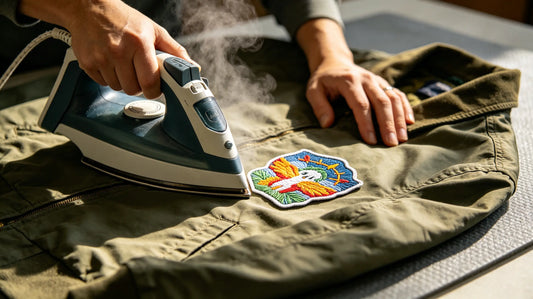
Solution: Use medium-high temperature ironing, apply even pressure for 10–15 seconds, and let cool completely for 24 hours to cure the adhesive before the first wash.
Mistake 2: No Cleaning Before Pasting
Pasting patches on dusty, damp, or oily fabric surfaces results in insufficient adhesion, causing edge warping and easy falling off.
Solution: Clean and dry the attachment position first, ensuring a smooth, dry, and dust-free surface before installation.
Washing clothes with velcro patches attached causes severe friction, velcro fluff accumulation, and adhesive weakening, greatly shortening service life.
Solution: Always remove velcro patches before machine washing and store separately.
5. Washing & Maintenance Mistakes (Shortens Patch Lifespan)
Neglecting targeted maintenance according to patch materials leads to premature aging, fading, and damage of high-quality customized patches.
Mistake 1: High-Temperature Washing & Tumble Drying
Hot water and high-temperature drying melt iron-on adhesive, accelerate thread fading, harden PVC materials, and crack leather patches.
Solution: Uniformly use cold water gentle washing and natural air drying for all patch-decorated clothes.
Mistake 2: Using Bleach & Strong Detergent
Corrosive detergents damage embroidery threads, leather surfaces, and plush fibers, causing irreversible fading and aging.
Solution: Use only neutral mild detergent to clean patch garments.
Mistake 3: Long-Time Sun Exposure & Soaking
Prolonged UV exposure causes color fading and material aging; long-term soaking erodes adhesive and loosens threads.
Solution: Avoid soaking for more than 10 minutes and dry in cool and ventilated shade.

6. Ordering & Budget Mistakes (Causes Overall Failure)
Unreasonable ordering plans and budget misunderstandings easily lead to unsatisfactory batch order effects and cost waste.
Mistake 1: Excessively Low-Budget Blind Bargaining
Over-pursuing low prices forces reduced stitching density, inferior threads, and rough craftsmanship, resulting in fuzzy patterns, loose threads, and easy fading.
Solution: Balance cost and quality. Prioritize high-density stitching and qualified environmental threads for formal batch orders to ensure durability.
Mistake 2: Skipping Pre-Production Samples for Bulk Orders
Direct mass production without sample confirmation leads to batch errors in color, size, and details, causing large-scale rework losses.
Solution: Confirm physical samples first for bulk orders above 50 pieces, verify color matching and details, and proceed with mass production after confirmation.
Mistake 3: Ignoring Copyright & Copyright Risks
Using unauthorized brand logos, celebrity patterns, and copyrighted images for customization leads to intellectual property infringement risks, especially for commercial sales use.
Solution: Use original designed patterns or obtain formal authorization for commercial custom patches to avoid legal risks.
7. Ultimate Zero-Mistake Custom Patch Checklist (2026)
Before confirming any custom patch order, check this list to eliminate all hidden risks:
✅ Design simplified without crowded tiny details, reasonable color contrast and blank space
✅ Size matches wearing position and fabric thickness, no oversized or undersized problems
✅ Material selected according to usage scenario (outdoor, daily, trendy, long-term wearing)
✅ Backing matched with fabric characteristics to avoid high-temperature and adhesive mismatch
✅ Installation method confirmed, mastering standardized ironing or sewing steps
✅ Cleared daily washing and maintenance taboos according to patch material
✅ Original design without copyright infringement risks for commercial orders
Pro Tip: Most patch failures are predictable and avoidable. When you custom embroidered patches, follow this mistake avoidance guide to ensure every order is perfect, durable, and stylish.

Final Thoughts
Custom patch customization is a systematic project covering design, size, material, backing, installation, and maintenance. Every small link error may affect the final presentation effect. The core of avoiding patch mistakes is scenario matching and rational customization, rather than blind pursuit of complexity, large size, and low price.
Overcomplicated designs cause blurry details, mismatched materials lead to durability failure, wrong installation causes peeling, and incorrect maintenance shortens service life. Mastering these high-frequency mistake avoidance methods can help beginners skip trial-and-error costs and achieve one-time successful customization.
By following the 2026 zero-mistake customization standard, you can create high-quality, durable, fashionable, and scenario-matched custom patches for personal DIY, team uniforms, and brand commercial projects, completely avoiding various customization failures.

FAQ
Q:What are the most common custom patch mistakes?
A:The top mistakes include overcrowded designs, wrong size selection, material and backing mismatch, improper ironing installation, high-temperature washing, and blind low-budget ordering. Avoiding these errors ensures perfect patch effects. You can get professional customization when you order custom embroidered patches.
Q:Why do my iron-on patches keep peeling off?
A:Peeling is mainly caused by insufficient ironing pressure, no adhesive curing time after installation, high-temperature washing, or matching with heat-sensitive fabrics. Standardized ironing and cold water maintenance can effectively solve the problem.
Q:Why do custom patch details look blurry?
A:Blurry details result from overcrowded design elements, ultra-small text lines, low stitching density, and mismatched materials. Simplifying designs and choosing woven patches for fine details can improve clarity.
Q:Is it risky to customize copyrighted patterns on patches?
A:Yes. Unauthorized use of copyrighted logos, celebrity images, and brand patterns for commercial custom patches will cause intellectual property infringement. It is recommended to use original designs for formal commercial orders.
Q:How to avoid bulky custom patches?
A:Avoid oversized sizes and rigid PVC materials on thin clothes. Choose thin woven patches or low-profile embroidered patches with flat craftsmanship to keep the outfit flat and fitted.
Tags:
Previous
Custom Patch Care & Washing Guide: How to Clean, Wash & Maintain Patches (2026)
Next
2026 Custom Patch Trends: Top 10 Popular Styles & Design Ideas