2D Flat vs 3D Puff Embroidered Patches: Key Differences & Which Is Better
When starting custom patch design projects, most brand owners and designers face a common choice dilemma. Both 2D flat embroidered patches and 3D puff embroidered patches are mainstream decorative accessories in the market, yet they show huge gaps in visual presentation and practical performance. Figuring out their core distinctions is the key to avoiding unsuitable customization results and saving unnecessary budget costs.
Many customers cannot tell the applicable boundaries of the two embroidery styles at first glance. Each type owns unique advantages and targeted usage crowds. Choosing the most matching style according to design positioning can greatly improve the finished product grade. If you pursue three-dimensional trendy texture, 3D puff embroidery patches will become your preferred decorative solution for apparel upgrading.
Fundamental Craft & Structural Differences
The root distinction between the two patches lies in manufacturing materials and internal structure. Traditional 2D flat embroidery adopts the most classic stitching technology. Embroidery machines weave colored threads directly on twill base fabric, and all patterns are formed by flat thread arrangement. The whole patch keeps thin and smooth surface without any raised structure, and the overall thickness stays at around 0.5mm.
Different from flat design, qualified custom 3D embroidered patches add an extra EVA foam supporting layer during production. Workers lay foam materials according to pattern outlines in advance, then use dense threads to fully wrap and fix the foam. After trimming and edge sealing processing, stable raised stereoscopic shapes are formed. The additional foam laying and wrapping procedures make 3D embroidery form a solid three-dimensional structure that flat craft cannot achieve.

Visual Texture & Aesthetic Style Gap
Visual feeling is the most intuitive difference between the two embroidery styles. 2D flat patches present elegant and steady plane effect. The neat thread layout can restore tiny lines and subtle color changes perfectly, delivering formal, rigorous and classic aesthetic temperament. This style fits low-key and restrained design positioning, suitable for occasions that do not need excessive visual impact.
On the contrary, 3D puff embroidered patches create rich light and shadow layering effect with raised outlines. The three-dimensional surface reflects light from multiple angles, making brand logos and pattern icons more eye-catching. The prominent stereoscopic texture brings strong fashion sense and premium atmosphere, which is very popular in streetwear, tactical style and personalized trend dressing design. Products decorated with 3D patches are easier to stand out in homogeneous market competition.

Durability & Wearing Comfort Comparison
Both two embroidery crafts have reliable wear resistance, but their comfort and anti-damage performance have different emphasis. 2D flat patches are thin and soft, closely fit fabric surface without bulging feeling. They will not rub against skin during wearing, bringing comfortable wearing experience for close-fitting clothes. The flat stitching structure is not easy to hook foreign objects, and maintains stable appearance after long-term daily use.
Supported by high-elastic compression-resistant foam, 3D puff embroidery patches have strong anti-extrusion capacity. The fully sealed thread layer isolates internal foam from moisture and dust effectively. Even after repeated machine washing and outdoor wind and sun exposure, the raised shape will not collapse or deform. Although it has certain thickness, flexible foam material ensures soft touch, and will not cause uncomfortable wearing feeling on conventional coats and headwear.

Design Adaptability & Detail Presentation Limit
2D flat embroidery has extremely high design compatibility, almost covering all pattern creation demands. Ultra-fine small fonts, complex gradient colors, dense delicate textures and intricate totem patterns can all be completely restored through flat stitching. It has almost no design threshold, and can perfectly present every creative detail designed by designers.
Pure 3D puff embroidered patches have certain production restrictions due to foam wrapping characteristics. Excessively thin lines and too small characters are not easy to shape stably, which may lead to blurred pattern edges. Bold thick lines, large-sized letters and simple geometric icons are the most suitable design forms for 3D craft. For complex patterns, professional suppliers adopt hybrid technology, combining flat embroidery details and 3D stereoscopic outlines to balance exquisite degree and three-dimensional effect.
Price Cost & Cost Performance Analysis
In terms of production cost, 2D flat patches have simpler working procedures and fewer material consumption, so the unit price is more economical. It is more cost-effective for large-batch formal uniform customization and mass commodity matching with limited budget.
3D puff embroidery needs extra foam materials and complicated wrapping stitching work, so the quotation is slightly higher than flat style. However, the premium texture brought by three-dimensional sense effectively improves product added value. Brands can appropriately raise selling price for apparel decorated with custom 3D embroidered patches. For limited edition products, trend accessories and high-end customized goods, the improved brand charm far exceeds the slight cost gap.

Applicable Scenarios & Selection Suggestions
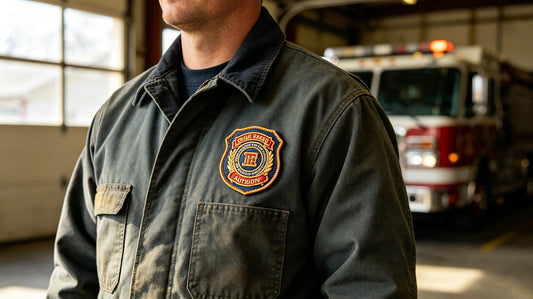
Clarifying targeted usage scenes can quickly lock the most suitable embroidery style. 2D flat patches are the optimal choice for corporate staff uniforms, official team signs, formal business clothing and products focusing on delicate detail expression. Its steady and restrained style conforms to formal occasion dressing atmosphere.
3D puff embroidered patches are widely applied in baseball caps, trendy hoodies, denim jackets, tactical backpacks and outdoor sports equipment. It highlights personalized charm and dynamic fashion temperament, perfectly matches youth trend culture and functional equipment styling. Many fashion brands also mix two styles in design, using 3D craft for core logo display and flat embroidery for auxiliary details, enriching overall visual hierarchy.

Frequently Asked Questions
Q1: Are 3D puff patches less durable than flat embroidery patches?
A: Not at all. High-quality foam and dense sealed stitching guarantee excellent washing and anti-friction performance, the service life is comparable to traditional flat embroidery.
Q2: Can complex logo designs be made into 3D puff patches?
A: Yes. Hybrid craft combines flat detail processing and 3D stereoscopic molding, realizing perfect presentation of complicated patterns.
Q3: Which patch style works best for cap customization?
A: 3D puff embroidered patches are the mainstream choice. The raised texture fits cap radian well and creates more attractive trendy visual effect.
Q4: Does 3D embroidery support small batch personalized orders?
A: Absolutely. No minimum order quantity rule applies, small sample orders and bulk wholesale all get consistent high-quality production standard.
Tags:
Previous
What Are 3D Puff Embroidered Patches? A Complete Beginner’s Guide
Next
Are 3D Puff Embroidered Patches Worth the Extra Cost? Full ROI Analysis