Custom 3D Embroidered Patches for Community Art Centers & Makerspace Branding
Core Advantages of 3D Embroidered Patches for Community Art Centers & Makerspaces
Community art centers and makerspaces serve as some of the most accessible creative hubs in American towns and cities. They bring together working artists, hobbyists, students, seniors and youth camp participants under one shared roof. In this environment, branding cannot feel overly corporate or sterile. It needs to look hand‑made, approachable and durable enough to stand up to real studio work.
Standard screen‑printed logos and heat transfers may seem like a low‑cost solution at first, but they wear out quickly in active makerspace environments. Facilitators and volunteers move between painting studios, woodworking benches, textile stations, ceramic wheels and digital lab areas. Their clothing comes into contact with acrylic paint, wood dust, clay, glue, solvent residues and frequent commercial washing. Cheap printed logos crack, peel and fade after a few months, making staff uniforms look unkempt and undermining the center’s professional credibility.
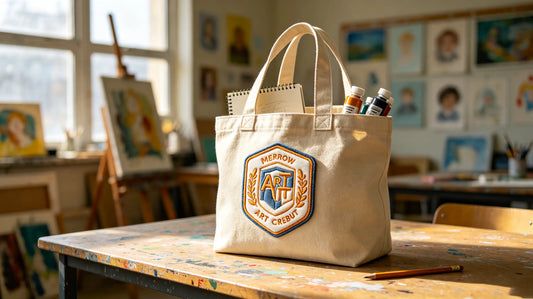
Custom 3D embroidered patches solve this problem by combining durability, texture and brand personality. High‑density polyester thread holds up against repeated washing, abrasion and studio contaminants. The raised foam structure adds a tactile, hand‑crafted feel that fits naturally with art centers, maker fairs and community workshop culture. Unlike flat embroidery, 3D patches create enough visual interest to stand out on dark aprons, hoodies, tote bags and camp uniforms without looking generic.
Safety and practicality are also important in shared creative spaces. Rigid metal pins and hard plastic name badges can scratch work tables, damage unfinished artwork, catch on tools and even pose minor safety risks during hands‑on activities. Foam‑backed 3D embroidered patches remain soft and flexible. Full merrow wrapped edges seal thread ends, reducing the chance of dust, paint flecks and craft debris becoming trapped in the stitching. This makes them more suitable for daily studio use than hard badges or delicate name tags.
Beyond staff apparel, custom patches create new opportunities for community engagement and small‑scale retail. Many American art centers and makerspaces operate on mixed revenue models, relying on class fees, memberships, grants, fundraisers and pop‑up sales. Patches work well as participant rewards, camp completion gifts, volunteer appreciation tokens and low‑cost retail items. They can be sewn onto canvas aprons, tote bags, artist jackets, sketchbook covers, duffle bags and camp swag.
Small‑batch custom orders are especially useful for community art centers. They allow studios to test new designs for summer art camps, holiday workshops, first Friday events, local maker fairs and fundraising campaigns without overstocking finished merchandise. If a design sells well, centers can reorder; if it does not, they avoid sitting on large inventory. This flexibility makes patches a practical choice for nonprofits, local art organizations and independently run makerspaces.

Design Guidelines for Community Art Center 3D Embroidered Patches
Designs for art centers and makerspaces should balance creativity with embroidery durability. Brand text must be legible from a distance, especially when placed on work aprons, hoodies and event merchandise. Bold sans‑serif fonts generally work better than thin script lettering, which can lose clarity when converted into stitched embroidery over 3D foam.
Popular design motifs include paintbrushes, artist palettes, spray cans, scissors, gears, woodworking planes, abstract geometric shapes and hand‑drawn mark‑making elements. These icons reflect the mixed‑media nature of most makerspaces and feel more authentic than overly polished corporate symbols. However, complex multi‑layer illustrations should be simplified before production. Tiny lines, fine shading and extremely detailed faces may look good on a digital mockup, but they do not always translate well to durable embroidery.
Size selection should match real‑world use. For facilitator aprons and staff hoodies, patches between 62mm and 82mm offer good visibility without feeling bulky. For tote bags, sketchbook covers and camp swag, sizes between 44mm and 58mm are often more appropriate. Patches smaller than 35mm are generally not recommended for main branding, because the 3D foam effect becomes less noticeable and small icons lose recognizability.
Color palettes can be more playful than in traditional corporate environments, but they should still remain practical. Recommended colors include burnt orange, vivid teal, mustard yellow, deep indigo, soft coral, forest green and off‑white. These shades reflect the energetic, creative atmosphere of art studios and work well on both light and dark garments. Limiting each patch to four to six thread colors helps control production cost and shortens sampling time.
Shape‑wise, irregular organic outlines, soft shields, rounded rectangles and free‑form contours are all suitable for art center branding. Rounded edges reduce snags on tools, fabric, equipment and artwork. They also feel friendlier and less institutional than sharp, angular badge shapes.

Material & Backing Selection
For community art centers and makerspaces, the best combination is colorfast polyester embroidery thread paired with medium‑density 3D foam. Polyester thread resists fading, abrasion, paint stains and repeated washing. It holds color better than cheaper alternatives under demanding studio conditions. Medium‑density foam creates a noticeable raised 3D embroidered texture without making the patch stiff or uncomfortable.
Extra‑thick rigid foam should be avoided. It can catch on work tables, tools, fabric edges and artwork, which defeats the purpose of a practical studio badge. The goal is a patch that feels durable, textured and flexible, not heavy or bulky.
✅ Sew‑on backing This is the top choice for full‑time facilitator aprons, volunteer uniforms and frequently used participant merchandise. Sew‑on patches stay attached through heavy washing, daily studio wear and constant movement. They are ideal for programs that require long‑term durability.
✅ Iron‑on backing Iron‑on patches work well for festival souvenirs, pop‑up market items and one‑off workshop gifts. They are easy to apply and suitable for low‑to‑moderate use. However, they are not recommended for daily‑worn staff aprons, because frequent washing and studio abrasion can weaken the adhesive over time.
✅ Hook and loop backing Hook and loop patches are useful for seasonal staff, summer camp counselors, pop‑up events and rotating workshop teams. They allow centers to swap patches between different garments without sewing. This is especially helpful when multiple programs, events or camp sessions run throughout the year.

Production Standard & Quality Control
Merrow overlocked edges are essential for makerspace patches. Raw hot‑cut edges fray quickly under heavy studio use, repeated washing and constant contact with dust and debris. Merrow edges seal the perimeter, reduce loose threads and create a cleaner, more professional finish.
Foam height should be kept between 1.5mm and 2.2mm. This range delivers a distinct three‑dimensional effect while keeping the patch flexible. Too little foam makes the 3D effect unnoticeable; too much foam makes the patch stiff and more likely to catch on tools and artwork.
Pre‑production physical samples are strongly recommended before bulk ordering. Art centers and makerspaces often have tight event schedules, especially before summer camps, holiday workshops and local maker fairs. Checking samples early helps avoid costly mistakes. Centers should review foam height, color accuracy, merrow edge tightness, stitch density and overall legibility. Icons, brand text and small workshop graphics should remain clear after embroidery conversion.
When bulk orders arrive, a full inspection is necessary. Quality checks should include consistent stitch tension, uniform merrow borders, zero exposed foam and no loose threads. Patches with distorted patterns, uneven edges, thread shedding or poor color matching should be rejected. In community‑focused spaces, small details like these directly affect how participants, volunteers and visitors perceive the organization.

Installation, Washing & Maintenance Guide
For sew‑on patches, stitching completely around the outer perimeter provides the best durability. This is especially important for aprons, hoodies and tote bags that will be used regularly in the studio. Strong thread and even stitching help the patch survive repeated washing and daily wear.
When applying iron‑on patches, the heat press temperature should be set to 150℃ with even pressure for 12 to 15 seconds. It is always a good idea to test on scrap fabric first, because some garment materials react differently to heat. Iron‑on adhesion will degrade over time with frequent laundering, so this method is better for souvenirs than for daily uniforms.
Embroidered art‑center garments should be washed inside out on a cold gentle cycle. Bleach should be avoided because it fades thread colors and can damage the internal foam structure. Heavily soiled areas near the patch should be cleaned gently rather than scrubbed directly over the embroidery. Tumble drying on low heat or air drying is recommended. High heat can permanently compress 3D foam and destroy the raised texture.
When storing retail merchandise, heavy objects should not be stacked directly on embroidered surfaces. This helps preserve the three‑dimensional shape and keeps patches looking ready for sale or event distribution.

Common Defects & Troubleshooting
Foam flattening is usually caused by low‑density foam, high‑temperature drying or heavy compression during storage. The solution is to use medium‑density foam and follow cold‑wash, low‑heat drying instructions.
Fraying edges occur when hot‑cut edges are used instead of merrow overlocking. All orders for studio‑use patches should explicitly specify merrow wrapped edges.
Snags and loose threads are often the result of insufficient stitch density. This should be confirmed during the sample approval stage, especially for patches that will be used in active workshop environments.
Color mismatches between sample and bulk production can be avoided by approving physical thread swatches before manufacturing. Digital proofs are helpful, but physical swatches provide the most accurate representation under real lighting conditions.
FAQ
Will 3D embroidered patches hold up in a paint‑splattered makerspace environment? Yes. Polyester thread and merrow‑sealed edges offer excellent resistance against paint splatters, dust, repeated washing and general studio wear.
Can patches be used as rewards for summer art camp participants? Absolutely. Custom patches are popular keepsakes for youth campers, teen art programs and adult workshop participants. They are low‑cost, shareable and easy to attach to backpacks, hoodies and tote bags.
Which backing is best for daily‑use facilitator art aprons? Sew‑on backing provides the strongest durability for aprons subjected to daily studio work, frequent washing and constant movement.
Can small‑batch custom orders support pop‑up events and fundraisers? Yes. Small‑batch production allows art centers to create limited‑edition designs for maker fairs, first Friday events, holiday workshops and nonprofit fundraisers without large inventory risk.
Can complex hand‑drawn artwork be converted into 3D embroidered patches? Yes. Intricate details are simplified for embroidery durability, but the original hand‑drawn character and brand identity can usually be preserved.
Tags:
Previous
Custom 3D Embroidered Patches for Yoga Studios & Wellness Retreat Branding
Next
Custom 3D Embroidered Patches for Independent Bookstores & Local Bookshop Brand Merchandise