Embroidered vs Woven Patches: Key Differences & How to Choose
Embroidered patches and woven patches are two of the most popular fabric-based custom patches on the market. They share similarities such as soft texture, good wash resistance and diverse customization options, so many buyers struggle to tell them apart and select the right style.
In fact, the two are fundamentally different in production craftsmanship, visual texture, detail performance, thickness, cost and applicable scenarios. Choosing blindly will lead to unsatisfactory finished effects or unnecessary budget waste. For example, patches with tiny text will turn blurry if made with ordinary embroidery, while woven patches cannot create the three-dimensional texture that embroidery is famous for.
This in-depth comparison guide fully analyzes embroidered and woven patches from craftsmanship, appearance, details, durability, price and usage. After reading, you can quickly distinguish the two and make targeted choices according to your design, budget and usage. Custom 3D embroidered patches provides both embroidered and woven patch solutions to meet diverse customization demands.

Basic Craft Overview
Embroidered Patches
Embroidered patches are made by stitching colored threads onto a base fabric with embroidery machines. Different patterns, colors and layers are formed through dense stitches. It is the most traditional and classic patch craft with a long history of application.
Woven Patches
Woven patches adopt professional weaving technology. Colored yarns are interlaced and woven together directly to form complete patterns and text during the fabric production process. The whole patch is a piece of specially woven thin fabric, without later stitching.
1. Visual Texture & Thickness
Embroidered Patches
- Texture: Obvious raised stitch surface, strong three-dimensional sense. You can clearly feel the uneven thread texture when touching by hand.
- Thickness: Relatively thick. Flat embroidery has certain thickness, while 3D puff embroidery is more bulging.
- Overall Style: Classic, retro and layered. The unique stitch texture brings a strong handmade feeling, which is very recognizable.
Woven Patches
- Texture: Flat and smooth surface, consistent with ordinary woven cloth. No raised stitches, the touch is delicate and soft.
- Thickness: Ultra-thin, almost close to the thickness of ordinary clothing fabric, no obvious bulging after being attached to clothes.
- Overall Style: Neat, delicate and minimalist, focusing on flat pattern presentation.
Summary: Choose embroidery for three-dimensional texture; choose woven for flat and thin effect.
2. Detail & Text Performance
This is the biggest functional difference between the two crafts, and also the core basis for selection.
Embroidered Patches
- Advantages: Excellent performance for large patterns, bold lines and large-size text. The layered stitches make large-area patterns full and vivid.
- Limitations: Poor for ultra-fine lines, tiny letters and dense small patterns. Too small details will cause threads to stick together and become blurry. Generally, the minimum readable text height is 4mm.
- Color note: Suitable for matching 3–6 mainstream colors, too many color transitions will increase production difficulty.
Woven Patches
- Advantages: The top choice for fine details and miniature text. Dense weaving structure can restore tiny fonts, thin lines and complex small patterns clearly. The minimum readable text height can reach 2mm.
- Limitations: Cannot form three-dimensional raised effects. Pure flat presentation, unable to create puff or layered stereo vision.
- Color note: Rich color layering, suitable for designs with many color segments and delicate pattern transitions.
Summary: Use woven patches if your design has lots of small text and fine lines; use embroidered patches for large graphics and bold slogans.

3. Durability & Wash Resistance
Both are fabric products with good durability, but there are subtle differences in long-term use.
Embroidered Patches
- High-density embroidery has strong friction resistance. Normal washing and daily friction will not cause large-area thread shedding.
- Long-term repeated washing may lead to individual loose threads at the edge of stitches; proper border processing can effectively improve anti-fray performance.
- Thick structure is not easy to deform, suitable for long-term wearing on outdoor gear and work uniforms.
Woven Patches
- The integrated weaving structure makes the whole patch connected as one, and there is no problem of loose stitches. The overall stability is excellent.
- Ultra-thin fabric is soft and fits closely with clothing. It will not warp or bulge after long-term bending and extrusion.
- Not easy to fade after repeated washing, and the pattern remains clear for a long time.
Summary: Both are durable. Embroidery resists heavy friction; woven patches keep stable under frequent bending.
4. Shape & Border Adaptability
Embroidered Patches
- Mainly suitable for regular shapes such as round, square and shield. It is also available for common irregular shapes, but overly complex special contours are not recommended.
- Matches well with merrow border, heat cut border. Merrow overlock border can further strengthen the three-dimensional sense and durability.
Woven Patches
- Flexible shape adaptation. Supports various regular and irregular outlines, and laser cutting can achieve ultra-precise special shapes.
- Heat cut and single stitched borders are more commonly used, keeping the overall flat and thin style. Thick merrow borders are rarely matched.

5. Price & Cost Performance
Price is a key factor for bulk orders, and the two have different cost rules affected by size, details and quantity.
Embroidered Patches
- Unit price is slightly higher than woven patches of the same size. The larger the pattern area and the higher the thread density, the higher the cost.
- Cost increases obviously when adding 3D puff effect and extra colors.
- Cost-effective for medium and large size patches with simple details, suitable for team and uniform bulk orders.
Woven Patches
- Lower unit price for small and medium-sized patches, especially cost-effective for products with fine text and multiple colors.
- The price change is not obvious with the increase of color types, which is an advantage for multi-color delicate designs.
- More competitive in small label, mini patch and high-volume thin patch orders.
Summary: For budget control, choose woven patches for small multi-color detailed designs; embroidered patches are better for large pattern designs pursuing texture.
6. Suitable Usage Scenarios
Best Use Cases for Embroidered Patches
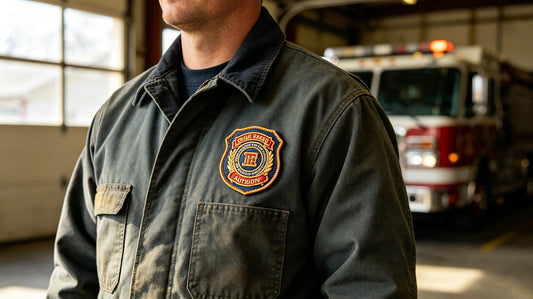
- School emblems, sports team patches and uniform main badges (pursue classic texture and three-dimensional sense)
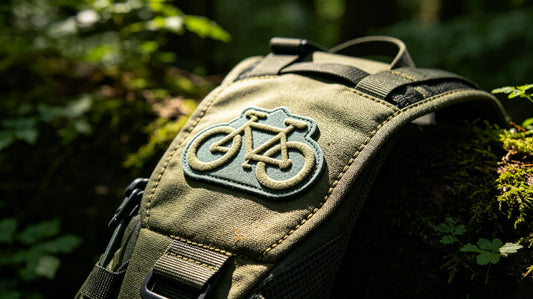
- Tactical morale patches, outdoor gear decorations (resist friction and wear)
- Event souvenirs, collection patches and gift peripherals (highlight layered craft sense)
- Large decorative patches on jackets, backpacks and hats (large pattern display)
Best Use Cases for Woven Patches
- Clothing brand labels, neck labels and size labels (ultra-thin, no foreign body sensation)
- Uniform auxiliary marks, name tags and small identification patches (require clear tiny text)
- High-end fashion apparel, formal wear accessories (pursue minimalist and delicate flat style)
- Mini patches and thin decorative labels (fit close-fitting clothes without bulging)

Quick Selection Cheat Sheet
Choose Embroidered Patches if you have these demands:
✅ Want three-dimensional stitch texture and classic retro style
✅ Design with large patterns, bold lines and big text
✅ Use on jackets, hats, backpacks and outdoor gear
✅ Pursue strong friction resistance and layered visual effect
Choose Woven Patches if you have these demands:
✅ Design contains a lot of tiny text, thin lines and fine details
✅ Need ultra-thin patches for close-fitting clothing and internal labels
✅ Prefer flat, minimalist and delicate visual style
✅ Multi-color delicate patterns, or bulk order of small-sized patches
Common Misconceptions to Clarify
-
"Woven patches are better than embroidered patches"Wrong. They are just different crafts, not divided into good or bad. It depends on whether they match your design and usage.
-
"Embroidered patches are easy to damage"High-density embroidered patches with qualified borders have excellent durability, which can fully meet the needs of daily wearing and repeated washing.
-
"Woven patches cannot make complex patterns"On the contrary, woven patches are better at restoring complex fine patterns and multi-color details, but they cannot create three-dimensional effects.
-
"Embroidered patches are always more expensive"For oversized full-coverage embroidery, the cost is higher; for small patches with simple patterns, the price gap between the two is very small.

Final Summary
The core difference between embroidered patches and woven patches lies in craft, thickness, texture and detail performance.
Embroidered patches rely on stitching to form a three-dimensional layered effect, suitable for large patterns, team emblems and decorative scenes pursuing texture. Woven patches are integrated woven fabrics, ultra-thin and delicate, excelling in presenting tiny text and fine lines, ideal for clothing labels, close-fitting apparel and mini identification marks.
Before placing an order, sort out your design elements, patch size, wearing position and budget. Matching the correct craft can maximize the display effect and control the cost reasonably. Both crafts have their own characteristics, and reasonable selection is the key to getting satisfactory custom patches.
Frequently Asked Questions
Q1: Which is thinner, embroidered or woven patches?
A: Woven patches are ultra-thin, much flatter than ordinary embroidered patches.
Q2: Which one is better for patches with small letters?
A: Woven patches can display tiny text more clearly.
Q3: Which craft has better three-dimensional effect?
A: Embroidered patches, especially 3D puff embroidery, have prominent stereo texture.
Q4: Which is cheaper for bulk small label orders?
A: Woven patches have better cost performance for small-sized label orders.
Tags:
Previous
Morale Patches 101: History, Meanings & Custom Design Guide
Next
PVC Rubber Patches: Features, Pros, Cons & Application Guide