Patch Sizing Guide: Standard Dimensions for Uniforms, Hats, Vests & Bags
Selecting a proper size is one of the most critical steps for custom patches. A patch that is too large will crowd the garment, restrict movement and look bulky; one that is too small loses display effect and becomes unrecognizable from a distance. Different wearing positions, clothing types and usage scenarios have fixed standard dimensions formed by long-term industry practice.
This guide sorts out universal standard patch sizes for common positions and items, including uniforms, hats, vests, jackets, sleeves and bags. It also includes sizing principles, measurement methods and custom tips to help you pick the ideal size at one time and avoid rework caused by improper dimensions. Custom 3D embroidered patches supports customized patches in all standard and special sizes to meet various matching needs.

Basic Size Classification Definition
First clarify the general size classification of patches, which is convenient for quick selection:
- Mini Patches: Below 4 cm, ultra-small identification marks and decorative accents
- Small Patches: 4 cm – 5.5 cm, for shoulders, hat sides, sleeves and auxiliary logos
- Standard Medium Patches: 5 cm – 7 cm, universal mainstream size for chest main logos
- Large Patches: 7 cm – 9 cm, for jacket backs, backpack main areas
- Oversized Patches: Above 9 cm, dedicated for vest back large totems and full-graphics
Standard Sizes by Wearing Position
1. Chest Position (Most Widely Used)
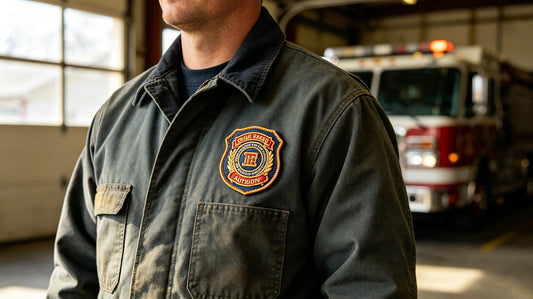
Applicable to staff uniforms, sports jerseys, casual jackets, work clothes, club costumes.
- Recommended size: 5 cm – 7 cm (medium standard size)
- Best proportion: Occupies about 1/4 ~ 1/3 of the chest display area
-
Notes:
- For slim-fit and tight uniforms, choose 5 cm – 6 cm to avoid bulging.
- For loose outdoor jackets and thick coats, choose 6 cm – 7 cm for better visual balance.
- Keep the same size for all team members to ensure unified style.
2. Shoulders
Applicable to all types of jackets, vests, tactical gear and riding clothes.
- Recommended size: 4 cm – 5.5 cm (small size)
- Notes: Do not use oversized patches, which will affect arm lifting and movement. Symmetrical layout on left and right shoulders for team uniforms.
3. Sleeves (Upper Arm & Forearm)
- Upper arm: 4.5 cm – 6 cm, suitable for league badges, activity patches and honor marks
- Forearm: 4 cm – 5.5 cm, for slogans, route patterns and small totems
- Forbidden: Do not place large patches at elbow bending positions, easy to deform and wear.
4. Collar & Neckline
Belongs to decorative auxiliary position.
- Recommended size: Below 4 cm (mini patch)
- Style: Simple small icons, abbreviations or tiny letters, keep concise.

Standard Sizes by Product & Item Type
1. Baseball Caps & Bucket Hats
Front main position (core display):
- Adult hats: 5 cm – 7 cm
- Youth & kids hats: 4 cm – 5.5 cm
Hat sides & back:
- Recommended size: 3.5 cm – 5 cm, mini to small size
Notes:
The curved surface of the hat has limited space. Do not use patches larger than 7 cm, otherwise edges will warp easily.
2. Biker Vests & Tactical Vests
Back main large patch (core logo/totem):
- Conventional: 9 cm – 12 cm (oversized)
- Extra large graphic design: Up to 15 cm
Chest & abdomen morale patches:
- Regular matching: 5 cm – 8 cm
Notes:
Reserve gaps between multiple patches on the vest to avoid overcrowding and affecting gear use.
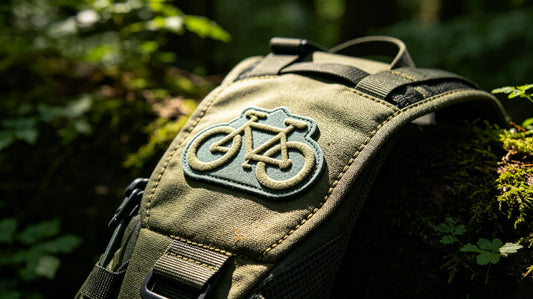
3. Backpacks, Travel Bags & Luggage
Front main panel:
- Main logo: 7 cm – 10 cm (large size)
Shoulder straps & side pockets:
- 4 cm – 6 cm (small to medium size)
Luggage surface:
- 6 cm – 8 cm, moderate size, not easy to scratch during transportation.
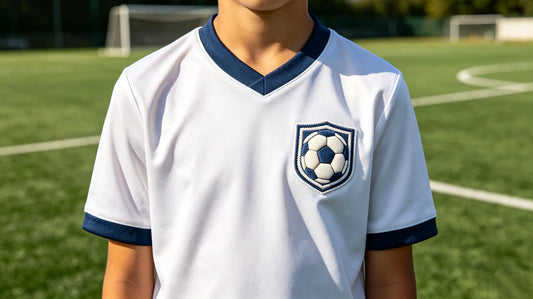
4. Sports Jerseys & Training Suits
Chest team logo: 5 cm – 6.5 cm
Sleeve league/sponsor patch: 4 cm – 5 cm
Shorts & trouser legs: 4 cm – 5.5 cm
Notes:
Sports apparel is close-fitting, strictly avoid oversized thick patches to guarantee movement comfort.
5. Kids Uniforms & Children’s Clothing
All positions need to be reduced accordingly based on adult sizes:
- Chest: 4 cm – 5.5 cm
- Shoulders & sleeves: 3.5 cm – 4.5 cm
- Hats for kids: 3.5 cm – 5 cm

Size Selection by Patch Craft
Different materials and crafts have different adaptability to sizes, which must be matched together:
1. Embroidered Patches
- Medium size (5–7 cm): Best display effect, balanced texture and proportion
- Oversized (>9 cm): Available, but choose high-density embroidery to prevent sagging
- Mini (<4 cm): Not recommended if with small text, easy to blur
2. 3D Puff Embroidery
- Optimal size: 5 cm – 8 cm
- Not recommended: Below 4 cm (poor stereo effect) and above 10 cm (easy to collapse under pressure)
3. PVC Rubber Patches
- Full size range available (3 cm – 15 cm)
- Irregular shapes and hollow-out designs are not limited by size
- Ultra-small PVC (<3.5 cm): Ensure line width to avoid breakage
4. Woven Patches
- Excellent for mini and small sizes (3.5–6 cm), clear tiny details
- Large size (>8 cm): Lack three-dimensional texture, weak visual impact

How to Measure & Confirm Patch Size Correctly
- Measure the available space first: Use a ruler to measure the maximum width and height of the target position on clothes or bags. The patch size must be 1–2 cm smaller than the available space.
- Square/Round/Oval patches: Take the longest side as the reference size.
- Irregular patches: Calculate based on the outer contour maximum width and height.
- Pre-mock test: Cut a paper of the same size and paste it on the position to check the proportion before formal customization.
Practical Sizing Tips for Bulk Team Orders
- Unify the size of the same position for all members to keep the team image neat.
- For mixed male and female teams, choose the middle size to adapt to both loose and slim figures.
- If matching multiple patches on one garment, follow the rule "large main + small auxiliary" to form layers.
- Reserve 0.5 cm gap between adjacent patches to prevent mutual extrusion and friction.
Common Size Mistakes to Avoid
- Using oversized patches on hat fronts and tight jersey chests, causing edge warping and poor comfort.
- Choosing ultra-small patches for main logos on vest backs, resulting in weak display effect.
- Designing 3D puff patches larger than 10 cm, easy to be squeezed and deformed.
- Using mini woven patches with multiple lines of text, leading to unreadable content.
- Ignoring the actual available space and making patches full of the area, lacking aesthetic blank space.

Final Summary
The core of patch sizing: match the dimension to the position, craft and usage scenario.
- Chest main logo: 5–7 cm (universal standard)
- Hat front: 5–7 cm for adults, 4–5.5 cm for kids
- Vest back main patch: 9–12 cm oversized
- Shoulders & sleeves: 4–5.5 cm small size
- Collar & hat sides: below 4 cm mini size
Before customization, measure the actual space and do a paper mock-up. Reasonable size can maximize the beauty and practicality of custom patches.
Frequently Asked Questions
Q1: What is the most common standard patch size for uniform chest?
A: 5 cm to 7 cm is the universal standard size.
Q2: What size is best for the front of adult baseball caps?
A: 5 cm to 7 cm works best.
Q3: What’s the proper size for the large main patch on a vest back?
A: 9 cm to 12 cm is the mainstream choice.
Q4: Are 3D puff patches suitable for sizes over 10 cm?
A: Not recommended, easy to collapse after extrusion.
Tags:
Previous
Embroidered Patches vs PVC Patches: Full Comparison & How to Choose
Next
Woven Patches Complete Guide: Features, Design Rules & Best Applications