Sports Team Patches: Custom Designs, Uniform Placement & Craft Selection
Custom team patches are essential accessories for all kinds of sports teams, from amateur clubs and school teams to professional leagues. Beyond simple decoration, they carry team logos, names, honors and team culture, unifying visual style, boosting morale and building a strong sense of belonging among players.
Sports apparel faces frequent movement, sweating, repeated washing and outdoor exposure, so craft, size, placement and durability have strict requirements. This guide shares mainstream design styles, standard placement rules, recommended materials, size specifications and customization tips for sports team patches, helping you create practical and stylish team emblems. Custom 3D embroidered patches offers full-service customization for sports teams, clubs and sports events.

Main Types of Sports Team Patches
1. Main Team Logo Patches
The core emblem, featuring team name, mascot, icon and official team colors. Used as the primary identification on all player uniforms, the most widely produced patch type.
2. League & Association Patches
Official badges of leagues, sports associations or tournaments. Required to be worn on jerseys during formal matches, following unified size and style regulations.
3. Honor & Championship Patches
Customized for championships, top rankings, tournament participation and milestone achievements. Record team glory, often collected and preserved by players.
4. Number & Name Auxiliary Patches
Small decorative patches next to jersey numbers and names, or position identification patches for players, enriching uniform details.
5. Sponsor & Partner Patches
Branded patches for team sponsors, placed in designated areas of uniforms as part of commercial cooperation.
Popular Design Styles for Sports Patches
1. Classic Shield Style
The most traditional sports patch shape. Solid outline, stable and powerful, suitable for ball games, track and field and combat sports. Works well for both school teams and professional teams.
2. Circular & Oval Style
Smooth lines, concise and international. Commonly used for league badges, event emblems and international sports teams, easy to recognize from a distance.
3. Dynamic Irregular Style
Streamlined outlines, sharp angles and dynamic contours. Match high-speed sports such as basketball, football, racing and extreme sports, highlighting passion and vitality.
4. Retro Vintage Style
Retro color matching, old texture and classic fonts. Popular for traditional sports clubs and nostalgic themed teams, full of historical charm.
5. Minimalist Modern Style
Simple lines, single or dual-color design, no complicated patterns. Fit modern casual sports, fitness teams and youth amateur groups.

Standard Placement Rules on Sports Uniforms
Follow industry common layout to keep uniforms neat and standardized:
1. Chest Position (Main Logo)
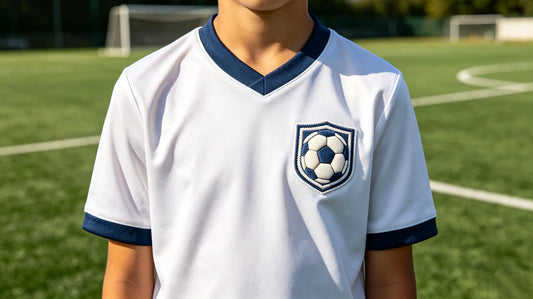
- Left chest: Default position for team main logo patch.
- Size: 5cm–7cm, moderate size, will not restrict arm movement during exercise.
- Rule: All team members keep the same position and size for unified appearance.
2. Sleeves
- Upper sleeve: League patches, sponsor logos or honor patches.
- Forearm: Commemorative patches and activity badges.
- Size: 4cm–5.5cm, avoid oversized patches affecting swinging movements.
3. Shoulders
Small icon patches, team abbreviations or mini mascot patterns. Size below 5cm, delicate and unobtrusive.
4. Back & Collar
- Upper back: Large-size championship patches or special event logos (8cm–12cm).
- Collar: Tiny team mark or slogan patches, as subtle decoration.
5. Shorts & Training Suits
Small logo patches on the side of shorts or trouser legs, size 4cm–6cm, symmetrical layout on both sides.

Recommended Crafts & Backings for Sports Scenarios
Combined with sweat resistance, wash resistance and activity characteristics, select materials as follows:
1. High-Density Flat Embroidery (First Choice for Most Teams)
- Advantages: Firm stitches, strong sweat and wash resistance, bright colors, classic sports texture.
- Applicable: Main team logos, league badges, long-term use uniforms.
- Edge: Merrow edge to prevent fraying after long-term friction.
2. 3D Puff Embroidery
- Advantages: Eye-catching 3D effect, strong sense of hierarchy, more dynamic for mascot and pattern designs.
- Applicable: Training uniforms, fan apparel, team peripheral products.
- Note: Not recommended for jersey main logos; easy to deform during intense exercise and repeated extrusion.
3. PVC Rubber Patches
- Advantages: Fully waterproof, sweat-proof, stain-resistant, easy to wipe clean, flexible and not stiff.
- Applicable: Outdoor sports, water sports, cycling and racing teams.
- Note: Slightly thick, not suitable for tight-fitting professional jerseys.
4. Woven Patches
- Advantages: Ultra-thin and flat, restore tiny text and detailed lines clearly.
- Applicable: Mini name patches, league fine-print badges and slim auxiliary logos.
Backing Selection
-
Sew-On (Most Recommended)
Highest durability, never falls off during running, jumping and frequent washing. Standard for formal competition uniforms.
-
Iron-On
Suitable for temporary training clothes, youth amateur teams and fan merchandise. Low cost and fast installation.
-
Velcro
Ideal for multi-event teams that need to switch league and activity patches frequently. Easy to replace without damaging uniforms.

Size Reference by Usage Scenario
- Mini patches (below 4cm): Collar, shoulder corners, small labels
- Small patches (4cm–5.5cm): Sleeves, shorts, auxiliary logos
- Standard size (5cm–7cm): Chest main team logo (universal standard)
- Large patches (8cm–12cm): Back honor patches, event large emblems
Color & Font Design Tips
-
Color MatchingStrictly use team official colors, keep consistent with jerseys. Control total color quantity to 3–5 kinds, too many colors will appear messy and increase cost. For outdoor sports, choose high-contrast colors to ensure recognition from a distance.
-
Font RequirementsTeam names, slogans and numbers adopt bold sports fonts. Font height ≥3.5mm to guarantee clarity during movement and watching. Avoid slender artistic fonts that are hard to identify.
Daily Care for Sports Patches
- Turn uniforms inside out before machine washing, use cold water and mild detergent, reduce strong spinning.
- For sweat-prone sports clothes, wash timely to prevent sweat from corroding threads and adhesives.
- 3D puff and PVC patches avoid long-time extrusion and high-temperature drying.
- Check patch edges regularly; reinforce loose threads promptly to prevent further damage.

Common Custom Mistakes to Avoid
- Using oversized patches on jersey chest and sleeves, hindering athletes’ movements.
- Choosing low-density embroidery for frequently washed team uniforms, leading to loose threads.
- Designing overly small text on main logos, unrecognizable during matches.
- Applying thick PVC patches on tight professional jerseys, affecting comfort.
- Randomly changing colors and sizes among team members, destroying unified team image.
Final Summary
Sports team patches focus on durability, standardization, comfort and team identity.
High-density embroidered patches with sew-on backing are the mainstream choice for formal teams; PVC fits outdoor sports, and velcro is convenient for frequent replacement.
Follow unified size and placement standards, match team colors and bold fonts, so the patches can not only show team style, but also adapt to high-intensity sports and long-term use.
Frequently Asked Questions
Q1: What craft is best for official sports competition jerseys?
A: High-density flat embroidery with sew-on backing is the most reliable.
Q2: What is the standard size for a team logo on the chest?
A: 5cm to 7cm is the universal standard size.
Q3: Are PVC patches suitable for basketball and football jerseys?
A: Not recommended; too thick and affects comfort during intense movement.
Q4: Which backing is good for teams participating in multiple tournaments?
A: Velcro backing allows quick replacement of different event patches.
Tags:
Previous
Guide to Morale Patches: Meaning, Styles & Collecting Culture
Next
Embroidered Patches vs PVC Patches: Full Comparison & How to Choose