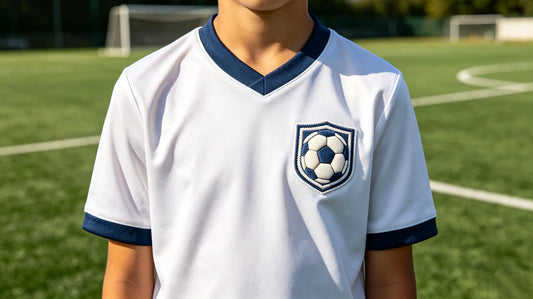
Uniform Patches: Professional Design, Crafts & Full Usage Guide
Uniform patches are essential accessories for workwear, service outfits, team costumes and institutional uniforms. Beyond simple decoration, standardized emblems represent corporate culture, professional identity and team image. Most uniforms face frequent washing, daily friction and long-term continuous use, so patches must meet strict requirements for durability, color fastness and neat appearance.
Many enterprises and teams encounter problems such as thread fraying, color fading, edge curling and falling off after short use due to improper customization. Choosing the wrong craft, size or backing will not only affect the overall image, but also increase repeated replacement costs. This guide systematically introduces the whole process of uniform patch customization, helping you create stable, formal and long-lasting uniform emblems. Custom 3D embroidered patches provides professional uniform patch solutions for all industries and teams.

Core Value of Uniform Patches
- Establish Professional Image: Standardized emblems make uniforms neat and unified, conveying rigorous and professional service temperament.
- Distinguish Identity & Department: Different patterns, colors or positions can mark positions, departments and job levels for easy management.
- Strengthen Team Cohesion: Unified visual symbols enhance employees’ sense of belonging and team recognition.
- Durable & Cost-Effective: High-quality patches withstand repeated washing, far more economical than direct printing on clothes.
- Flexible Upgrade: Replace patches separately when updating logos or departments, no need to discard the whole set of uniforms.
Main Crafts for Uniform Patches
Flat Embroidered Patches
The most mainstream choice for uniforms. Dense stitches deliver excellent wear resistance and color fastness, suitable for high-frequency washing scenarios. Various border styles keep the formal look. Ideal for security, catering, property, school and general enterprise uniforms. It supports logos, texts and simple totems, and the overall style is steady and decent.
Woven Patches
Ultra-thin, flat and delicate, outstanding in presenting tiny text and complex lines. No bulging on the fabric surface, comfortable to wear. Perfect for high-end business uniforms, medical staff outfits and fine work clothes. Suitable for designs with multiple words, department names and detailed identification information.
3D Puff Embroidery
With moderate three-dimensional sense, it improves grade and visual impact. Mainly used for management staff uniforms, honor emblems and team leader identification patches. Control the raised height below 3.5mm to avoid excessive bulk affecting daily work.
PVC Rubber Patches
Waterproof, oil-proof and easy to clean. The first choice for catering, kitchen, cleaning and other workplaces that are prone to stains. Note the slightly hard texture, not recommended for long-term wear on close-fitting uniforms.

Standard Size & Shape by Placement
Uniforms have fixed wearing areas, and patch sizes follow mature industry standards to ensure coordination and formality.
Chest Position (Main Emblem)
- Size: 5cm – 7cm in length, 3cm – 4.5cm in height. The core display area for company logos and main emblems, recognizable from a distance.
- Recommended shapes: Rounded rectangle, oval, regular shield. Formal and standard, matching the style of work uniforms.
Shoulder & Sleeve Position
- Size: 4cm – 5.5cm. For department marks, job badges and auxiliary logos. The size is compact to avoid restricting arm movement.
- Recommended shapes: Small square, round, mini shield. Simple and neat.
Collar & Pocket Position
- Size: 2.5cm – 4cm. Mini identification patches, initials or small icons. Do not use oversized designs to prevent scratching skin.
Reminder
All uniform patches are preferred with rounded corners. Sharp right angles are easy to wear fabric and scratch the body during work.
Standard Placement Rules
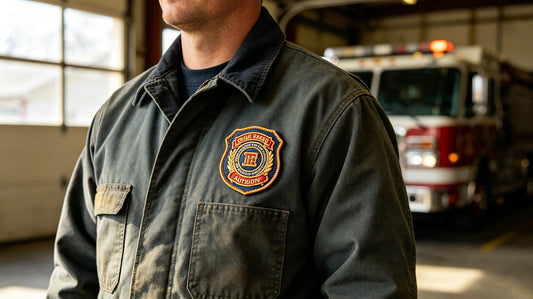
- Single Chest Emblem: Placed on the left chest, horizontally centered, 8cm to 10cm below the collar. The most classic formal layout for most work uniforms.
- Double Symmetrical Layout: Main emblem on left chest, department patch on right chest. Common for large enterprises and multi-department teams.
- Shoulder Emblem Layout: Patches sewn on the outer side of both shoulders, used for team signs and regional marks.
- Sleeve Mark Layout: Fixed on the upper part of the sleeve, mainly for job level and functional identification.
Placement Taboos
- Do not cover uniform buttons, pockets and stitching lines, which affects normal use and fitting.
- Keep consistent height and position for all staff uniforms to ensure overall unity.

Border & Color Matching Principles
Border Selection
- Merrow Border: Classic thick overlock edge, enhances durability and formal sense. The top pick for embroidered uniform patches.
- Heat Cut Border: Flat and concise, cost-effective, matching woven patches and simple-style emblems.
- No Border Design: Minimalist style, suitable for high-end business and medical uniforms.
Color Matching
- Follow enterprise VI color standards to keep the brand style unified.
- Adopt high contrast between patch and uniform fabric to ensure clear recognition.
- Use color-fast threads and inks to prevent fading after repeated washing.
- Formal uniforms prioritize solid color collocation; avoid overly fancy multi-color designs.
Backing & Installation Methods
Sew-On Backing (First Choice for All Uniforms)
Highest durability, no peeling or edge curling after hundreds of washes and daily friction. Fully compatible with cotton, polyester, thick work cloth and other uniform fabrics. Use matching color threads for neat stitching, which will not damage the formal appearance. It is the standard configuration for long-term used work uniforms.
Iron-On Backing
Easy and fast installation, suitable for temporary staff, short-term activity uniforms and low-frequency washing work clothes. Must use medium-low temperature and turn off steam. Not recommended for uniforms washed every day, as the adhesive will age and peel off quickly.
Velcro Backing
Detachable and replaceable, ideal for uniforms that need to frequently switch departments or job positions. Convenient for management and replacement, widely used in activity organizations and temporary teams.

Industry-Specific Customization Suggestions
Service & Catering Industry
Prioritize flat embroidery or oil-proof PVC patches. Focus on stain resistance and easy cleaning. Simple logos and store names are recommended.
Medical & Health Industry
Choose ultra-thin woven patches. Keep the surface flat and comfortable, use soft colors to match professional medical uniforms.
Security & Property Industry
Select high-density embroidered patches with merrow borders. Wear-resistant and formal, shield and regular shapes are mainstream.
Education & Student Uniforms
Medium-size embroidered emblems, bright and neat colors. Durable for long-term campus use and regular washing.
Corporate Office Uniforms
Woven or thin flat embroidered patches, minimalist design, to match business and formal temperament.
Washing & Daily Maintenance
- Turn uniforms inside out before machine washing to reduce friction on patch surfaces.
- Do not use strong bleach or high-temperature disinfection liquid, to avoid thread fading and material aging.
- Avoid vigorous scrubbing on patch areas to prevent loose threads.
- Dry in a ventilated place, avoid long-term sun exposure to protect color fastness.
- Trim scattered loose threads in time, do not pull forcibly.

Common Customization Mistakes to Avoid
- Using sharp-cornered patches on work uniforms, causing wear and safety hazards.
- Choosing iron-on backing for frequently washed workwear, leading to early peeling.
- Designing too small text on main chest patches, resulting in unrecognizable content.
- Excessively thick 3D patches for close-fitting uniforms, reducing wearing comfort.
- Inconsistent placement and size among staff, destroying the unified team image.
Final Summary
Uniform patches take formality, durability and uniform specification as the core. Flat embroidery and woven crafts are the most widely used options, while sew-on backing guarantees long-term stable use.
Follow standard sizes and placement rules according to different positions on uniforms, and select materials targeting industry characteristics. A set of well-customized uniform patches can not only maintain a neat team image, but also reduce the cost of repeated replacement.
Frequently Asked Questions
Q1: Which craft is most suitable for daily work uniforms?
A: Flat embroidered patches with good wear resistance and formal appearance.
Q2: What is the standard size for left chest uniform emblems?
A: 5cm to 7cm long and 3cm to 4.5cm high.
Q3: What is the most durable backing for uniform patches?
A: Sew-on backing is the safest choice for long-term use.
Q4: Are woven patches good for medical uniforms?
A: Yes, ultra-thin and flat woven patches are comfortable and fit well.
Tags:
Previous
Backpack & Bag Patches: Design Ideas, Sizes & Installation Guide
Next
Patch Washing & Care Guide: Keep Embroidered, PVC & Leather Patches Like New