Bulk Custom Patches Ordering Guide: Cost, Quality & Lead Time Tips (2026)
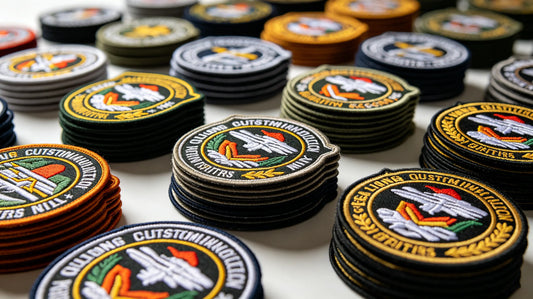
Bulk custom patches are the top choice for team uniforms, company branding, school clubs, military units, sports teams, and commercial merchandise batches. Unlike small personal DIY orders, bulk patch customization involves large quantities, unified quality standards, batch color consistency, and strict delivery cycle requirements. A single oversight in ordering details may lead to batch defects, cost waste, delivery delays, or inconsistent patch quality, affecting team image and business promotion effects.
Many bulk buyers face common troubles: unclear pricing rules, inconsistent color and texture among batches, unknown quality inspection standards, unreasonable design settings leading to increased costs, and failure to grasp delivery rhythms. Based on tens of thousands of successful bulk order cases and factory mass production standards, we have sorted out a complete zero-risk bulk custom patches ordering guide, covering demand sorting, cost control, quality inspection, lead time arrangement, and high-frequency mistake avoidance. Before you order bulk custom embroidered patches, master these professional rules to achieve low-cost, high-quality, and on-time batch customization.
This guide applies to all bulk scenarios including enterprise uniform batches, school group orders, outdoor team equipment matching, brand peripheral merchandise, and event promotional patch customization.
1. Pre-Order Demand Sorting: Lay the Foundation for Zero-Mistake Bulk Orders
Complete demand sorting before placing a bulk order is the core premise of standardized batch production, which can avoid repeated revisions and secondary rework in the later stage. Most bulk order errors stem from unclear initial demand and inconsistent design standards.
Confirm Core Customization Parameters
Unify all key specifications in advance to ensure zero difference in batch finished products, including patch size, material type (embroidered/woven/PVC), backing type (iron-on/sew-on/velcro), color matching standards, border technology, and craft upgrades (3D puff, metallic thread, reflective effect). For team multi-role differentiated patches, clarify the color difference, text distinction, and size rules of different positions to avoid specification confusion.
Clarify Usage Scenarios & Performance Requirements
Match materials and craftsmanship according to actual usage environments: daily indoor uniform batches prioritize cost-effective embroidered patches; outdoor high-frequency use and harsh environment batches choose waterproof and wear-resistant PVC patches; high-precision brand logo batches adopt flat high-definition woven patches. Clear scenario positioning can avoid material mismatch and performance insufficiency of batch patches.
Determine Quantity & Reserve Spare Stock
Calculate the exact quantity according to the number of team members, equipment matching quantity, and reserve demand. It is recommended to reserve 3%-5% spare patches for bulk orders to cope with subsequent personnel changes, patch loss, and damage replacement, avoiding the high cost and long cycle of supplementary small-batch orders.

2. Bulk Order Cost-Saving Tips (No Quality Loss)
Most bulk buyers blindly pursue low unit prices and ignore hidden cost increases. Professional bulk ordering can effectively reduce comprehensive costs while ensuring zero loss of patch quality, realizing real high cost performance.
Unify Design & Reduce Complex Craft Overlay
Too many color types, complex gradient designs, and repeated superposition of multiple special crafts will significantly increase batch production costs. Unified simple solid-color blocking design and controlled color types within 4-6 can effectively reduce production difficulty and batch proofing costs. For team unified patches, avoid personalized random design modifications to ensure batch standardization and cost control.
Make Full Use of Bulk Quantity Discounts
Custom patch pricing follows an obvious quantity tiered discount rule: the larger the order quantity, the lower the unit price. Integrating scattered small orders into unified large-batch orders can maximize preferential policies. Regular team and enterprise bulk customers can negotiate long-term cooperative pricing to lock in stable low unit prices for repeated orders.
Choose Appropriate Material Matching
Avoid over-customization and over-matching of high-end crafts. Conventional daily uniform batches do not need expensive 3D puff and metallic thread upgrades; indoor static decorative patches do not need high-standard waterproof and UV-resistant PVC materials. Reasonable material-craft matching eliminates unnecessary premium costs while meeting usage needs.
Standardize Artwork to Avoid Revision Fees
Provide high-definition 300DPI+ vector files and confirmed final design drafts at one time. Frequent design revisions, color adjustments, and size modifications in the production process will generate additional proofing and modification fees. Standardized final artwork delivery can completely avoid hidden revision costs.
3. Bulk Batch Quality Control Standards (Ensure 100% Uniformity)
The biggest difficulty of bulk patch orders is batch consistency. Color difference, stitch density deviation, size error, and craft unevenness will lead to inconsistent overall team styling and affect brand and team image. We summarize factory-level batch quality control standards to ensure zero difference in finished products.
Unified Color Calibration
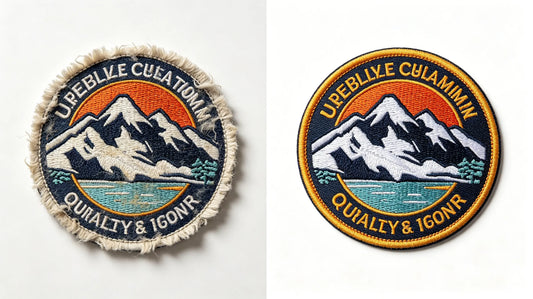
Require the factory to adopt unified CMYK color calibration and fixed color thread batches for production. Avoid color deviation caused by different thread batches and manual color adjustment errors. For high-color-precision brand orders, confirm physical color swatches before mass production to lock color standards.
Fixed Craft & Parameter Standards
Unify stitch density, border width, adhesive thickness, and mold parameters. Embroidered patches keep consistent thread coverage density; PVC patches maintain unified mold depth and softness; velcro patches ensure consistent adhesion and density. Fixed production parameters eliminate batch craft differences.
Pre-Production Sample Confirmation
Before full-batch mass production, ask the supplier to provide a pre-production sample. Confirm the design, color, size, craft, and backing effect of the sample, and start mass production only after full confirmation. This is the most effective way to avoid batch defective products.
Random Batch Inspection
During the production process, conduct random sampling inspection of finished patches to check for thread fraying, edge degumming, color distortion, size deviation, and defective adhesion. Timely adjust production parameters to control batch quality within the standard range.

4. Lead Time Management & Order Schedule Arrangement
Bulk patch production includes design proofing, mold opening, mass production, quality inspection, and packaging delivery, with a fixed production cycle. Reasonable schedule arrangement can effectively avoid delivery delays affecting team activities and uniform replacement.
Reserve Sufficient Production Cycle
Conventional bulk embroidered and woven patch orders take 7-10 working days for production; PVC bulk orders require 10-14 working days due to mold opening process. It is recommended to place orders 2-3 weeks in advance of the usage time to reserve buffer time for design revision and quality inspection.
Reasonable Rush Order Arrangement
For urgent bulk orders, confirm the supplier's rush order mechanism in advance. Formal professional manufacturers support priority production and fast-track delivery for urgent orders, which can shorten the cycle appropriately while ensuring quality. Avoid temporary rush orders from informal factories that sacrifice quality for speed.
Unified Batch Packaging & Delivery
Require unified classified packaging for bulk patches, with clear quantity labeling and specification classification, convenient for subsequent distribution and use. Confirm delivery methods and logistics cycles in advance to avoid logistics delays affecting on-time use.
5. High-Frequency Bulk Order Mistakes & Professional Solutions
Summarize the most common bulk ordering errors of team and enterprise customers, with targeted solutions to help buyers avoid losses and risks.
Mistake 1: No Pre-Production Sample Confirmation Before Mass Production
Consequence: Design deviation, color difference, or craft defects are found after the whole batch is completed, resulting in large-area rework and cost waste. Fix: Always confirm physical pre-production samples and sign off on design standards before full-batch production.
Mistake 2: Excessively Complex Designs for Bulk Orders
Consequence: Complex multi-color and multi-craft designs lead to difficult batch production, high defective rate, and increased unit cost. Fix: Simplify bulk patch designs, adopt standardized solid-color matching and conventional crafts to stabilize quality and control costs.
Mistake 3: Ignoring Spare Patch Reserve
Consequence: Insufficient quantity caused by patch loss and damage requires supplementary small-batch orders, with high unit price and long waiting cycle. Fix: Reserve 3%-5% spare patches for all bulk team orders to meet subsequent replacement demand.
Mistake 4: Blindly Pursuing Low Unit Price
Consequence: Low-price bulk orders are accompanied by reduced thread density, inferior raw materials, and simplified crafts, resulting in poor durability and inconsistent batch quality. Fix: Balance price and quality, prioritize professional manufacturers with standardized batch quality control systems.
Mistake 5: Un Unified Design Specifications for Multi-Batch Orders
Consequence: Different production batches have color and craft differences, resulting in inconsistent team patch styling. Fix: Fix design drafts, color standards, and production parameters for repeated orders to ensure batch consistency for long-term team use.

6. Bulk Order Material & Backing Selection Guide
Combined with bulk order usage characteristics, we sort out the most cost-effective material and backing matching schemes for different team scenarios, facilitating quick selection for bulk buyers.
Enterprise & School Daily Uniform Bulk Orders
Priority: Embroidered patches + sew-on/iron-on backing. Balanced texture, durability, and cost, suitable for long-term fixed wearing and high-frequency washing, stable batch quality, and high cost performance for large orders.
Brand Logo & High-End Merchandise Batches
Priority: Woven patches + iron-on backing. Ultra-flat and high-precision detail restoration, delicate and high-end texture, uniform batch effect, suitable for brand image display and commercial sales.
Outdoor & Tactical Team Equipment Batches
Priority: PVC patches + velcro backing. Waterproof, wear-resistant, and anti-aging, adaptable to harsh outdoor environments, reusable and detachable, convenient for team equipment unified management and replacement.
Short-Term Event & Promotion Batches
Priority: Embroidered patches + peel & stick backing. Low cost, fast production, meeting short-term temporary decoration needs, no waste after the event.
Pro Tip: Unified material and backing matching is the key to batch patch consistency. When you custom patches in bulk, select unified specifications to ensure overall team styling uniformity and maximize order cost performance.

Final Thoughts
Bulk custom patch ordering is a systematic project that integrates demand sorting, design standardization, cost control, quality supervision, and schedule management. Different from small personal orders, bulk orders focus on batch consistency, cost controllability, and delivery stability. Blindly pursuing low prices, ignoring sample confirmation, and unclear specification standards are the main causes of bulk order failure.
By following this professional bulk ordering guide, you can effectively avoid common customization risks, control comprehensive costs without sacrificing quality, and obtain high-uniformity, high-durability, and high-cost-performance batch custom patches. Whether for long-term team uniform matching, brand commercial batch production, or short-term event customization, standardized bulk ordering processes can maximize customization value and perfectly present team and brand visual effects.
Choose professional standardized bulk customization services, strictly implement pre-production sample confirmation and batch quality inspection, and make every bulk custom patch order stable, reliable, and cost-effective.

FAQ
Q:What is the most cost-effective patch type for bulk orders?
A:For most daily team and uniform bulk orders, standard embroidered patches are the most cost-effective option, with balanced quality, durability, and pricing. Large-batch orders can enjoy tiered quantity discounts to further reduce unit costs. You can get high-quality and budget-friendly results when you order bulk custom embroidered patches.
Q:How to ensure consistent color and quality for bulk patches?
A:Confirm fixed design drafts and physical color swatches before production, require unified production parameters and thread batches, and strictly check pre-production samples. Professional manufacturers adopt standardized batch quality inspection to eliminate color difference and craft deviation, ensuring 100% uniformity of finished bulk patches.
Q:How long does bulk custom patch production take?
A:Conventional embroidered and woven patch bulk orders take 7-10 working days; PVC patch bulk orders take 10-14 working days due to mold opening. Urgent orders can support fast-track production and delivery on the premise of guaranteed quality.
Q:Is it necessary to reserve spare patches for bulk orders?
A:Yes. It is recommended to reserve 3%-5% spare patches for team bulk orders to cope with daily loss, damage, and personnel changes, avoiding the trouble and extra cost of temporary supplementary small-batch orders.
Q:Can bulk custom patches support customized differentiated designs?
A:Yes. We support unified main logo + differentiated text, color, and size designs for team bulk orders, meeting the identification needs of different roles and positions while maintaining overall team style unity.
Tags:
Previous
How to Wash & Care for Custom Patches: Full Maintenance Guide (2026)
Next
10 Common Custom Patch Design Mistakes & How to Avoid Them (2026 Guide)