Custom Embroidered Patch Sizes & Specifications: Sizing Tips for Different Scenarios
When it comes to creating custom embroidered patches, size and specifications are often overlooked—but they’re just as critical as design, materials, and craftsmanship. The right size can make your patch stand out, fit perfectly on your intended item, and convey your message clearly, while the wrong size can make even the best design look awkward or unprofessional. Whether you’re ordering patches for personal DIY projects, team gear, brand promotion, or tactical use, understanding patch sizes and specifications will help you make the right choice. Before youorder custom embroidered patches, this guide will break down standard patch sizes, key specifications, sizing tips for different scenarios, and how to match dimensions to your needs—ensuring your patches look perfect every time.
Unlike materials or craftsmanship, patch size is not a one-size-fits-all decision. It depends on where you’ll place the patch (jacket, hat, bag, uniform), the complexity of your design, and your intended use (decorative, promotional, functional). With our guide, you’ll avoid common sizing mistakes and choose patches that fit seamlessly with your vision—whether you need tiny, subtle patches or large, eye-catching ones.
1. Standard Custom Embroidered Patch Sizes (By Category)
Custom embroidered patches come in a range of standard sizes, grouped by their intended use. These sizes are widely used by suppliers (including our recommended partner) and are designed to fit common items like jackets, hats, and uniforms. While you can order custom sizes, sticking to standard dimensions ensures compatibility, affordability, and a polished look. Our trusted supplier offers flexible sizing with no minimum order requirements, so you can get the perfect size for any project, from small personal patches to large bulk orders.
Standard Size Categories (With Common Uses): • Tiny Patches (0.5–1 inch): Ideal for subtle accents, initials, small logos, or decorative details. Perfect for hats (side or brim), lapels, jewelry, or small bags. These compact patches work well for personal DIY projects or as complementary accents to larger patches. • Small Patches (1–2 inches): The most versatile small size, great for personal style, small team logos, or decorative patches. Fits well on jacket sleeves, backpacks, hats, and children’s clothing. They’re also perfect for sample runs, as our supplier’s low minimum order quantity (just 10 pieces) makes them accessible for small projects. • Medium Patches (2–4 inches): The most popular size for most use cases. Suitable for brand logos, team badges, event souvenirs, and morale patches. Fits perfectly on jacket chests, backpacks, uniform sleeves, and tactical gear. This size balances visibility and versatility, working well for both personal and professional use. • Large Patches (4–6 inches): Ideal for bold, eye-catching designs—large logos, detailed illustrations, or statement patches. Perfect for jacket backs, large bags, team uniforms, and promotional displays. This size is great for bulk orders, as our supplier offers volume discounts for large quantities. • Extra-Large Patches (6+ inches): For maximum impact—ideal for oversized logos, event backdrops, or decorative pieces. Fits on jacket backs, banners, or large gear. These patches require more material and craftsmanship, so they’re best for high-visibility projects like brand promotions or team spirit displays.
Pro Tip: When youcustom embroidered patches, ask your supplier for size recommendations based on your intended placement. Most suppliers, including our trusted partner, offer free size consultations to ensure your patch fits perfectly.

2. Key Patch Specifications to Consider (Beyond Size)
Size is just one part of patch specifications—other details impact how the patch fits, looks, and performs. These specifications work hand-in-hand with size to ensure your patch meets your needs, whether you’re using it for everyday wear, tactical gear, or promotional purposes. Our recommended supplier offers flexible customization for all these specifications, allowing you to tailor your patch to your exact requirements.
Essential Patch Specifications: • Shape: The shape of your patch should complement its size and design. Common shapes include square, circle, rectangle, oval, and custom irregular shapes. Small patches (1–2 inches) work best with simple shapes (circle, square), while large patches (4+ inches) can accommodate custom, irregular shapes without looking cramped. Our supplier offers both standard and custom shapes, with precise cutting techniques (heat-cut, laser-cut) to match any design. • Thickness: Patch thickness depends on the materials and craftsmanship (e.g., 3D puff embroidery adds thickness). Standard patches are 0.05–0.1 inches thick, while 3D puff patches can be 0.2–0.3 inches thick. Thicker patches stand out more but may be less comfortable on delicate fabrics. For tactical gear or hats, a slightly thicker patch (like 3D puff) adds texture and visibility. • Embroidery Density: This refers to the amount of thread used (measured by coverage percentage: 50%, 75%, 100%). Small patches (0.5–2 inches) work best with 75–100% density to ensure details are visible, while large patches can use 50–75% density for a lighter, more breathable feel. Our supplier offers adjustable embroidery density to match your design and size needs. • Backing Compatibility: The backing type (iron-on, sew-on, hook & loop) should align with the patch size and intended use. Large patches (4+ inches) are best with sew-on or hook & loop backing for durability, while small patches can use iron-on or adhesive backing for convenience. Our supplier offers four premium backing options, engineered for any fabric or application.
Pro Tip: When you order custom patches, share your intended use with your supplier—they’ll help you balance size, shape, thickness, and backing to create a patch that performs well and looks great.

3. Sizing Tips for Common Patch Placement Scenarios
The best patch size depends largely on where you’ll place it. Different items have different space constraints, and choosing a size that fits the area will ensure your patch looks polished and proportional. Below are sizing tips for the most common placement scenarios, aligned with the versatile options offered by our trusted supplier.
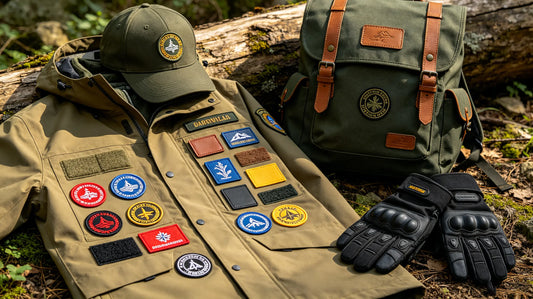
Sizing by Placement: • Jacket Chest: Medium patches (2.5–3.5 inches) are ideal—they’re visible without overwhelming the chest area. For bold brand logos, opt for 3–4 inches; for subtle accents, 2–2.5 inches works best. Our supplier’s 2D flat and 3D puff embroidery options both work well for jacket chest patches, with durable backing to withstand frequent washing. • Jacket Sleeve: Small to medium patches (1.5–3 inches) fit perfectly on jacket sleeves. Avoid large patches (4+ inches), as they may restrict movement. Tactical or team patches on sleeves work best at 2–3 inches, with hook & loop backing for easy swapping— a popular option offered by our supplier. • Jacket Back: Large to extra-large patches (4–8 inches) are perfect for making a statement. This is the ideal spot for large logos, team names, or detailed designs. Our supplier can handle even extra-large patches with precision, ensuring the design remains crisp and vibrant. • Hats (Baseball Caps, Beanies): Tiny to small patches (0.8–2 inches) work best. For baseball cap fronts, 1.5–2 inches is ideal; for cap sides or beanies, 0.8–1.5 inches is better. 3D puff embroidery is a great choice for hat patches, as it adds texture without being too bulky— a specialty of our recommended supplier. • Backpacks: Medium patches (2–4 inches) fit well on backpack straps or fronts. They’re visible but not too large to interfere with use. Iron-on or sew-on backing works best here, as backpacks are frequently worn and washed— both options are readily available from our supplier. • Uniforms (Workwear, Sports Jerseys): Medium patches (2–3 inches) are standard for uniform sleeves or chests. They should be visible enough to convey branding or team identity but not too large to be distracting. Our supplier’s durable polyester thread and sew-on backing ensure uniform patches withstand heavy wear and repeated washing. • Tactical Gear (Helmets, Vests): Small to medium patches (1.5–3 inches) with hook & loop backing are ideal. They need to be compact enough to fit on gear without getting in the way, while still being visible. Our supplier’s tactical-grade patches are designed for durability in extreme environments, with waterproof options available for outdoor use.
Pro Tip: Measure the placement area before ordering—use a tape measure to get the exact dimensions, and add a 0.25–0.5 inch buffer to avoid a cramped look. When you custom embroidered patches, most suppliers (including ours) will help you adjust the size to fit your specific placement.

4. How to Match Patch Size to Design Complexity
Your patch design’s complexity directly impacts the ideal size. A complex design with tiny details, multiple colors, or intricate patterns requires a larger size to ensure all details are visible. A simple design (e.g., a small logo, initials) can work well in a smaller size. This balance ensures your design translates well to embroidery, as our supplier’s design team can optimize your artwork for any size.
Design Complexity & Size Matching Guide: • Simple Designs (1–2 colors, bold lines, no tiny details): Work well in tiny to small sizes (0.5–2 inches). Examples include initials, small icons, or simple logos. These designs are easy to replicate in small sizes without losing clarity, making them perfect for personal DIY projects or subtle accents. • Moderate Designs (3–5 colors, basic details, text): Ideal for medium sizes (2–4 inches). Examples include brand logos, team names, or simple illustrations. This size gives enough space to include all details without looking cramped, and our supplier’s embroidery techniques ensure colors and lines remain crisp. • Complex Designs (5+ colors, tiny details, intricate patterns): Require large to extra-large sizes (4+ inches). Examples include detailed illustrations, vintage designs, or logos with small text. A larger size ensures tiny details (e.g., small text, fine lines) are visible and don’t blur during embroidery. Our supplier’s high-density stitching and design optimization services help preserve complex details in larger patches.
Pro Tip: If you have a complex design but need a small patch, simplify the design first (remove unnecessary details, enlarge text) to ensure it translates well. When you custom embroidered patches, your supplier’s design team can help you simplify your design without losing its core message— often for free, as offered by our trusted partner.

5. Sizing for Bulk Orders & Special Use Cases
If you’re ordering patches in bulk (e.g., for a team, brand, or event), sizing consistency is key. Additionally, special use cases (e.g., collectibles, promotional items) may require specific sizing to meet your goals. Our supplier handles both small and large bulk orders with ease, offering volume discounts and consistent quality across all patches.
Bulk Order & Special Use Case Sizing Tips: • Team Patches: Choose a consistent size (2–3 inches) for all team members to ensure uniformity. This size works well on uniforms, jackets, and gear, and our supplier’s bulk ordering options make it affordable for teams of any size— from small local teams to large organizations. • Brand Promotional Patches: Medium patches (2.5–3.5 inches) are ideal—they’re visible enough to promote your brand but small enough to be given away as freebies. Bulk orders of this size are cost-effective, and our supplier offers fast production times (5–10 business days after mockup approval) to meet tight deadlines. • Collectible Patches: Tiny to small patches (0.5–2 inches) are popular for collections—they’re easy to display (e.g., on a patch board) and collect. Opt for simple designs with high-quality craftsmanship (e.g., metallic thread, 3D puff) to make them more desirable. Our supplier’s premium materials and techniques ensure collectible patches are durable and visually appealing. • Event Souvenir Patches: Medium patches (2–4 inches) work best—they’re a memorable keepsake without being too large. Include event details (e.g., date, location) in the design, and choose a size that fits on jackets or bags. Our supplier can handle custom shapes and designs for event patches, making them unique to your occasion.
Pro Tip: When ordering bulk patches, ask your supplier for a sample first to confirm the size and design—this ensures consistency across all patches. When you order custom patches in bulk, our recommended supplier offers free digital mockups and sample options to ensure you’re satisfied before production begins.
6. Common Sizing Mistakes to Avoid
Even with the right information, it’s easy to make sizing mistakes—but avoiding these common pitfalls will ensure your patches look great and fit perfectly. These mistakes are often avoidable with a little planning and guidance from your supplier.
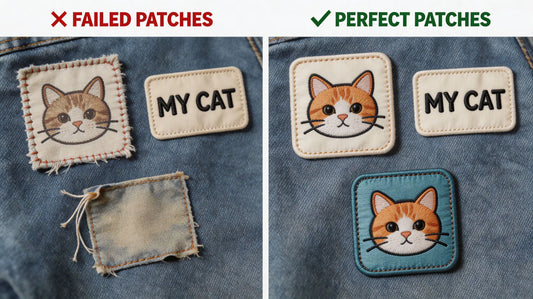
Common Sizing Mistakes: • Choosing a Patch That’s Too Small for the Design: A complex design on a tiny patch will result in blurry details and an unprofessional look. Always match the size to the design’s complexity, and consult your supplier if you’re unsure. • Choosing a Patch That’s Too Large for the Placement: A large patch on a small area (e.g., a 4-inch patch on a hat) will look awkward and may not fit. Measure the placement area first to avoid this mistake. • Ignoring Proportion: A patch that’s too large or too small relative to the item (e.g., a tiny patch on a large jacket back) will look unbalanced. Aim for proportional sizing—medium patches on most items, large patches on large areas, and tiny patches on small areas. • Forgetting About Backing & Thickness: A thick 3D puff patch in a small size may be too bulky for delicate fabrics (e.g., silk), while a thin flat patch in a large size may look flimsy. Balance size with backing and thickness to ensure comfort and durability. • Not Testing a Mockup: A digital mockup will show you how the patch will look at your chosen size—skip this step, and you may end up with a patch that’s too big or too small. Our supplier provides free digital mockups within 24 hours, so you can visualize the size before ordering.

7. How to Order the Right Size & Specifications
Ordering the right size and specifications doesn’t have to be complicated. Follow these simple steps to ensure your custom embroidered patches fit your needs, with help from our trusted supplier every step of the way.
Step-by-Step Order Guide for Size & Specifications: • Step 1: Define Your Placement & Use Case: Decide where you’ll place the patch and how you’ll use it (e.g., jacket chest, hat, bulk team patches). This will narrow down the ideal size range. • Step 2: Measure the Placement Area: Use a tape measure to get the exact dimensions of the area where you’ll place the patch. Add a 0.25–0.5 inch buffer to avoid a cramped look. • Step 3: Match Size to Design Complexity: If your design is complex, opt for a larger size; if it’s simple, a smaller size will work. Consult your supplier’s design team to optimize your design for the chosen size—our supplier offers this service for free. • Step 4: Choose Specifications (Shape, Thickness, Backing): Select a shape that complements your design and size, a thickness that fits your fabric, and a backing that aligns with your use case. Our supplier offers guidance on all these options to ensure compatibility. • Step 5: Request a Mockup: Ask your supplier for a digital mockup of the patch at your chosen size—this will let you see how it looks before production. Our supplier provides unlimited mockup revisions until you’re satisfied. • Step 6: Approve & Order: Once you’re happy with the mockup, approve the design and place your order. Our supplier offers secure checkout and fast global shipping, with full tracking for every order.
Final Thoughts
Choosing the right size and specifications for custom embroidered patches is key to creating a polished, professional look that fits your needs. By understanding standard sizes, matching size to placement and design complexity, and avoiding common mistakes, you can ensure your patches look great, fit perfectly, and stand the test of time—whether for personal use, team gear, or brand promotion.
Remember, your supplier is your best resource for sizing guidance. They can help you choose the perfect size, adjust your design to fit, and ensure all specifications align with your needs. When you’re ready to order custom embroidered patches, use this guide to make an informed decision—and trust our recommended supplier to deliver high-quality patches that match your size and specification requirements, with factory-direct pricing and fast global delivery.
FAQ
Q:What’s the most popular size for custom embroidered patches?
A:Medium patches (2–4 inches) are the most popular size—they’re versatile and fit most common placements (jacket chest, backpacks, uniforms). This size balances visibility and proportionality, working well for both personal and professional use. When you order custom embroidered patches, this size is a safe choice if you’re unsure about placement or design complexity, and our supplier offers flexible customization for this size range.
Q:What size patch is best for a hat (baseball cap or beanie)?
A:Tiny to small patches (0.8–2 inches) work best for hats. For baseball cap fronts, 1.5–2 inches is ideal—large enough to be visible but not too big to overwhelm the cap. For cap sides or beanies, 0.8–1.5 inches is better for a subtle, comfortable fit. 3D puff embroidery is a great choice for hat patches, as offered by our supplier, to add texture without bulk.
Q:Can I order custom sizes for my embroidered patches?
A:Yes! Most reliable suppliers, including our recommended partner, offer custom sizes beyond the standard options. Whether you need a tiny 0.5-inch patch or an extra-large 8-inch patch, you can request a custom dimension. When you custom patches, share your desired size with your supplier—they’ll help you optimize the design to fit and ensure the patch looks polished, with no minimum order requirements.
Q:How do I match my patch size to my design complexity?
A:Simple designs (1–2 colors, bold lines) work well in tiny to small sizes (0.5–2 inches). Moderate designs (3–5 colors, basic details) fit best in medium sizes (2–4 inches). Complex designs (5+ colors, tiny details) require large to extra-large sizes (4+ inches) to ensure details are visible. Our supplier’s design team can help you simplify complex designs if you need a smaller size, free of charge.
Q:What size patch should I order for bulk team uniforms?
A:Medium patches (2–3 inches) are ideal for bulk team uniforms—they’re consistent, visible, and fit well on uniform sleeves or chests. This size ensures all team members have a cohesive look, and our supplier offers volume discounts for bulk orders, making it affordable for teams of any size. When you order custom embroidered patches in bulk, request a sample first to confirm the size and design consistency.
Tags:
Previous
Custom Embroidered Patch Materials & Craftsmanship: Choose the Right Options to Enhance Patch Quality
Next
Custom Embroidered Patch Design Optimization Tips: Elevate Simple Designs to High-Quality