Custom Patch Size Guide: Standard Sizes, Measurement & Placement Rules (2026)
Size is one of the most decisive yet easily overlooked details in custom patch customization. Many perfectly designed patches end up looking awkward: oversized chest patches crowd the garment layout, tiny back patches lack visual impact, and misaligned sleeve patches ruin the overall neatness. Improper sizing and placement can downgrade high-quality craftsmanship and sophisticated designs, wasting customization budget and effort.
Unlike stitch density, backing type, and color matching, patch size directly determines visual coordination and wearing presentation. Each wearing position and gear type has its own golden standard size range. Whether you customize personal decorative patches, team uniform batches, or brand merchandise, standardized size matching is the first step to flawless presentation. Before you order custom embroidered patches, mastering this full size and placement guide helps you avoid disproportionate and misplaced patch effects.
In this guide, we sort out industry-standard patch dimensions, accurate measurement methods, scenario-based size matching rules, and professional placement standards for all common garments and gear, solving all sizing confusion once and for all.
1. How to Correctly Measure Custom Patch Size
Most sizing errors stem from incorrect measurement methods. Different patch shapes have exclusive measurement standards, not simply measuring the side length of the outer frame. Mastering accurate measurement rules ensures the customized patch size matches the expected effect perfectly.
Square & Rectangle Patches
Measure the maximum horizontal width and vertical height of the patch pattern. Take the outermost edge of the embroidery or pattern as the benchmark, excluding excess border blank space. The final size is confirmed by width × height, suitable for logo, text, and rectangular team badge patches.
Round & Oval Patches
Round patches take the maximum diameter as the standard size; oval patches are measured by the longest horizontal width and vertical height. Avoid measuring partial arc edges to prevent size deviation leading to mismatched placement.
Irregular & Custom Shape Patches
For irregular patches such as logos, animal shapes, and special patterns, measure the overall maximum width and height of the entire pattern outline. The industry uniformly adopts the outer bounding box size as the custom size standard to ensure production accuracy.
Key Measurement Tip
Reserve 0.2–0.3 inches of edge space appropriately. Excessively full size will cause edge extrusion during ironing and wearing, affecting flat fitting; too much reserved space will make the patch look small and empty.

2. Industry Standard Patch Size Chart (Universal Reference)
We summarize the most widely used standard patch sizes in the customization industry, covering mini, small, medium, large, and extra-large specifications, matching 99% of daily wearing and decorative scenarios:
Mini Size (1.0–2.0 inches)
Ultra-small lightweight patches, suitable for hat sides, collar corners, cuffs, and zipper decorations. Mainly used for subtle brand logos, small icons, and minimalist embellishments, with delicate and low-key visual effects.
Small Size (2.0–3.0 inches)
The most common chest patch specification, perfectly adapted to the chest area of various jackets, hoodies, and uniforms. Suitable for team logos, corporate badges, and personalized pattern embellishments, with balanced proportion and not easy to be abrupt.
Medium Size (3.0–4.0 inches)
Universal size for sleeves, backpacks, and tactical gear. It has sufficient display area to restore pattern details, strong recognition, and moderate volume, not affecting wearing and daily movement.
Large Size (4.0–5.0 inches)
Exclusive size for garment back and backpack main body decoration. It has strong visual impact, suitable for large-area patterns, slogan texts, and team totem designs, significantly improving overall styling recognition.
Extra-Large Size (5.0+ inches)
Custom oversized patches, mostly used for full-back garment decoration, banner embellishment, and commercial display. Suitable for complex high-detail designs and bold creative styling, exclusive for personalized advanced customization.

3. Scenario-Based Golden Size & Placement Rules
Different wearing positions and gear types have fixed golden size ranges and placement standards. Matching size and position strictly can avoid all disproportionate and misplaced problems:
Hat Patches (Baseball Caps & Beanies)
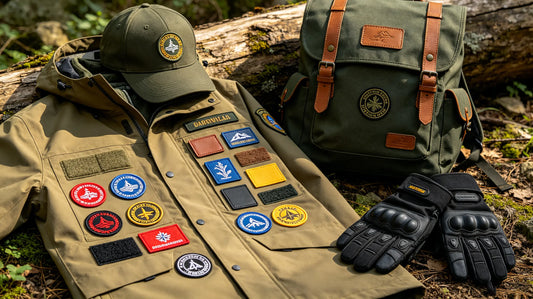
Best Size: 1.5–2.5 inches Placement Rule: Center on the front hat panel, 0.5 inch away from the hat brim. Avoid oversized patches that squeeze the hat stitching and cause fabric wrinkling. Mini 1.0–1.5 inch patches are suitable for hat side and back embellishment.
Chest Patches (Jackets, Hoodies, Uniforms)
Best Size: 2.5–3.0 inches Placement Rule: Right chest or left chest conventional position, horizontally centered with the chest pocket, 1–1.5 inches away from the collar. Symmetrical and neat, suitable for team badges and brand logos, maintaining formal and unified visual effect.
Sleeve Patches (Tactical & Casual Garments)
Best Size: 3.0–3.5 inches Placement Rule: Middle of the upper arm, 2–3 inches above the elbow joint. Avoid covering the elbow activity area to prevent patch extrusion and warping during arm movement. Suitable for morale patches, tactical identifiers, and personalized decorative patterns.
Back Patches (Full Back Decoration)
Best Size: 4.5–5.5 inches Placement Rule: Centered on the back of the garment, 3–4 inches below the collar. Large-area patches need to reserve edge space to avoid covering shoulder stitching, ensuring flat fitting and grand visual presentation.
Backpack & Gear Patches
Best Size: 3.0–4.0 inches Placement Rule: Center of the backpack front panel or side pocket area. Moderate size ensures high recognition without affecting backpack storage and daily use, perfect for outdoor tactical gear decoration.
Work & Military Uniform Patches
Best Size: 2.0–3.0 inches (chest) / 3.0–3.5 inches (sleeve) Placement Rule: Follow industry unified placement standards, ensuring consistent height and position of all batch patches for neat and standardized team styling.

4. Common Sizing & Placement Mistakes to Avoid
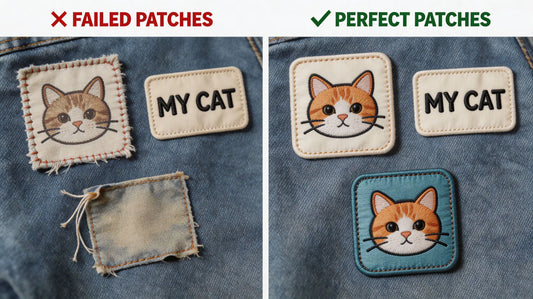
Most patch styling failures come from inappropriate size selection and irregular placement. We summarize high-frequency mistakes and targeted solutions to help you achieve zero-error matching:
Mistake 1: Oversized patches on narrow chest areas
Consequence: The patch squeezes the garment stitching, causes fabric bulging and wrinkling, and looks bulky and uncoordinated. Fix: Control chest patch size within 3 inches, reserve enough fabric buffer space.
Mistake 2: Undersized back patches
Consequence: The patch is too small to form a visual focus, empty back area, weak styling sense, and no recognition. Fix: Choose 4.5+ inches large-size patches for back decoration to ensure sufficient display area.
Mistake 3: Misaligned patch height for batch uniforms
Consequence: Inconsistent patch placement height on team uniforms leads to messy overall styling and unprofessional appearance. Fix: Unify placement distance standards before pasting, calibrate horizontal height one by one.
Mistake 4: Ignoring shape adaptation for placement area
Consequence: Square patches on curved hat surfaces are prone to edge warping; oversized irregular patches cannot fit the garment radian. Fix: Match round/oval patches for curved surfaces, and choose medium-size regular patches for flexible fitting.

5. Size Matching Tips for Different Patch Materials
Different patch materials have different size adaptation characteristics. Reasonable size matching can maximize fitting effect and durability:
Embroidered Patches
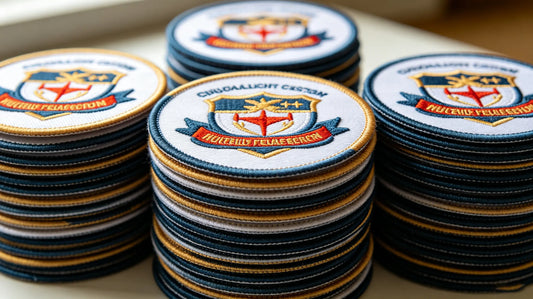
Embroidered patches have moderate hardness and good ductility. Conventional 2–5 inches sizes are the most stable. Ultra-small sizes (below 1.5 inches) are prone to detail loss; ultra-large sizes are easy to wrinkle after long-term wearing.
Woven Patches
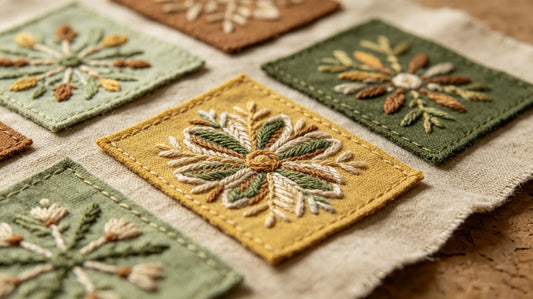
Woven patches are thin and flat, suitable for mini and small sizes (1.5–3 inches). They can perfectly restore fine details of small-size patterns, ideal for delicate logo and collar decoration.
PVC Rubber Patches
PVC patches are rigid and stereoscopic, not easy to deform. Suitable for medium and large sizes (3–5.5 inches). Oversized PVC patches are heavy and easy to fall off; ultra-small sizes are hard to show texture advantages.
Chenille Patches
Chenille patches have fluffy texture, suitable for medium and large sizes (3.5–5 inches). Small-size chenille patches lose three-dimensional fluffy sense and look flat and ungraded.
Pro Tip: Reasonable size matching is the premise of perfect patch styling. When youcustom embroidered patches, clarify the wearing position first, and select the standard size according to the scenario to avoid all disproportionate problems.

Final Thoughts
Patch size and placement are the invisible keys to determining the overall aesthetics of customized patches. Superior craftsmanship and exquisite designs can be completely ruined by inappropriate sizing and misplaced placement. Each wearing position, garment type, and patch material has its exclusive golden size range and standardized placement rules.
Mini sizes are perfect for subtle embellishment of hats and collars, small and medium sizes adapt to daily chest and sleeve decoration, and large sizes are dedicated to back and outdoor gear styling. Combined with accurate measurement methods and batch placement standards, every patch can achieve flat fitting, coordinated proportion, and prominent visual effect.
Mastering this professional size guide can help you avoid common sizing mistakes in personal customization and bulk team orders, maximize the aesthetic value of custom patches, and present neat, unified, and high-grade wearing effects in all scenarios.
FAQ
Q:What is the most standard size for custom chest patches?
A:2.5–3.0 inches is the universal golden size for chest patches, suitable for most jackets, hoodies, and corporate uniforms. This size maintains balanced visual proportion without crowding the garment layout. You can get perfectly sized works when you order custom embroidered patches with scenario-based customization.
Q:What size patch fits best on baseball hats?
A:1.5–2.5 inches patches are the most suitable for the front of baseball caps. This size fits the curved hat panel perfectly without edge warping or fabric wrinkling, ensuring flat and neat fitting.
Q:How big should a back patch be on a jacket?
A:4.5–5.5 inches is the ideal size for full-back jacket patches. It covers a reasonable back area with strong visual impact, avoiding the empty and monotonous feeling caused by undersized patches.
Q:How to measure irregular custom patch size correctly?
A:Measure the maximum horizontal width and vertical height of the irregular pattern outline, and take the outer bounding box size as the standard custom size, which is the unified industry measurement rule.
Q:Do different patch materials require different size matching?
A:Yes. Thin woven patches fit small sizes well, rigid PVC patches suit medium and large sizes, and fluffy chenille patches perform best in large specifications. Material characteristics determine the optimal size range.
Tags:
Previous
15 Common Custom Patch Mistakes & How to Avoid Them Completely (2026)
Next
Custom Patch Backing Guide: Iron-On, Sew-On, Velcro & Peel-Stick Comparison (2026)