Custom Patch Backing Guide: Iron-On, Sew-On, Velcro & Peel-Stick Comparison (2026)
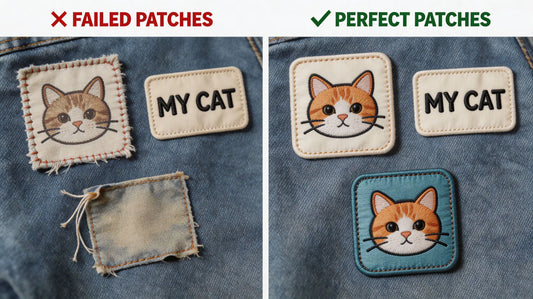
Most custom patch quality complaints are not about embroidery density, color fastness, or design details, but about wrong backing selection. A perfectly crafted patch can fail completely if paired with unsuitable backing: iron-on patches peel off after washing, velcro patches feel bulky on thin hoodies, and peel-stick patches lose adhesion quickly. Choosing the right backing is as critical as picking the right material and size for your patches.
Every custom patch project has a unique usage cycle, fabric type, and functional demand. The four mainstream backing types—iron-on, sew-on, velcro hook & loop, and peel-stick self-adhesive—serve totally different scenarios. Understanding their durability, installation difficulty, texture performance, and limitations helps you avoid attachment failures. Before youorder custom embroidered patches, master this full backing comparison guide to match the most reliable option for your gear.
In this guide, we break down the core features, pros, cons, ideal applications, and installation tips of all four premium backing options, helping you make zero-mistake backing decisions for personal, team, and commercial orders.
1. Iron-On / Heat Seal Backing: DIY Fast Permanent Choice
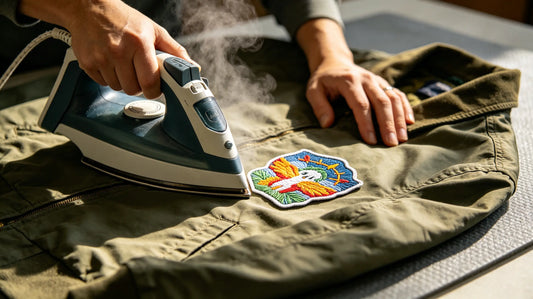
Iron-on backing, also known as heat seal backing, is the most popular DIY-friendly option for custom patches. It adopts high-quality TPU hot-melt adhesive coating, which melts and bonds firmly with fabrics under high temperature and pressure. No sewing tools or professional skills are required, enabling fast household installation in minutes.
Core Advantages
First, it features ultra-easy installation. With a standard household iron or heat press, patches can be firmly attached within seconds, perfect for beginners and quick DIY upgrades. Second, the fitting effect is flat and seamless. The thin adhesive layer does not add extra bulk, maintaining the original soft texture of garments without affecting wearing comfort. Third, it delivers stable washing resistance after full curing. Premium color-fast thread matching with qualified heat seal backing ensures repeated cold water washing without peeling or edge warping.
Limitations
Iron-on backing cannot withstand high-temperature washing and drying. Hot water and tumble drying will melt the adhesive layer and cause peeling. Besides, it is not compatible with heat-sensitive fabrics such as nylon, polyester blends, and elastic materials, which are prone to scalding and fabric damage under high ironing temperature.
Best Application Scenarios
Ideal for cotton jackets, denim overalls, canvas bags, and conventional cotton hoodies. Perfect for daily casual decorative patches, personal DIY styling, and common team uniform batches with normal washing frequency.

2. Sew-On / Plastic Backing: Maximum Heavy-Duty Durability
Sew-on backing is the most traditional and durable patch backing solution, equipped with a thin, stable plastic base layer. Unlike adhesive backings, it relies on manual or machine stitching for fixed attachment, featuring extreme tensile resistance and aging resistance. It is recognized as the heavy-duty standard for long-term high-frequency use patches.
Core Advantages
Its biggest strength is unlimited durability. Sewn patches never peel off, even after years of repeated machine washing, friction, and outdoor exposure. The plastic backing stabilizes the patch shape effectively, preventing edge curling, thread loosening, and fabric deformation during long-term use. Moreover, it has zero fabric restrictions, compatible with all textile materials including leather, thick workwear, and rugged denim. It is completely resistant to high temperature and chemical detergent erosion.
Limitations
The installation process is relatively complicated, requiring sewing tools and basic stitching skills, which is not suitable for users pursuing quick installation. Compared with iron-on backing, the stitching edge will leave slight needle holes, and the overall operation takes more time and labor.
Best Application Scenarios
Professional work uniforms, heavy-duty workwear, leather biker vests, outdoor long-term wearing gear, and team uniforms requiring frequent washing. It is the exclusive choice for commercial patches that need long-term stable attachment and zero falling risk.
3. Hook & Loop / Velcro Backing: Removable Tactical Standard
Velcro hook & loop backing consists of two matching parts: hook side (attached to the patch) and loop side (sewn on garments or gear). It allows free attachment, removal, and replacement of patches at any time without damaging the original fabric. It is the mainstream backing for military, tactical, and morale patch scenarios.
Core Advantages
The greatest feature is flexible replaceability. Users can switch different morale patches, team identifiers, or decorative patches according to scenarios, realizing one-piece gear with diverse styling. The velcro structure has strong tensile force, resisting daily pulling and friction without falling off. Besides, it avoids repeated washing wear of patches, greatly extending the overall service life, as patches can be removed before cleaning.
Limitations
Velcro backing adds slight thickness and bulk, which is not suitable for ultra-thin close-fitting garments and lightweight casual wear. Long-term friction may cause minor hair pilling on the loop side. In addition, the velcro part may accumulate dust and fluff, requiring regular cleaning to maintain adhesion.
Best Application Scenarios
Military uniforms, tactical gear, airsoft equipment, police and fire department patches, morale patches, and frequently updated team identification patches. It is also widely used for backpack and helmet decorative patches requiring flexible replacement.

4. Peel & Stick / Self-Adhesive Backing: Fast Temporary Attachment
Peel-stick self-adhesive backing is a lightweight disposable solution with premium pressure-sensitive adhesive on the back and protective release paper. It requires no ironing, no sewing, and can be pasted instantly after tearing off the paper, realizing zero-tool fast installation.
Core Advantages
It boasts the fastest installation efficiency among all backing types, suitable for emergency and one-time use scenarios. The adhesive layer is moderate in viscosity, firm enough for short-term decoration without leaving residual glue or damaging fabric fibers after removal. It is not limited to fabrics, and can be pasted on laptops, metal surfaces, wooden decorations, and other hard materials.
Limitations
Poor washing resistance and weather resistance. It cannot withstand water washing and long-term sun exposure, with viscosity gradually decreasing after moisture and friction. It is only suitable for temporary use, unable to meet long-term wearing and fixed decoration needs.
Best Application Scenarios
One-time event promotions, trade show decorations, short-term activity identification, temporary garment matching, and hard surface decoration such as electronic devices and luggage stickers.
5. Side-by-Side Backing Comparison Chart (Quick Reference)
We organize an intuitive all-dimensional comparison of the four backings to help you quickly screen the optimal option:
Durability Ranking: Sew-On > Velcro > Iron-On > Peel-Stick
Installation Difficulty: Peel-Stick (Easiest) < Iron-On < Velcro < Sew-On (Hardest)
Wash Resistance: Sew-On (Excellent) > Iron-On (Good) > Velcro (Moderate) > Peel-Stick (Poor)
Removability: Velcro & Peel-Stick (Removable) | Iron-On & Sew-On (Permanent)
Texture & Bulk: Iron-On (Thinnest) > Peel-Stick > Sew-On > Velcro (Slightly Bulky)
Best For: Iron-On (Daily DIY) | Sew-On (Heavy-Duty) | Velcro (Tactical/Replaceable) | Peel-Stick (Temporary Events)

6. Scenario-Based Zero-Mistake Backing Selection Rules
Match the perfect backing according to your garment material, usage cycle, and functional needs to avoid all attachment failures:
Choose Iron-On If: You need fast DIY installation, decorate cotton/denim daily garments, pursue flat and seamless texture, and have conventional low-frequency washing needs. It is the most cost-effective choice for personal and small-batch daily customization.
Choose Sew-On If: The patches are used for heavy-duty workwear, leather products, and long-term uniform wearing with frequent washing. You need permanent fixed attachment and zero peeling risk, and prioritize durability over convenient installation.
Choose Velcro If: You need to replace patches frequently for tactical gear, outdoor equipment, and team identification. You want to protect garments from repeated stitching and ironing damage and realize flexible multi-scene matching.
Choose Peel-Stick If: It is only for short-term events, temporary promotions, and one-time decoration. You need instant installation and no residual glue after removal, with no long-term durability requirements.
7. Common Backing Mistakes & Practical Fixes
Most patch peeling, bulking, and attachment failure problems stem from mismatched backing selection. We summarize high-frequency mistakes and solutions:
Mistake 1: Iron-on patches on heat-sensitive fabrics
Consequence: High ironing temperature scalds nylon and thin polyester fabrics, causing fabric shrinkage and damage, while the adhesive fails to bond firmly. Fix: Replace with sew-on or velcro backing to avoid high-temperature operation.
Mistake 2: Peel-stick patches for long-term garment wearing
Consequence: The adhesive loses viscosity after sweat erosion and minor friction, leading to edge warping and overall peeling in a short time. Fix: Upgrade to iron-on or sew-on backing for long-term wearing scenarios.
Mistake 3: Velcro patches on ultra-thin tight clothes
Consequence: The bulky velcro layer affects garment fitting, causes uneven wearing, and reduces comfort. Fix: Choose thin iron-on backing for lightweight close-fitting garments to maintain flat texture.
Mistake 4: Using iron-on patches for high-frequency washed uniforms
Consequence: Repeated water washing gradually fails the adhesive layer, resulting in edge peeling and bubbling. Fix: Switch to sew-on backing for long-term high-frequency washing uniforms to ensure permanent firmness.

8. Professional Installation & Maintenance Tips
Reasonable backing matching plus standardized maintenance can maximize patch service life:
Iron-On Patch Maintenance: After ironing, let the patch cool completely to cure the adhesive. Wash garments inside out with cold water, avoid high-temperature drying and ironing the patch surface again.
Sew-On Patch Maintenance: Use color-matched thick threads for stitching, fix the four corners and edges densely to prevent warping, and trim excess thread ends after sewing.
Velcro Patch Maintenance: Clean dust and fluff on the velcro surface regularly to keep stable adhesion. Remove patches before washing gear to avoid friction wear.
Peel-Stick Patch Maintenance: Paste on clean, dry, and smooth surfaces. Avoid pasting on dusty, damp, and uneven fabrics to prevent insufficient adhesion.
Pro Tip: Backing type determines the final service life and wearing effect of custom patches. When you custom embroidered patches, confirm your usage scenario first to select the most suitable backing and avoid post-order attachment problems.

Final Thoughts
Patch backing is the invisible foundation of perfect patch presentation and durability. There is no universal best backing type—only the most scenario-matched one. Iron-on delivers fast flat DIY installation for daily wear; sew-on provides ultimate durability for heavy-duty long-term use; velcro offers flexible replaceability for tactical gear; peel-stick meets fast temporary decoration needs.
Blindly choosing cheap or convenient backing will lead to peeling, bulking, and failure of customized patches, wasting design and production costs. By combining your garment fabric, usage cycle, washing frequency, and functional requirements, you can accurately match the optimal backing type.
Mastering this professional backing comparison guide helps you eliminate all attachment risks in personal customization and bulk team orders, making every custom patch fit firmly, look neat, and last long in corresponding scenarios.
FAQ
Q:What is the most durable patch backing type?
A:Sew-on plastic backing is the most durable option, withstanding years of frequent machine washing and outdoor friction without peeling or warping. It is the top choice for heavy-duty work uniforms and long-term wearing patches. You can get durable customized works when you order custom embroidered patches with sew-on backing.
Q:Are iron-on patches permanent and washable?
A:High-quality iron-on patches with premium TPU heat seal backing are semi-permanent and cold-water washable. They can withstand conventional daily washing but cannot resist high-temperature drying and over-frequent friction, less durable than sew-on patches.
Q:Can velcro patches be washed normally?
A:It is recommended to remove velcro patches before washing garments or gear to avoid velcro friction wear and dust accumulation. This simple operation can greatly extend the service life of both patches and clothes.
Q:Is peel-stick backing suitable for long-term clothing decoration?
A:No. Peel-stick self-adhesive backing is only designed for temporary use. Its viscosity will decline rapidly after water washing, sweat erosion, and friction, making it unable to support long-term wearing and fixed decoration.
Q:Which backing is best for thin polyester and nylon clothes?
A:Sew-on or velcro backing is the best choice. Iron-on backing is not applicable due to high-temperature scalding risk on heat-sensitive fabrics, while sew-on and velcro cause no fabric damage and ensure stable attachment.
Tags:
Previous
Custom Patch Size Guide: Standard Sizes, Measurement & Placement Rules (2026)
Next
2026 Custom Patch Trends: Hottest Designs, Colors & Styles for Apparel & Gear