Hook and Loop Patches 2026 | The Complete Removable Velcro Patch Guide
Hook‑and‑loop backing, widely known under the brand‑name Velcro, is the most popular removable fastening system for custom patches. Unlike heat‑seal iron‑on glue or permanent sewing, hook‑and‑loop patches can be detached, swapped out, repositioned, and rearranged hundreds of times with zero damage to your garment.
This flexible swap‑able design makes them the industry standard for tactical morale patches, uniform badges, backpack displays, and rotating collections. However, many customers misunderstand how the two‑part system works, installation requirements, washing rules, and long‑term wear limits.
This full 2026 guide breaks down hook‑and‑loop patches, compares them against other backing choices, walks you through proper installation, and helps you decide whether removable hook‑loop backing is the right choice for your custom embroidered patches.

1. What Are Hook‑and‑Loop Patches?
Hook‑and‑loop is a two‑piece fastening system made from nylon.
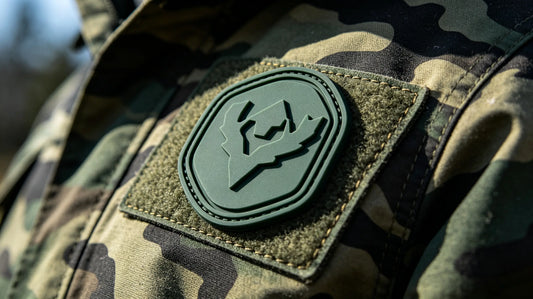
- Hook side (rough): Sewn onto the back of your finished custom patch. Tiny hard plastic hooks catch onto the soft loop fabric.
- Loop side (soft fuzzy): A separate fabric strip that you must attach to your jacket, vest, hat, backpack, or uniform.
The patch will only stick to surfaces fitted with the matching loop fabric. It will not stick directly onto regular cotton, denim, or polyester clothing by itself. This is one of the most common misconceptions among first‑time buyers.
2. Hook‑and‑Loop VS Iron‑On VS Sew‑On Backing
Hook‑and‑Loop
‑ Attachment: Two‑part system, fully removable and swappable ‑ Durability: Excellent when used on loop‑panel gear; hooks can wear down after thousands of removals ‑ Washing: Remove patch before laundering the garment ‑ Best for: Tactical morale patches, law‑enforcement uniforms, collectible displays, rotating badge sets
Iron‑On (Heat‑Seal)
‑ Attachment: Permanent heat‑activated glue bond ‑ Durability: Medium, semi‑permanent; edges may peel after repeated washes ‑ Removable: Very difficult to take off once bonded ‑ Best for: Quick DIY projects, casual clothing, single‑use apparel
Sew‑On
‑ Attachment: Stitched directly around patch border ‑ Durability: Maximum permanent strength, wash‑proof ‑ Removable: Can only be removed by cutting stitching ‑ Best for: Motorcycle vests, heavy‑work uniforms, long‑term permanent applications

3. Key Advantages of Hook‑and‑Loop Patches
Fully Swappable & Re‑Positionable
You can instantly change your patch layout, switch badges to match events, holidays, or missions, and move patches between multiple jackets, hats, and backpacks. One single loop panel can hold dozens of rotating patch designs.
No Heat, No Glue, No Permanent Holes
Hook‑and‑loop creates zero permanent marks on your expensive gear. Leather jackets, high‑end tactical vests, and limited‑edition bags will not get burn marks from irons or needle holes from sewing.
Simple Garment Washing Process
Take the patch completely off before washing your jacket. This eliminates almost every common patch‑related laundry problem: peeling, fading, foam collapse for 3D puff patches, and color bleeding. Both your garment and your patch stay in mint condition.
Highly Versatile For Group & Team Use
Teams, clubs, and departments can share a single vest base and assign different hook‑loop patches to individual members for different roles. It is very cost‑effective for large uniform programs with rotating positions.
Easy Inspection & Replacement
If one patch becomes worn or damaged, you only replace that single patch, not the whole uniform. This drastically cuts long‑term uniform maintenance costs.
4. Important Limitations of Hook‑and‑Loop Patches
Requires Separate Loop Fabric Panel
Your clothing must have a soft‑loop surface already sewn on. Ordinary fabric will not grip the hook side. If your jacket does not come pre‑fitted with loop panels, you will need to buy and sew loop tape onto the garment yourself.
Hooks Wear Down Over Time
After countless peel‑and‑stick cycles, the tiny nylon hook teeth gradually bend flat. Once hooks wear smooth, the patch will no longer grip firmly and may pop loose during high‑activity movement. Heavy‑use tactical patches will need replacement eventually.
Risk of Snagging Other Fabrics
The rough hook back of your loose patch can catch and snag delicate knitwear, fleece, or soft fabrics when carried inside a bag or pocket. Always store patches with hook‑sides facing each‑other, or inside a small protective pouch.
Not Recommended For Constant High‑Speed Motion
On motorbike jackets worn at highway speeds, very large heavy hook‑loop patches have a small risk of lifting and detaching under strong wind. High‑speed riding gear is often better suited for sewn‑on patches.
Extra Thickness
The hook nylon layer adds slight extra thickness to the back of your patch. On thin, close‑fitting garments this may create a small bump.

5. Two Installation Options For Your Loop Side
Option 1: Sew‑on Loop Tape (Most Popular)
Cut your loop fabric to your desired shape, pin it to your vest, then stitch neatly around all four edges. Sewing creates a permanent, extremely strong loop base. This is the standard installation method for tactical uniforms.
Option 2: Iron‑On Loop Tape
Some loop fabric comes with heat‑seal adhesive. While quick to install, iron‑bonded loop tape will peel away after repeated washing. Sewing is always recommended for long‑term loop panel durability.
6. Washing & Long‑Term Care Instructions
- Always peel the hook‑and‑loop patch completely off your gear before you wash the garment. Never launder the patch while attached.
- Clean lint, hair, and fabric fuzz out of the hook teeth regularly. Trapped debris reduces gripping strength. You can pick lint away with a small toothbrush.
- Wash embroidered hook‑loop patches separately in cold gentle water when needed. Air‑dry only; avoid high heat dryers. High heat can warp and melt nylon hook fibers.
- When not in use, store patches hook‑to‑hook to prevent snagging other items.

7. Common Problems & Troubleshooting
Patch will not stick firmly to loop panel
‑ Cause: Hook teeth clogged with lint and debris; hooks worn flat; wrong‑side fabric used. ‑ Fix: Brush lint away. If hooks are smoothed‑out, the patch needs replacing.
Loop fabric peels off jacket
‑ Cause: Loop tape was iron‑on, not sewn. ‑ Fix: Re‑attach loop panel by sewing all edges.
Patch pops off during activity
‑ Cause: Large heavy patch, insufficient loop surface coverage, worn hooks. ‑ Fix: Choose a patch size that fits fully inside your loop panel boundary. Replace worn patches.
8. Best Projects For Hook‑and‑Loop Backing
‑ Tactical morale patches for military, airsoft, paintball gear ‑ Security, safety, and staff uniforms with changing roles ‑ Collectible patch displays and hobby collections ‑ Backpacks, range bags, and gear storage bags ‑ Youth clubs, scout groups, and team rotating badges

Final Thoughts
Hook‑and‑loop (Velcro) backing is the best choice whenever you want removable, swappable custom patches. It protects your expensive garments from permanent glue or needle damage, makes laundry care effortless, and supports endless layout customization.
Just remember you will need a matching soft‑loop surface on your gear. For permanent, high‑speed, heavy‑wear applications, sewing is still the stronger long‑term solution. When matched to the right equipment and cared for properly, hook‑and‑loop custom embroidered patches deliver years of flexible use.
FAQ
Q: Will a hook‑and‑loop patch stick to my normal jacket?
A: No. It will only grip onto soft fuzzy loop fabric. You must add loop tape to regular clothing.
Q: Can I wash my patch while it is attached to my vest?
A: It is strongly recommended to remove the patch before washing. Laundering while attached will wear down hooks rapidly.
Q: How many times can I peel and re‑stick a hook‑loop patch?
A: High‑quality nylon hook backing can withstand hundreds to thousands of peel cycles, before hooks gradually wear flat and lose grip.
Q: Can I add hook‑and‑loop backing to patches I already own?
A: Yes. You can purchase separate hook tape and sew it onto the reverse of finished patches.
Q: Are hook‑and‑loop patches stronger than iron‑on patches?
A: The fastener itself is very strong, but removability means it can be pulled‑off on purpose. Iron‑on creates a permanent, non‑removable bond.
Tags:
Previous
Iron‑On Patches 2026 | Complete Heat‑Transfer Application & Troubleshooting Guide
Next
Custom Leather Patches 2026 | The Complete Buying, Design & Care Guide