3D Embroidered Badge Base Fabric Guide | Twill, Polyester, Satin & Canvas Base Material Craft Standards
For custom 3D embroidered badges, buyers usually focus on stereo height, thread colors and foam quality, while ignoring the most fundamental carrier: base fabric. For flat embroidery badges, base cloth only serves as a carrier. But for pure 3D embroidered badges, the base fabric must resist continuous foam expansion tension, dense stitch pulling force, and high-temperature heat shaping pressure.
Low-grade thin base fabric stretches easily during embroidery, shrinks after heating, and cannot balance 3D stereo tension. The final result is edge warping, surface wrinkling, outline distortion, uneven stereo height, and batch inconsistency. Even with premium foam and high-density stitching, wrong base fabric will ruin the entire 3D badge quality.
Different base fabrics have different tensile strength, shrinkage rate, thickness, hardness and surface texture. Each material fits exclusive 3D thickness, badge size and usage scenario. This professional industrial guide fully standardizes the four core base fabrics for 3D embroidered badges, summarizes their advantages, limitations and matching standards, and solves all fabric-induced 3D shaping defects once and for all.
Custom 3D embroidered badges strictly matches base fabric according to order type. We use low-shrinkage, high-tension professional embroidery base cloth for all pure 3D orders to ensure zero stretching, zero shrinkage, zero warping, and perfectly stable stereo shaping for every custom badge.

Part 1: Why 3D Embroidery Badges Need Special Base Fabric Standards
Flat embroidery = surface stitching only 3D Embroidery Badge = Tension + Foam Support + Heat Shaping + Structural Locking
3D badges place four unique stresses on base fabric:
- Dense 3D stitching pulls the fabric in all directions, requiring strong tensile resistance
- Raised foam pushes upward continuously, requiring non-stretch stable base support
- High-temperature heat shaping causes fabric shrinkage risk, requiring low-shrinkage material
- Long-term wearing and washing requires anti-deformation and anti-wrinkle fabric stability
Ordinary printing cloth or thin stretch cloth is completely unqualified for 3D embroidery badges.
Part 2: Four Industrial Grade Base Fabrics for 3D Embroidered Badges
1. High-Density Twill Fabric (Industry Standard Default)
Core Features: Tight diagonal weave, ultra-low shrinkage, strong tension resistance, moderate thickness Advantages: No stretching during embroidery, stable heat shaping, flat and neat surface, excellent stitch adhesion Best Match: 1mm–3mm standard 3D badges, uniforms, hats, corporate emblems, daily commercial patches Industry Status: The universal standard base fabric for formal 3D embroidered badges
2. High-Tensile Polyester Fabric (Commercial Universal Grade)
Core Features: Fine plain weave, smooth surface, high color restoration, soft texture Advantages: Lightweight, washable, cost-effective, stable batch consistency Best Match: Mass custom 3D badges, fashion apparel patches, team logos, daily merch Limit: Not suitable for 4mm ultra-high 3D thick stereo (slightly softer support)
3. Satin Fabric (High-End Fashion Luxury Grade)
Core Features: Glossy smooth surface, soft drape, delicate texture Advantages: High-end visual effect, elegant surface, no coarse weave texture Best Match: Luxury gift badges, fashion limited patches, decorative high-end 3D embroidery Limit: Low tension resistance, only for 1mm–2mm thin light 3D, not for heavy friction
4. Thick Canvas Fabric (Heavy-Duty Outdoor Grade)
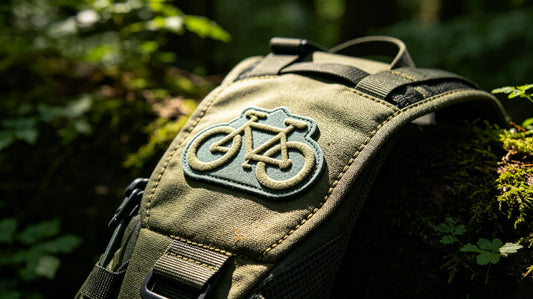
Core Features: Thick tight weave, super tough, wear-resistant, rigid support Advantages: Ultra-strong anti-deformation, anti-friction, anti-tear, perfect for thick stereo support Best Match: 3mm–4mm thick high 3D badges, tactical patches, outdoor gear, motorcycle heavy-duty emblems Limit: Slightly hard hand feel, not suitable for lightweight fashion badges

Part 3: 3D Stereo Height & Base Fabric Matching Golden Rules
1mm–2mm Light Micro 3D Badges
Matching: Polyester / Satin Reason: Light stereo requires soft base, fine texture, smooth surface display
2mm–3mm Standard Commercial 3D Badges
Matching: Twill Fabric (Top Choice) Reason: Balanced tension and thickness, most stable for mainstream 3D badge production
3mm–4mm Thick High 3D Badges
Matching: Thick Canvas / Reinforced Twill Reason: Thick foam has strong tension, only heavy-duty base fabric can prevent sinking and stretching
Part 4: Badge Size & Fabric Stability Rules
Small Mini Badges (2–5cm)
Satin / Polyester: Delicate surface, no coarse weave exposure
Standard Medium Badges (5–12cm)
Twill: Perfect tension balance, zero deformation
Large Back Panel Badges (12cm+)
Canvas / Heavy Twill: Large area easily warps, requires maximum rigid base support

Part 5: 5 Common Fabric-Caused 3D Badge Defects & Solutions
1. Edge Warping & Curling
Cause: Thin low-tension base fabric cannot resist foam rebound Fix: Replace with high-density twill base cloth
2. Surface Wrinkling & Uneven Texture
Cause: Fabric stretching during dense 3D stitching Fix: Use non-stretch professional embroidery base fabric
3. Shrunken Outline After Washing
Cause: High-shrinkage ordinary cloth Fix: Low-shrinkage industrial twill or polyester base
4. Foam Sinking & Unflat Stereo
Cause: Overly soft base fabric lacks support Fix: Upgrade canvas or thick twill for high 3D badges
5. Weave Texture Exposure & Rough Surface
Cause: Coarse low-grade base fabric Fix: High-density fine weave base for delicate 3D badges
Part 6: Washing & Durability Performance Comparison
- Twill Base: 40+ wash cycles, most stable formal grade
- Polyester Base: 30+ wash cycles, excellent daily durability
- Canvas Base: 50+ heavy-duty wash cycles, strongest toughness
- Satin Base: Hand wash recommended, decorative high-end use only

Part 7: Premium 3D Badge Fabric Craft Standard
High-end factory 3D badge rules: All pure 3D stereo badges prohibit ordinary cotton cloth, stretch cloth and thin printing cloth True premium 3D batches adopt unified low-shrinkage twill base to guarantee 100% batch consistency
Part 8: 2026 Latest 3D Badge Fabric Trend
Current high-end custom trend: Fine matte twill base 3D badges Abandon overly glossy cheap surface, adopt fine matte tight twill weave. The texture is delicate, high-grade, non-reflective, more suitable for uniforms, tactical style and high-fashion apparel, and becomes the mainstream standard for commercial premium 3D embroidered badges.
Final Summary Core Rule
3D embroidered badge base fabric determines overall stability and shaping yield. Twill is the standard universal base for most 3D orders, polyester fits light daily badges, satin serves high-end decorative styles, and canvas supports heavy-duty thick high stereo 3D patches. Correct fabric matching eliminates warping, stretching, wrinkling and shrinkage defects, ensuring stable, neat and high-grade stereo effect for all custom 3D embroidery badges.

Frequently Asked Questions
Q1: What is the best base fabric for custom 3D embroidered badges? A: High-density low-shrinkage twill fabric is the industry standard and most stable for almost all 3D badge styles.
Q2: Can satin fabric make thick 3D badges? A: No, satin has low tension and will stretch and deform; only suitable for thin 1–2mm light 3D.
Q3: Why do my 3D badges warp after washing? A: Low-quality high-shrinkage base fabric is the main cause; switch to industrial twill base.
Q4: Is canvas base better for 3D patches? A: Only for thick high stereo heavy-duty badges; too stiff for thin lightweight fashion 3D designs.
Tags:
Previous
3D Embroidered Patch Thread Density Guide | Stitch Count Grading, Tightness Standard & Texture Uniformity Rules
Next
3D Embroidered Badge Adhesive Backing Guide | Heat Seal Glue, Cold Peel, Hot Peel & Permanent Bond Standards