Custom 3D Embroidered Patches for Sports Teams & Athletic Apparel | Design Tips, Fabric Compatibility and Wash Durability
Sports uniforms and fan merchandise rely on visual branding to build team identity. Coaches, athletic directors and apparel designers often compare multiple branding options: flat direct embroidery, heat transfer vinyl, rubber patches, metal pins and 3D Embroidered Patches. The core distinction of 3D Embroidered Patches is its unique construction: polyester embroidery threads fully cover closed-cell EVA foam placed atop polyester twill base fabric, creating raised tactile relief. This foam embroidery technique achieves far greater depth than flat stitching while remaining flexible enough for stretchy athletic textiles.
Sportswear faces frequent stretching, friction during training and repeated machine washing. Low-quality patches will suffer thread loosening, foam compression, exposed foam edges, color fading and backing separation. Unlike rigid metal pins or stiff rubber patches that irritate athletes during movement, properly crafted 3D Embroidered Patches move naturally alongside jerseys, caps and tracksuits. This guide is dedicated solely to foam-built 3D Embroidered Patches for sports use, separating foam embroidery technology from other branding solutions and detailing design rules, wash-resistant material formulas, backing selection and uniform production standards.

Part 1: Why Sports Teams Choose 3D Embroidered Patches
Tactile Raised Branding
Flat embroidery appears flat on fabric, while 3D Embroidered Patches create visible shadow and depth. Team mascots, logos, lettering and numbers pop visually on jerseys, caps and fan hoodies, attracting attention from spectators and photographers.
Excellent Flexibility for Athletic Fabrics
Sports apparel includes polyester jersey, stretch spandex, cotton fleece and lightweight performance fabric. Rigid rubber patches and metal pins cannot flex with stretching textiles and may cause discomfort during training. 3D Embroidered Patches bend and stretch gently without cracking, suitable for active wear.
Simple Uniform Upgrades
Instead of direct embroidery on every garment, teams can apply pre-made 3D Embroidered Patches. This lowers production costs when updating team logos or swapping seasonal designs, and enables reuse of base uniforms across multiple years.
Versatile Application Across Merchandise
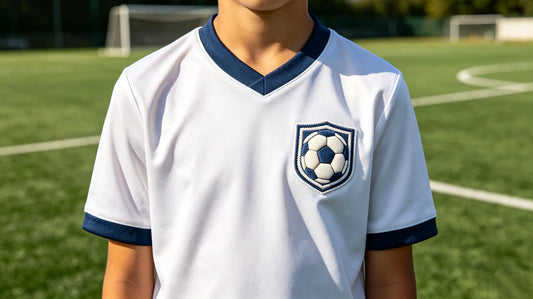
3D Embroidered Patches work seamlessly on game jerseys, training jackets, baseball caps, backpacks, fan beanies and tote bags. Teams can create unified branding sets for athletes and supporter merchandise.
Long-Term Wash Resistance (With Correct Materials)
When manufactured with wash-proof thread and stable closed-cell foam, premium 3D Embroidered Patches retain shape and color through dozens of laundry cycles, outperforming many heat transfer prints that peel or crack after repeated washing.
Part 2: Core Design Guidelines for Sports 3D Embroidered Patches
2.1 Optimize Graphics for Uniform Visibility
Patches will be viewed from stands and field distances. Avoid overcrowding designs with tiny fine details. Bold mascot outlines, thick lettering and strong contrasting team colors ensure instant recognition.
- Minimum uppercase letter height: 6mm for 2mm foam 3D Embroidered Patches; 8mm for 3mm high-relief foam embroidery.
- Ultra-thin graphic lines must be widened during artwork preparation. Narrow shapes cannot support complete foam wrapping stitches and will flatten quickly under friction and washing.
2.2 Standard Sizing Reference for Sports 3D Embroidered Patches
- Cap Front 3D Embroidered Patch: 6cm – 9cm
- Jersey Chest Main Team Logo Patch: 10cm – 15cm
- Sleeve Secondary Emblem Patch: 5cm – 8cm
- Fan Merch Large Back Patch: 15cm – 22cm
2.3 Color Matching for Team Brand Standards
Match thread colors strictly to official team Pantone shades. Choose high-tenacity polyester thread with Grade 4+ wash and light fastness. Low-grade dyed threads bleed and fade after repeated laundry cycles, ruining uniform appearance.
2.4 Contour Structure Recommendations
Shields, mascot silhouettes, oval and rectangular shapes are common for sports teams. All outer edges of 3D Embroidered Patches require continuous perimeter wrapping stitches to seal foam, preventing foam exposure after washing and surface abrasion.

Part 3: Specialised Material Selection for Sports 3D Embroidered Patches
All materials listed below are designed exclusively for foam-based 3D Embroidered Patches and are not compatible with raw materials used for rubber patches, metal pins or flat embroidery.
Embroidery Thread
High-tenacity polyester thread with Grade 4+ color fastness for washing and UV exposure. Cotton thread is not recommended for sports uniforms; cotton fibers weaken, fray and bleed dye during machine laundering.
Base Fabric
Medium-weight polyester twill. Stable twill prevents stretching and deformation of the patch structure during washing, providing solid support for dense foam wrapping stitches.
3D Relief Core: Closed-Cell EVA Foam
Medium-hardness closed-cell EVA foam is the standard for sports 3D Embroidered Patches. Overly soft foam compresses permanently after repeated squeezing and washing; overly rigid foam reduces flexibility and irritates athletes during movement. 2mm foam is widely used for cap and jersey patches; 3mm foam is selected for fan merchandise requiring maximum stereo effect.
Backing Selection for Sports 3D Embroidered Patches
✅ Sew-On Backing (Top Recommendation for Official Uniforms) The most reliable choice for team jerseys, training apparel and caps. No adhesive layer to fail under repeated washing, high temperature and sweat exposure. Sew-on attachment creates permanent bonding ideal for long-term athletic use.
⚠️ Iron-On Backing (Limited to Low-Wash Fan Merchandise) Iron-on backing works well for casual fan apparel with infrequent washing. Not recommended for official game uniforms; continuous laundry cycles and body sweat will gradually break down adhesive, causing patches to lift and peel.
⚠️ Hook & Loop Backing Suitable for interchangeable patches on sports backpacks and training vests. Rarely used on official game jerseys, as repeated detachment may damage uniform fabric.
Edge Finishing Options for 3D Embroidered Patches
- Merrow Stitched Border Popular for regular oval, shield and rectangular team logos. Reinforced outer stitching prevents edge thread fraying during washing and friction, delivering a classic sport uniform aesthetic.
- Laser Cut Edge Best choice for custom mascot silhouettes and irregular shapes. Precise laser trimming delivers sharp outlines. Manufacturers must add continuous foam wrapping stitches to seal all cut edges.
- Hot Cut Edge Only suitable for small lightweight fan patches. Avoid hot cut edges for jersey uniform patches; heat-sealed edges may separate after repeated washing cycles.

Part 4: Critical Production Requirements for Sports 3D Embroidered Patches
Professional 3D Embroidery Digitizing
- Calibrate balanced stitch density to avoid excessive compression flattening foam during washing and stretching
- Mandatory full foam edge wrapping stitches to seal foam completely against water penetration
- Add perimeter stabilizing running stitches to minimise edge curling after repeated laundry cycles
Pre-Production Wash Sample Test
For official team uniforms, request a physical sample and complete a simulated wash test before bulk production. Digital mockups cannot verify foam stability, thread color fastness or patch flatness after laundering.
Color Consistency Control
Batch color matching is essential for team sets. Ensure all 3D Embroidered Patches within one order use identical thread lots to avoid color difference between jerseys, caps and merchandise.
Part 5: Practical Application & Care Tips for 3D Embroidered Patches on Sportswear
- When sewing sew-on 3D Embroidered Patches onto performance jerseys, use polyester sewing thread to match stretch properties of athletic fabric.
- Avoid placing large 3D Embroidered Patches in high-friction zones such as underarm areas to prevent accelerated wear.
- Turn garments inside out before machine washing to protect embroidery surfaces.
- Do not tumble dry on high heat; excessive heat will deform foam inside 3D Embroidered Patches. Air drying is preferred.
- Avoid heavy ironing directly on the raised surface of 3D Embroidered Patches.

Part 6: Common Defects of Sports 3D Embroidered Patches & Solutions
1. Thread fades or bleeds after repeated washing
Cause: Low color fastness embroidery thread Solution: Specify Grade 4+ wash-resistant polyester thread when ordering 3D Embroidered Patches
2. Raised foam surface flattens permanently
Cause: Overly soft EVA foam or over-dense stitch compression Solution: Select medium-hardness closed-cell foam and apply balanced digitizing parameters for 3D Embroidered Patches
3. Foam leaks out from patch edges after laundry
Cause: Missing complete perimeter wrapping stitches Solution: Confirm full foam edge wrapping is included in production specifications for all 3D Embroidered Patches
4. Iron-on backed patches lift off jerseys after washing
Cause: Adhesive degraded by water and sweat Solution: Switch to sew-on backing for all official team uniform 3D Embroidered Patches
5. Patch edges curl after multiple wash cycles
Cause: Insufficient perimeter stabilizing stitches or thin base twill Solution: Upgrade to medium-weight twill and add reinforcing running stitches during digitizing
Part 7: Maintenance Guidance for Garments with 3D Embroidered Patches
- Wash garments inside out using mild detergent, select cold or lukewarm water cycles
- Avoid bleach, fabric softener and aggressive stain removers that damage thread color and foam structure
- Do not use high-temperature tumble drying; air dry away from direct strong sunlight
- Refrain from heavy ironing directly on top of 3D Embroidered embroidery surfaces
- Do not scrub aggressively against the raised patch area during cleaning
Part 8: 2026 Industry Trend for Sports 3D Embroidered Patches
Sports teams and school athletic programs are increasingly choosing matched branding sets consisting of coordinated 3D Embroidered Patches for uniforms, caps and fan merchandise. Many buyers clearly distinguish foam-based 3D Embroidered Patches from heat transfers and rubber patches, prioritizing premium tactile branding for official team kits. More athletic apparel suppliers require pre-production wash testing to guarantee patch durability, and many youth sports leagues prefer flexible foam embroidery over rigid alternative branding to reduce athlete discomfort during training and competition.

Final Summary Core Rule
Custom 3D Embroidered Patches constructed with thread-wrapped closed-cell foam deliver flexible, eye-catching three-dimensional branding for sports uniforms and fan merchandise, with unique advantages over flat embroidery, rubber patches and metal pins. Sew-on backing is the most reliable choice for official game jerseys and athletic apparel. Design graphics should prioritize field visibility, and production must include full foam edge wrapping and wash-resistant polyester thread. With appropriate material selection and professional 3D embroidery digitizing, foam embroidered patches maintain shape, color and stereo texture through countless training sessions and laundry cycles.
Frequently Asked Questions
Q1: What backing works best for 3D Embroidered Patches on sports jerseys? A: Sew-on backing is strongly recommended for official uniforms; iron-on backing is only suitable for casual fan merchandise with infrequent washing.
Q2: Will 3D Embroidered Patches remain flexible on stretch athletic fabric? A: Yes. Properly manufactured foam-based 3D Embroidered Patches flex naturally with performance textiles, unlike stiff rubber alternatives.
Q3: Can 3D Embroidered Patches survive repeated machine washing? A: Yes, if produced with high wash fastness polyester thread and stable closed-cell foam. Following proper garment care instructions extends service life.
Q4: What foam thickness is recommended for cap front 3D Embroidered Patches? A: 2mm medium-hardness closed-cell foam offers balanced stereo effect and flexibility for baseball caps.
Tags:
Previous
3D Embroidered Patches for Tactical Gear & Outdoor Enthusiasts | Design Guide, Durability and Backing Options
Next
3D Embroidered Patches for Fashion Brands & Streetwear | Custom Design Trends, Fabric Matching and Application Methods