Custom Patch Backing Types Guide | Iron-On, Sew-On, Velcro & Self-Adhesive Pros & Cons
Most customers focus on patch design, color and craft while ignoring backing selection. In fact, the backing type directly decides whether the patch can be installed smoothly, whether it will fall off, and its overall service life. Different backings fit different fabrics, equipment and usage environments. Choosing the wrong backing will lead to peeling, warping and scrapping even with high-quality patch craftsmanship. This comprehensive backing comparison guide systematically analyzes the four mainstream types, helping you make accurate choices for personal DIY, team uniforms, outdoor gear and promotional gifts.
Custom 3D embroidered patches supports all four backing processes, providing targeted backing matching solutions according to customer usage scenarios to ensure stable and long-term use of patches.

Part 1: Core Classification & Basic Definition of Patch Backings
All custom patch backings are divided into four mainstream types, covering 99% of daily and commercial customization scenarios. Each type has independent structural characteristics, installation methods and environmental adaptability:
1. Iron-On Hot Melt Backing: Glue-coated heat-activated backing, fixed by high-temperature ironing.
2. Sew-On Blank Backing: Pure fabric backing without glue, fixed by manual or machine sewing.
3. Velcro Hook & Loop Backing: Detachable adhesive backing, freely replaceable and combinable.
4. Self-Adhesive Sticker Backing: Double-sided glue backing, tear and paste for one-time quick installation.
Part 2: Iron-On Hot Melt Backing (Most Popular for Daily Clothing)
1. Craft Principle
Uniformly coated with high-temperature hot melt glue on the patch back. The glue melts and adheres to the fabric after heating, and solidifies after cooling to complete fixation.
2. Advantages
No sewing required, easy and fast installation, zero operation threshold, flat and neat after pasting, no bulging stitches, low cost, suitable for mass clothing matching.
3. Disadvantages
Poor high-temperature resistance and water resistance. Long-term soaking, high-temperature washing and dryer use will cause glue failure and peeling. Not detachable and cannot be reused.
4. Suitable Scenarios
Daily casual clothes, children’s clothing, school ordinary uniforms, backpacks, low-frequency washing items, indoor decorative patches.
5. Unsuitable Scenarios
Outdoor rainproof gear, riding equipment, high-frequency washing uniforms, high-temperature drying clothes.

Part 3: Sew-On Blank Backing (Most Durable & Permanent)
1. Craft Principle
Retain the original fabric backing without any glue coating. Fix the patch on the target fabric through circle sewing or edge sewing.
2. Advantages
Ultra-strong durability, waterproof, high-temperature resistant, washable countless times, no peeling or warping. Soft and fit, no hard glue layer, best wearing comfort.
3. Disadvantages
Manual sewing required for installation, slightly complicated operation, longer installation time.
4. Suitable Scenarios
Formal school uniforms, corporate staff uniforms, biker vests, outdoor professional gear, long-term fixed team emblems, high-wash-frequency clothing.
5. Core Features
The only backing that supports long-term outdoor use and repeated industrial washing, recognized as the most reliable permanent fixation method.
Part 4: Velcro Hook & Loop Backing (Most Flexible & Replaceable)
1. Craft Principle
Attach full or half covered Velcro on the patch back. Match the loop base on clothes or gear to realize quick adhesion and disassembly.
2. Advantages
Freely detachable and replaceable, support seasonal style switching, convenient for cleaning clothes, reusable, strong three-dimensional sense, neat display effect.
3. Disadvantages
Slightly higher cost than iron-on backing, easy to stick lint after long-term use, need regular cleaning to maintain adhesion.
4. Suitable Scenarios
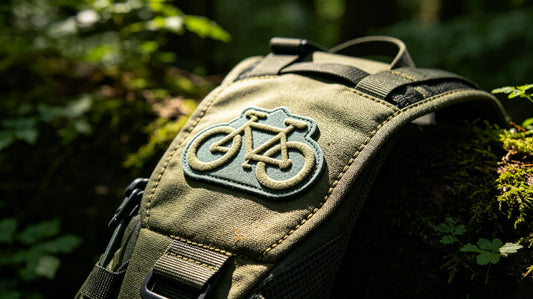
Tactical vests, outdoor backpacks, club activity patches, collection commemorative patches, team exchange patches, multi-style matching decorations.
5. Usage Tips
Choose full-coverage thickened Velcro for large patches to avoid partial falling off caused by uneven force.

Part 5: Self-Adhesive Backing (Fastest One-Time Installation)
1. Craft Principle
Equipped with high-viscosity double-sided adhesive backing with protective film. Tear off the film and paste it directly on smooth surfaces.
2. Advantages
Instant installation, no tools required, ultra-convenient, suitable for temporary decoration and hard surface pasting.
3. Disadvantages
Poor durability, easy to lose viscosity after bending and washing, not reusable, only suitable for short-term use.
4. Suitable Scenarios
Notebooks, pencil cases, hard shell water bottles, gift box decoration, temporary display items, non-washable accessories.
5. Unsuitable Scenarios
All washable fabrics, frequently bent clothing surfaces, long-term outdoor exposure items.
Part 6: Multi-Dimensional Backing Contrast Table
|
Backing Type
|
Durability
|
Waterproof
|
Reusable
|
Installation Difficulty
|
Cost
|
|---|---|---|---|---|---|
|
Iron-On
|
Medium
|
Poor
|
No
|
Easy
|
Low
|
|
Sew-On
|
Ultra-High
|
Excellent
|
No
|
Hard
|
Low
|
|
Velcro
|
High
|
Excellent
|
Yes
|
Easy
|
Medium
|
|
Self-Adhesive
|
Low
|
Poor
|
No
|
Very Easy
|
Low
|

Part 7: Targeted Backing Matching Rules By Scenario
1. Student & School Uniforms
Formal uniforms prioritize sew-on backing for long-term washing resistance; ordinary casual school clothes can choose iron-on backing for convenient arrangement.
2. Outdoor & Tactical Gear
Uniformly match Velcro or sew-on backing, avoid iron-on and self-adhesive to prevent peeling in wind and rain.
3. Biker & Riding Clothes
Leather vests and jackets use sew-on backing for anti-vibration and anti-falling; activity commemorative patches use Velcro.
4. Daily DIY Decoration
Bags and hats choose iron-on or Velcro; stationery and hard accessories use self-adhesive backing.
5. Promotional & Gift Patches
Universal gifts adopt cost-effective iron-on backing; high-end collection gifts use detachable Velcro backing.
Part 8: Common Backing Selection Mistakes To Avoid
1. Choose iron-on backing for outdoor rainproof gear → glue fails quickly after water soaking.
2. Use self-adhesive backing on washed clothes → peel off after one or two washes.
3. Match large heavy patches with thin Velcro → local depression and falling off easily occur.
4. Pursue convenience and use iron-on backing for high-frequency washing uniforms → short service life.
5. Choose sew-on backing for temporary decorative patches → unnecessary installation trouble.
Part 9: Daily Usage & Maintenance By Backing Type
1. Iron-On Patches: Wash in cold water with gentle mode, avoid dryer and high-temperature ironing again.
2. Sew-On Patches: Check stitches regularly, trim loose threads, support normal washing and sun drying.
3. Velcro Patches: Clean surface lint frequently to ensure stable adhesion, disassemble before washing clothes.
4. Self-Adhesive Patches: Avoid squeezing and bending, replace regularly after viscosity decreases.

Final Summary Core Rule
Sew-on backing is the first choice for permanent and high-wash scenarios; iron-on backing is best for convenient daily clothing decoration; Velcro backing dominates replaceable and collection patches; self-adhesive backing is only for short-term hard surface decoration. Match backing according to usage environment, washing frequency and replacement demand to maximize patch service life.
Frequently Asked Questions
Q1: Which patch backing is the most durable? A: Sew-on blank backing has the strongest durability and is suitable for long-term use.
Q2: Can iron-on patches be washed normally? A: Yes, but only cold water gentle washing, avoid high temperature and soaking.
Q3: Are Velcro patches reusable? A: Yes, they can be disassembled and replaced freely for long-term repeated use.
Q4: What backing is best for hard water bottle patches? A: Self-adhesive or professional waterproof Velcro backing is the most suitable.
Tags:
Previous
Custom Patch Merrow Edge vs Heat Cut Edge | Edge Types, Pros & Cons & Selection Guide
Next
Custom Patch Color Matching & Color Fastness Guide | Pantone Matching, Fading Prevention & Color Troubleshooting