Patch Border Guide: Merrow Edge, Heat Cut & No Border Comparison
When customizing embroidered and woven patches, the border style is an easily overlooked yet vital detail. A proper edge design can enhance durability, unify the overall style and even raise the grade of patches. The three most common edge types in the industry are merrow edge, heat cut edge and borderless design. Each has unique appearance, performance and applicable scenarios.
Many buyers randomly select borders without considering craft matching and usage environment, leading to loose edges, thread fraying or mismatched style. This guide fully explains the features, advantages, drawbacks and matching rules of three mainstream patch borders, helping you make targeted choices for uniforms, hats, bags and souvenir patches. Custom 3D embroidered patches offers all edge styles to match your design and usage demands.

Overview of Three Main Patch Borders
Patch borders are mainly used to fix edge threads, prevent fraying and shape the overall outline. Merrow edge and heat cut edge are artificial processing edges, while borderless patches retain natural edges integrated with patterns. They differ greatly in texture, thickness and style positioning.
1. Merrow Edge (Overlock Edge)
Merrow edge is the classic thick overlock stitching, also known as embroidered border. It is made by continuous circular stitching around the patch outline, forming a raised three-dimensional border.
Core Features
- Thick and obvious stitches, strong three-dimensional sense, classic retro style
- Excellent anti-fray performance, highest durability among all edge styles
- Multiple color options for border threads, can contrast or match the main patch color
- Slightly increases the overall thickness of the patch
Advantages
- Resists long-term friction and repeated washing, not easy to loose or crack
- Clear outline, strong sense of hierarchy, highly recognizable
- Widely compatible with all embroidered patches
Limitations
- Bulky texture, not suitable for ultra-thin close-fitting clothing
- The raised border may slightly affect fitting on ultra-curved surfaces
Best Applicable Scenarios
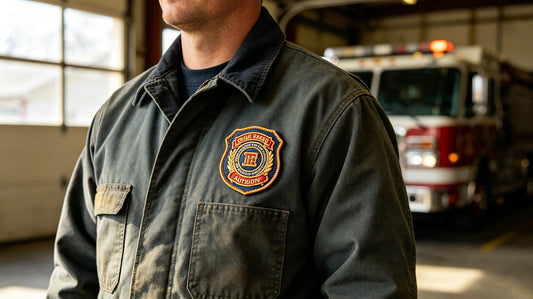
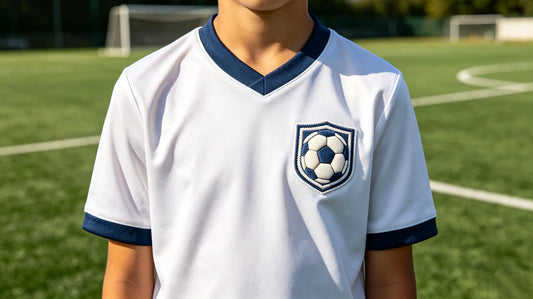
- Team uniforms, security uniforms, sports jerseys and workwear with high washing frequency
- Hats, backpacks and outdoor gear bearing long-term friction
- Retro style patches, tactical morale patches and commemorative souvenirs
- Formal team emblems that require stable outlines

2. Heat Cut Edge
Heat cut edge, also called hot cut edge, uses high temperature to melt and seal the patch edge, forming a flat and smooth outline without extra stitching. It is the mainstream choice for modern minimalist styles.
Core Features
- Completely flat surface, no raised stitches, thin and neat
- The edge is slightly hardened by high-temperature sealing to prevent thread fraying
- Simple and low-key outline, does not grab attention, highlights internal patterns
- Uniform and delicate texture, high-end visual feeling
Advantages
- Ultra-flat, almost flush with fabric, comfortable for close wearing
- Concise style, matches modern business and minimalist fashion
- Low profile, won’t destroy the overall aesthetic of fine patterns
- Lower cost than merrow edge for bulk orders
Limitations
- Durability is weaker than merrow edge; long-term severe friction may cause local wire loosing
- Single color effect, unable to make multi-color border designs
Best Applicable Scenarios
- High-end business uniforms, medical uniforms and service industry outfits
- Woven patches and thin flat embroidered patches with fine details
- Close-fitting clothes, slim jackets and delicate fashion accessories
- Brand logo patches that focus on minimalist and low-key style

3. Borderless Design (No Border)
Borderless patches cancel extra edge processing. The pattern extends directly to the patch edge, presenting a natural and integrated visual effect. It is a popular high-end design in recent years.
Core Features
- No obvious dividing line between edge and pattern, natural transition
- The overall vision is integrated, breaking the rigid feeling of regular outlines
- Ultra-thin and soft, the most comfortable for wearing
- Strong artistic sense, suitable for creative and personalized designs
Advantages
- Perfect fusion with clothing and accessories, like patterns directly printed on fabric
- Maximum display of complete patterns without being restricted by borders
- Lightweight and flexible, fits all curved surfaces and elastic fabrics
Limitations
- Higher process requirements, not suitable for patches with loose stitching
- Poor anti-fray ability; not recommended for high-frequency washing and heavy friction scenes
- Not compatible with overly complex irregular shapes
Best Applicable Scenarios
- Fashion brand apparel, personalized casual clothes and limited-edition patches
- Art-themed patches, creative graphic designs and abstract pattern patches
- High-end collection patches and gift souvenirs with artistic styles
- Thin woven patches and small delicate decorative patches
Border & Patch Craft Matching Rules
Embroidered Patches
- High-density embroidery for long-term use: Priority Merrow Edge for maximum durability
- Thin flat embroidery for business wear: Choose Heat Cut Edge for flat and neat effect
- Fashion creative embroidery patterns: Try Borderless Design for integrated vision
Woven Patches
- Woven patches with tiny text and fine lines: Heat Cut Edge is the best match, keep flat and clear
- Large area woven decorative patches: Optional merrow edge to enhance outline sense
- Ultra-thin mini woven labels: Borderless design to maintain lightweight features
PVC & Leather Patches
- PVC rubber patches and leather patches do not need thread borders. Their own material structure naturally prevents edge damage, so border selection is not required. Focus on contour cutting and surface craft instead.

Border Selection by Usage Scenario
Formal Work & Team Uniforms
- Daily washed work uniforms, security uniforms: Merrow Edge (prioritize durability)
- Office business uniforms, medical uniforms: Heat Cut Edge (prioritize flatness and formality)
Hats & Outdoor Gear
- Sports hats, tactical hats, outdoor backpacks: Merrow Edge (resist outdoor friction)
- Fashion casual hats and retro leather hats: Heat cut or borderless for delicate style
Event & Commemorative Patches
- Large-scale official competition patches: Merrow Edge for stable and formal look
- Music festivals, theme activity patches: Heat cut or borderless for creative atmosphere
High-End Apparel & Brand Merchandise
- Luxury clothing and studio brand products: Heat cut or borderless to present high-end minimalist texture
Common Mistakes to Avoid
- Using merrow edge on ultra-thin close-fitting uniforms, causing bulging and poor comfort.
- Choosing borderless design for patches on frequently washed workwear, leading to rapid edge fraying.
- Matching thick multi-color merrow edge with delicate fine-line patterns, distracting attention from core designs.
- Picking heat cut edge for outdoor high-friction gear, resulting in short service life.
- Designing complex irregular shapes with borderless craft, increasing the risk of edge damage.

Final Summary
The three border styles have clear positioning:
Merrow Edge = durable, three-dimensional, classic, for high friction and frequent washing scenarios.
Heat Cut Edge = flat, neat, minimalist, for formal business wear and fine detailed patches.
Borderless = integrated, artistic, lightweight, for fashion creativity and high-end customized products.
When choosing borders, combine patch craft, wearing environment and design style. A reasonable edge design can not only extend the service life, but also make the overall patch design more complete and professional.
Frequently Asked Questions
Q1: Which patch border is the most durable?
A: Merrow edge, with strong anti-fray performance for long-term use.
Q2: Which edge is best for close-fitting uniforms?
A: Heat cut edge, ultra-flat and comfortable without bulging.
Q3: Can borderless patches resist frequent washing?
A: Not recommended, their edge durability is relatively weak.
Q4: What edge to choose for retro style embroidered patches?
A: Merrow edge, which matches classic retro temperament perfectly.
Tags:
Previous
Custom Patch Shapes: Standard & Unique Contour Design Guide
Next
Custom Patch Color Guide: Color Matching Rules & Popular Combinations