How to Wash and Care for Custom Embroidered Patches to Extend Their Lifespan
Custom embroidered patches are durable, stylish, and versatile, ideal for decorating jackets, uniforms, backpacks, hats, and outdoor gear. However, without proper washing and daily maintenance, high-quality patches can quickly fade, fray, peel, or lose their neat texture after repeated wearing and cleaning. Many people mistakenly toss patched clothing into regular washing machines or use harsh detergents, resulting in damaged patches and wasted customization costs. This complete care guide will teach you how to wash, clean, dry, and store custom embroidered patches properly, helping you avoid common damage and greatly extend your patch lifespan. Before you order custom embroidered patches for your apparel and gear, master these professional maintenance skills to keep your patches looking brand new for years.
Different patch backing types and fabric bases require different care methods. Iron-on patches, sew-on patches, and hook & loop patches all have unique weaknesses during washing and daily use. Understanding these differences allows you to adopt targeted maintenance strategies, protect stitch details and colors, and maintain a neat, professional look for your custom patches.
1. Pre-Washing Precautions for All Embroidered Patches
Pre-washing preparation is the key to avoiding patch damage. Many patch peeling and fraying problems occur not during washing, but due to incorrect pre-washing operations. No matter what kind of embroidered patches you use, follow these universal precautions before cleaning.
Universal Pre-Washing Rules: • Check Patch Firmness: Before washing, gently pull the edge of the patch to confirm it is firmly attached. For iron-on patches with slight edge warping, press them with a low-heat iron first to reinforce adhesion and prevent peeling during washing. • Turn Clothes Inside Out: Always turn patched apparel inside out before washing. This reduces direct friction between patch stitches and the washing machine drum, avoiding stitch loosening and surface abrasion. • Separate Washing: Wash patched clothes separately from rough fabrics like denim or towels. Hard friction from thick fabrics will scratch patch threads and cause pilling. • Avoid Harsh Chemicals: Prepare mild, neutral detergent in advance. Never use bleach, strong stain removers, or fabric softeners containing fluorescent agents, which will cause thread fading and color distortion.
Pro Tip: When you custom embroidered patches, ask the supplier for professional care instructions matching your patch backing type, so you can formulate a targeted maintenance plan.

2. Washing Methods by Patch Backing Type
Backing type determines the patch’s water resistance and adhesion stability. Iron-on, sew-on, and hook & loop patches have completely different washing requirements. Using a unified washing method will greatly shorten their service life.
Washing Guide for Different Backings: • Iron-On Heat Seal Patches: Iron-on patches rely on heat-activated adhesive for bonding, so they are the most vulnerable to water and high-temperature damage. It is recommended to wash by hand with cold or lukewarm water (below 30°C). If using a washing machine, choose a gentle cold-water cycle and put the clothes in a laundry bag. Avoid long-time soaking—soaking over 20 minutes will soften the adhesive and cause edge peeling. • Sew-On Patches: Sew-on patches have the strongest stability with physical stitching fixation. They support machine washing and hand washing. You can use a normal gentle cycle, but still avoid high temperature and strong detergent. The stitched edges are not easy to peel, but excessive friction may cause loose stitches. • Hook & Loop Patches: It is better to remove hook & loop patches before washing if possible. If removal is inconvenient, must put them in a laundry bag to prevent the hook surface from hooking other fabrics or damaging patch stitches. Avoid pressing and twisting hard, which will deform the patch shape. • Peel & Stick Patches: These temporary adhesive patches are not washable at all. Water will completely fail the adhesive, leading to falling off. Remove peel & stick patches before cleaning items.
Pro Tip: When you order custom patches for daily frequently washed clothes, prioritize sew-on backing for the best wash resistance and durability.

3. Correct Drying Techniques to Prevent Deformation & Fading
Incorrect drying is one of the main causes of patch fading, warping, and adhesive failure. Many high-quality patches are damaged after the first drying due to high-temperature baking or direct sunlight exposure. Master these drying rules to protect your patches effectively.
Patch Drying Rules: • Avoid High-Temperature Machine Drying: Never put patched clothes into a high-temperature dryer. High heat will melt the iron-on adhesive, deform the patch shape, and accelerate thread fading. If you need quick drying, choose a cold air drying mode only. • Dry in Shade: Hang patched apparel in a well-ventilated cool place to dry naturally. Long-term direct sunlight will cause gradual color fading of colored threads, especially bright red, blue, and yellow embroidery threads. • Flat Dry for Soft Fabrics: For thin t-shirts and hoodies with embroidered patches, lay them flat to dry to avoid patch deformation caused by gravity stretching during hanging. • Do Not Wring Hard: After hand washing, do not twist or squeeze the patch area hard. Extrusion force will displace the patch and loosen internal stitches.
Pro Tip: After washing and drying, gently flatten the patch edge by hand. This simple action can effectively prevent warping and keep the patch flat and neat for a long time.

4. Daily Maintenance & Stain Removal Tips
Daily careful maintenance can greatly extend the service life of custom embroidered patches. Timely and correct stain removal can also avoid permanent damage caused by long-term dirt accumulation.
Daily Care & Stain Removal Guide: • Daily Wearing Protection: Avoid long-term friction with backpack straps, belts, and rough surfaces when wearing patched clothes. Frequent local friction will cause thread pilling and thinning. • Gentle Stain Cleaning: For local small stains, use a cotton swab dipped in dilute neutral detergent to wipe gently, instead of overall washing. This reduces unnecessary water contact and protects patch adhesion. • Oil Stain Treatment: For oil stains on embroidery threads, apply a small amount of mild soap foam, let it stand for 3 minutes, then wipe and rinse with cold water. Do not scrub hard to avoid thread shedding. • Dust Cleaning: Usually use a soft brush or lint roller to clean surface dust on patches, keeping the embroidery texture clear and neat.
Pro Tip: When you custom embroidered patches for outdoor gear and work uniforms that are easy to get dirty, choose high color fastness thread options for better stain resistance and color stability.
5. How to Fix Common Patch Damage Problems
Even with careful maintenance, minor damage such as edge peeling, slight warping, and loose stitches may occur after long-term use. You can repair these common problems at home without replacing the patch.
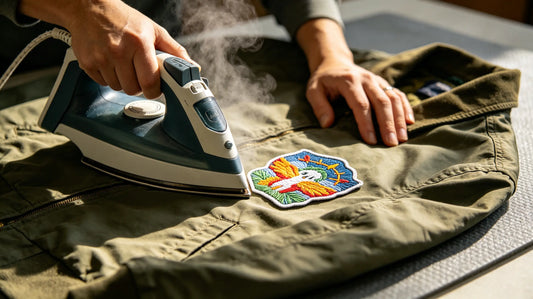
Common Damage & Repair Methods: • Edge Peeling (Iron-On Patches): Clean the patch surface, cover with a thin cloth, and press with a low-temperature iron for 10–15 seconds to reactivate the adhesive. After cooling naturally, the patch will stick firmly again. • Patch Warping: Lay the clothes flat, cover the patch with a cloth, and apply even low heat and pressure to flatten the warped part. Avoid high temperature to prevent adhesive melting and deformation. • Loose Stitches: Use a small needle and matching color thread to fix the loose edge slightly, trimming excess floating threads to keep the patch tidy. • Faded Dullness: Avoid repeated sun exposure for faded patches. You can use clothing color fixative appropriately to enhance color saturation and restore luster.
Pro Tip: Do not use super glue to repair peeling patches. Hard glue will harden the patch texture, cause brittle cracking, and damage the original embroidery threads.

6. Long-Term Storage Methods for Unused Patches
Proper storage is essential whether you store patched clothes or spare custom embroidered patches. Wrong storage will cause mildew, discoloration, and adhesive failure.
Long-Term Storage Tips: • Keep Dry & Ventilated: Store patched clothes in dry, ventilated wardrobes. Damp environment will cause mildew on threads and backing adhesive failure. • Avoid Stacking Heavy Objects: Do not press heavy items on patched clothes for a long time, which will cause permanent patch flattening and deformation. • Independent Storage for Spare Patches: Put unused custom patches in sealed transparent bags, avoiding dust, moisture, and extrusion. Keep them flat to maintain shape. • Separate Hook & Loop Patches: Store hook & loop patches separately to prevent the hook surface from scratching other patches or fabrics.
7. What Shortens Embroidered Patch Lifespan? (Mistakes to Avoid)
Many daily unnoticed habits are the main culprits of patch damage. Avoid these wrong operations to maximize the service life of your custom patches.
Bad Habits to Avoid: • Washing with hot water over 40°C, which fails adhesive and fades threads • Using bleach, strong detergent, and irritating fabric softener • High-temperature drying and long-term direct sunlight exposure • Hard scrubbing and twisting the patch area during cleaning • Using super glue or strong adhesive to repair peeling patches • Long-term damp storage and heavy extrusion

Final Thoughts
Custom embroidered patches are exquisite customized crafts that deserve careful maintenance. Correct washing methods, scientific drying skills, daily protection, and standard storage can effectively avoid common problems such as fading, peeling, warping, and fraying, greatly extending the patch lifespan. Different backing patches have different maintenance focuses: iron-on patches focus on low-temperature and less water washing, sew-on patches focus on anti-friction, and hook & loop patches focus on protective storage.
As long as you follow this professional care guide, your custom embroidered patches can keep bright colors and three-dimensional texture for years. When you’re ready toorder custom embroidered patches, choose high-quality craftsmanship and match with scientific daily maintenance to make your customized patches always look brand new.
FAQ
Q:Can custom embroidered patches be machine washed?
A:Yes, most embroidered patches can be machine washed with precautions. Sew-on patches are the most machine-wash friendly. Iron-on patches need a cold gentle cycle and laundry bag protection, while hook & loop patches are better removed before machine washing. Never use hot water or high-temperature drying. When you order custom embroidered patches, confirm the backing type to match the correct washing method.
Q:Why do iron-on patches peel off after washing?
A:Iron-on patch peeling is mainly caused by high-temperature washing, long soaking, unprotected machine washing, or incomplete ironing during application. The heat-activated adhesive will fail under high heat and excessive water immersion. You can re-iron the peeling edge with low heat to repair it. For long-term durability, you can add hand stitching reinforcement. When you custom patches, choose high-quality heat-seal adhesive for better water resistance.
Q:How to prevent embroidered patches from fading?
A:To prevent patch fading, avoid direct sunlight drying, hot water washing, bleach and strong chemical detergents. Choose neutral mild detergent and cold water cleaning. High-quality color-fast threads also effectively prevent fading. When youorder custom embroidered patches, ask for color-fast polyester threads to ensure long-lasting bright colors.
Q:Is it okay to put patched clothes in the dryer?
A:It is not recommended. High-temperature dryer heat will melt iron-on adhesive, deform patch shapes, and accelerate thread fading. If you need to use a dryer, only choose cold air mode with no heating function, and put the clothes in a sealed laundry bag for protection.
Q:How long can a well-maintained embroidered patch last?
A:With correct washing and daily maintenance, high-quality custom embroidered patches can last 3–5 years for daily wear, and even longer for infrequently used items. Sew-on patches have the longest lifespan, followed by hook & loop patches, while iron-on patches need more careful maintenance for long-term use. When you custom embroidered patches, matching high-quality production with scientific care achieves the best durability.
Tags:
Previous
Bulk Custom Embroidered Patches: Cost Control, MOQ Optimization & Efficient Delivery Guide
Next
2D Flat vs 3D Puff vs Chenille Embroidered Patches: Full Comparison Guide