Custom Embroidered Patch DIY Guide: From Beginner to Advanced
Custom embroidered patches are a fantastic way to personalize apparel, gear, and home decor—and applying them yourself is easier than you think. Whether you’re a complete beginner looking for quick, no-sew options or an advanced DIYer ready to tackle complex sew-on projects, there’s a patch application method that fits your skill level. Before you order custom embroidered patches, knowing the right DIY techniques will help you achieve a professional, long-lasting finish, no matter what you’re customizing.
This guide breaks down DIY patch application into beginner, intermediate, and advanced levels, covering all popular backing types (iron-on, peel & stick, hook & loop, sew-on). We’ll share essential tools, step-by-step instructions, and pro tips to help you avoid common mistakes and create custom pieces you’ll love to show off.
Beginner Level: No-Sew DIY Patch Applications (Perfect for Newbies)
If you’re new to DIY or want a quick, hassle-free way to apply patches, these no-sew methods are ideal. They require minimal tools and no sewing experience, making them perfect for beginners, kids, or anyone short on time.

1. Peel & Stick (Self-Adhesive) Patches: The Easiest DIY Option
Peel & stick patches are the simplest DIY choice—no heat, no sewing, just peel and stick. They’re great for temporary projects, promotional items, or solid surfaces like laptops, water bottles, and notebooks.
Step-by-Step: 1. Clean the surface thoroughly—wipe it with a dry cloth to remove dust, dirt, and moisture (a clean surface ensures better adhesion). 2. Peel off the backing paper from the patch, exposing the adhesive. 3. Align the patch in your desired position, press firmly for 10–15 seconds, and smooth out any bubbles. 4. Let the adhesive set for 1–2 hours before handling. Pro Tip: For extra hold, apply a small amount of clear fabric glue around the edges (optional). When you order custom patches with peel & stick backing, choose smooth, non-porous surfaces for the best results.
2. Iron-On (Heat Seal) Patches: Quick & Durable No-Sew Option
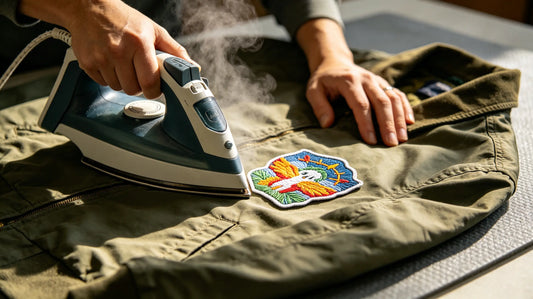
Iron-on patches are slightly more involved than peel & stick but still beginner-friendly. They offer a more durable hold than self-adhesive patches and work great on cotton, denim, and canvas.
Step-by-Step: 1. Preheat your iron to the cotton setting (no steam—steam can weaken the adhesive). 2. Place the patch on your garment in the desired position (ensure the adhesive side is facing down). 3. Cover the patch with a thin cloth (to protect the embroidery from direct heat). 4. Press the iron firmly on the cloth for 20–30 seconds, applying even pressure (avoid moving the iron back and forth). 5. Flip the garment inside out and press the back of the patch for another 10–15 seconds to secure the adhesive. 6. Let the patch cool completely before handling. Pro Tip: Test the iron on a hidden area of your garment to avoid scorching. When youorder custom embroidered patches with iron-on backing, follow the provider’s heat instructions for your specific patch.

Intermediate Level: Hook & Loop (Velcro-Style) Patches (Versatile & Reusable)
Hook & loop patches are a great intermediate DIY option—they’re reusable, easy to swap out, and perfect for tactical gear, morale patches, or anyone who wants to change their patches regularly. They require a bit more preparation but are still simple to apply.
Step-by-Step: 1. Choose a garment or gear item with a flat surface (tactical vests, backpacks, and hats work best). 2. The patch comes with a hook side (attached to the patch) and a loop side (separate piece). First, apply the loop side to your garment: peel off the backing and press firmly in place, or sew it on for extra durability. 3. Let the loop side adhesive set for 1–2 hours (if using adhesive-backed loop tape). 4. Align the hook side (on the patch) with the loop side on your garment, press firmly to secure. 5. To swap patches, simply peel the hook side off the loop side and replace it with a new hook & loop patch. Pro Tip: Clean the loop side regularly to remove lint and debris, which can weaken the hold. When you order custom patches with hook & loop backing, opt for adhesive-backed loop tape for easier application.
Advanced Level: Sew-On Patches (Permanent & Durable)
Sew-on patches are the most advanced DIY option but offer the most permanent, durable hold. They’re perfect for heavy-duty workwear, leather, denim jackets, and any item that will be frequently washed or worn. Sewing requires basic hand-sewing skills or a sewing machine.

Hand-Sewing a Sew-On Patch (Beginner-Friendly Advanced Option)
Step-by-Step: 1. Gather your tools: a needle, thread (matching the patch’s color or the garment’s color), scissors, and pins. 2. Pin the patch in place on your garment to keep it from shifting. 3. Thread the needle and tie a knot at the end of the thread. 4. Start sewing from the back of the garment, pushing the needle through the fabric and the patch’s border (use a running stitch or blanket stitch for a clean finish). 5. Stitch around the entire edge of the patch, keeping the stitches even and close together (about 1/4 inch apart). 6. When you reach the starting point, tie a knot on the back of the garment to secure the thread, and cut off any excess. Pro Tip: For leather or thick fabrics, use a leather needle to avoid breaking the thread.
Machine-Sewing a Sew-On Patch (Pro-Level Advanced Option)
Step-by-Step: 1. Pin the patch in place on your garment, ensuring it’s flat and centered. 2. Set your sewing machine to a straight stitch or zigzag stitch (zigzag is better for curved edges). 3. Lower the presser foot and start sewing around the edge of the patch, keeping the needle close to the patch’s border (about 1/8 inch from the edge). 4. Sew around the entire patch, backstitching at the start and end to secure the thread. 5. Remove the pins and trim any excess thread. Pro Tip: Use a stabilizer under the garment to prevent the fabric from puckering, especially for lightweight fabrics. When you order custom patches with sew-on backing, choose a reinforced border to make sewing easier.

Essential DIY Tools for Patch Application (All Skill Levels)
No matter your skill level, these tools will make your DIY patch application easier and more professional:
• For beginners: Iron (no steam), thin cloth, dry cloth (for peel & stick), and clear fabric glue (optional). • For intermediate: Adhesive-backed loop tape, soft brush (for cleaning hook & loop), and scissors. • For advanced: Needles (regular and leather), thread, pins, scissors, sewing machine (optional), and stabilizer (for machine sewing). • Universal tools: Measuring tape (for centering patches), chalk or fabric marker (for marking positions), and tweezers (for adjusting small patches).
Pro Tips to Avoid Common DIY Patch Mistakes
Even experienced DIYers make mistakes—here are some pro tips to help you avoid them:
• Don’t rush the adhesive: For peel & stick and iron-on patches, let the adhesive set completely before handling the item. • Avoid direct heat on embroidery: Always use a thin cloth when ironing patches to protect the threads from melting or fading. • Center your patches: Use a measuring tape or fold the garment in half to find the center, ensuring your patch is straight. • Choose the right fabric: Iron-on patches work best on natural fabrics; avoid synthetic fabrics that can melt from heat. • Reinforce when needed: For frequently worn items, add extra stitches or glue to iron-on or peel & stick patches for better durability.

Final Thoughts
DIY patch application is a fun, easy way to personalize your belongings—whether you’re a beginner or an advanced DIYer. With the right techniques, tools, and custom patches, you can create unique, professional-looking pieces that reflect your style. From quick peel & stick applications to permanent sew-on projects, there’s a DIY method for every skill level and every project.
When you’re ready to start your DIY patch project, order custom embroidered patches from a reputable provider that offers a variety of backing types—so you can choose the perfect option for your skill level and project. With a little practice and the tips in this guide, you’ll be applying patches like a pro in no time.
FAQ
Q:Do I need any sewing experience to apply sew-on patches?
A:No—basic hand-sewing skills are enough to apply sew-on patches, and our step-by-step guide makes it easy for beginners. Start with a simple running stitch, and practice on a scrap piece of fabric first. When you order custom embroidered patches with sew-on backing, choose patches with reinforced borders to make sewing even easier.
Q:Can I use iron-on patches on synthetic fabrics?
A:It’s not recommended—synthetic fabrics (like polyester, nylon) can melt or warp from the heat of an iron. Iron-on patches work best on natural fabrics like cotton, denim, and canvas. For synthetic fabrics, opt for peel & stick or hook & loop patches instead.
Q:How long do peel & stick patches last?
A:Peel & stick patches are designed for temporary use—they typically last 1–3 months with regular use, depending on the surface and how often the item is handled. For a longer-lasting hold, use iron-on or sew-on patches. When you order custom patches for temporary projects, peel & stick is the perfect choice.
Q:Can I machine-sew a patch on leather?
A:Yes, but you’ll need a leather needle and heavy-duty thread to penetrate the leather. Use a zigzag stitch for better hold, and avoid sewing too close to the edge of the leather (to prevent tearing). For best results, practice on a scrap piece of leather first.
Q:How do I center a patch on a jacket or backpack?
A:To center a patch, fold the jacket or backpack in half (vertically or horizontally) and mark the center with chalk or a fabric marker. Align the patch’s center with the marked center, and use pins to hold it in place before applying. For extra precision, use a measuring tape to ensure the patch is evenly spaced from the edges.
Tags:
Previous
Common Custom Embroidered Patch Problems & How to Fix Them
Next
Best Occasions to Use Custom Embroidered Patches in Daily Life