Custom Embroidered Patch Size Guide: Perfect Sizes for Hats, Jackets, Sleeves & Bags
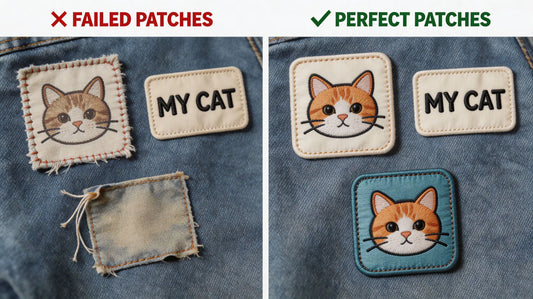
Size selection is one of the most critical yet overlooked steps in custom embroidered patch design. Many customized patches end up looking awkward not because of poor patterns or bad colors, but due to mismatched dimensions: oversized chest patches crowd the clothing layout, undersized back patches lack presence, hat patches warp and wrinkle, and sleeve patches affect wearing comfort. Choosing the right standard patch size according to different wearing positions is the key to neat, fashionable, and professional visual effects. Before you order custom embroidered patches, master this full-scene size guide to avoid all sizing failures and achieve a perfect fit every time.
Different clothing positions and carriers have fixed ergonomic and aesthetic size standards. Too large or too small will destroy the overall proportion balance. Based on mass customization data and apparel wearing aesthetics, we have sorted out the most practical standard patch sizes for hats, chests, jackets, sleeves, backpacks, and uniforms, along with sizing principles, adjustment skills, and common mistake avoidance methods, suitable for personal DIY and commercial bulk customization.
1. Core Principles of Patch Size Selection
Before matching specific sizes, you need to clarify three core sizing principles that apply to all patch customization scenarios. These rules can help you flexibly adjust special-shaped patches and personalized custom sizes to avoid rigid mechanical matching.
Basic Sizing Rules: • Proportion Adaptation: The patch area should occupy 1/4 to 1/3 of the local clothing blank area, neither full coverage nor too trivial, maintaining the best visual proportion. • Detail Feasibility: Ultra-small patches (below 4cm) cannot display fine text and tiny patterns; ultra-large patches (above 15cm) are prone to fabric wrinkling and edge warping. • Scene Priority: Daily casual apparel pursues moderate and versatile sizes; team uniforms and official apparel follow industry standard fixed dimensions; trendy streetwear allows oversized bold sizes. • Shape Matching: Round and square patches adapt to conventional positions; irregular and shield-shaped patches need to fine-tune the overall size according to radian and structure.
Pro Tip: Size determines the upper limit of patch presentation effect. Reasonable sizing can greatly improve the high-end texture of custom works. When you custom embroidered patches, consult the design team for size optimization according to your actual wearing carrier.

2. Standard Patch Size for Hats (Caps & Beanies)
Hat patches have the strictest size restrictions due to the curved three-dimensional structure of the cap surface. Improper size is the main cause of patch warping, bubbling, and unsmooth fitting. Too large patches cannot fit the radian of the cap surface, while too small patches appear trivial and lack decorative effect.
Recommended Standard Sizes: • Most Common Universal Size: 5.0cm – 6.5cm (2” – 2.5”) • Minimalist Small Logo Patch: 4.0cm – 5.0cm (1.5” – 2”) • Large Trendy Statement Patch: 6.5cm – 7.5cm (2.5” – 3”)
Sizing & Installation Tips: Flat patches for curved caps must be controlled within 7.5cm at maximum. Exceeding this size will cause the patch to fail to fit the cap’s radian, resulting in edge tilting and uneven paste. For curved brim caps and baseball caps, square and rectangular patches are recommended to be slightly reduced in size, while round and oval patches have better radian adaptability and allow a slightly larger size range. Beanies and soft knitted hats prefer small and medium sizes to avoid hard and bulky texture affecting wearing comfort.
Best Use Cases: Brand logo caps, team baseball hats, casual daily caps, personalized knitted beanies. Avoid: Patches larger than 8cm on ordinary caps, which will completely destroy the three-dimensional structure of the hat.
3. Chest Patch Standard Size (Jackets, Hoodies, T-Shirts)
Chest patches are the most commonly used position for daily customization, suitable for casual clothing, team uniforms, corporate work clothes, and student apparel. The chest area has moderate blank space, requiring balanced size to ensure prominent logos without crowding the clothing layout.
Recommended Standard Sizes: • Universal Daily Casual Size: 7.0cm – 9.0cm (2.75” – 3.5”) • Corporate & Team Uniform Standard Size: 8.0cm – 10.0cm (3” – 4”) • Minimalist Small Chest Logo: 6.0cm – 7.0cm (2.3” – 2.75”)
Sizing Matching Rules: Slim-fit T-shirts and thin casual tops choose 6–8cm small and medium sizes to avoid heavy and crowded visual effects. Loose hoodies and thick denim jackets can appropriately expand to 8–10cm to enhance recognition. Uniform chest patches need to maintain unified specifications to ensure neat and standardized overall team dressing effect, which is the most widely used size standard for corporate bulk customization.
Pro Tip: Uniform chest patches have strict size uniformity requirements. When youcustom patches for team and corporate uniforms, strictly follow the 8–10cm standard size for unified specifications.

4. Sleeve Patch Standard Size (Long & Short Sleeves)
Sleeve patches are located on the curved limb movement area, with limited effective blank space. Excessively large patches will restrict arm stretching and cause fabric wrinkling during movement, while oversized hard patches will affect wearing flexibility and comfort.
Recommended Standard Sizes: • Universal Sleeve Patch Size: 5.0cm – 7.0cm (2” – 2.75”) • Tactical & Armband Logo Size: 7.0cm – 8.0cm (2.75” – 3”) • Ultra-Small Decorative Sleeve Patch: 4.0cm – 5.0cm (1.5” – 2”)
Practical Sizing Tips: Ordinary casual long-sleeve and short-sleeve apparel prioritize 5–7cm moderate sizes, which are beautiful and do not restrict movement. Tactical uniforms, outdoor work clothes, and team armband logos can adopt 7–8cm standard specifications to meet identification needs. Avoid full-layout large patches on sleeve positions, which are prone to edge warping and thread loosening after repeated arm bending and friction.
5. Back Large Patch Standard Size (Full Back Decoration)
The back of jackets, hoodies, and canvas coats has the largest blank area, suitable for oversized trendy patches and large pattern designs, which can create a strong visual impact and fashion sense, being the mainstream position for streetwear brand customization.
Recommended Standard Sizes: • Daily Trendy Oversized Patch: 10.0cm – 13.0cm (4” – 5”) • Super Large Full-Back Statement Patch: 13.0cm – 15.0cm (5” – 6”) • Minimalist Back Small Logo: 8.0cm – 10.0cm (3” – 4”)
Sizing Adaptation Rules: Loose oversized hoodies and thick denim jackets support 10–15cm large patches, which are fashionable and atmospheric. Slim-fit coats and thin casual clothes are not suitable for super-large patches; it is recommended to control within 10cm to avoid clothing dragging and wrinkling. Back patches focus on overall layout coordination, and the size should match the clothing version to maintain a balanced upper body proportion.
Pro Tip: Large back patches are the core of streetwear styling. When you order custom embroidered patches for fashion streetwear, choose 10–15cm oversized sizes to highlight trendy attributes.

6. Backpack & Bag Patch Standard Size
Backpacks, canvas bags, and tactical bags have flat and hard surfaces with strong bearing capacity, allowing more flexible size selection, suitable for personalized combination decoration and large pattern display.
Recommended Standard Sizes: • Universal Backpack Decorative Patch: 7.0cm – 10.0cm (3” – 4”) • Multi-Patch Combination Size: 5.0cm – 7.0cm (single small patch) • Large Backpack Main Logo Patch: 10.0cm – 12.0cm (4” – 4.75”)
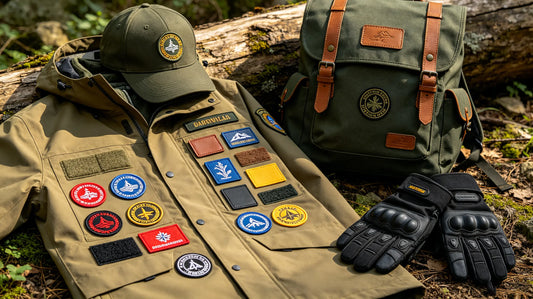
Decoration Matching Skills: Single main logo on the backpack front panel adopts 10–12cm large size for prominent recognition. Multi-patch collage matching uses 5–7cm small and medium sizes for combination, with rich layers and no messy vision. Tactical backpack morale patches mostly adopt standard 7–9cm specifications, which are convenient for unified velcro matching and replacement.
7. Standard Size for Special-Shaped & Irregular Patches
Shield-shaped, circular, heart-shaped, and custom irregular patches cannot be mechanically matched with fixed square sizes. It is necessary to convert the maximum width and height for adaptive sizing to ensure consistent visual proportion with conventional patches.
Special-Shaped Sizing Conversion Rules: • Circular Patches: The diameter refers to the standard square patch side length, 5–6.5cm for hats, 7–9cm for chest, 10–12cm for back. • Shield & Irregular Patches: Take the maximum vertical and horizontal width as the sizing standard, appropriately reduce 0.5–1cm compared with square patches to avoid oversized visual effect. • Long Strip Patches: Mainly used for sleeve and collar decoration, recommended width 3–5cm, length 8–12cm, slender and coordinated proportion.

8. Common Size Selection Mistakes & Fixes
Most patch fitting failures come from incorrect size judgment. We summarize the most frequent sizing mistakes and targeted solutions to help you avoid detours in customization.
Typical Sizing Mistakes & Solutions: • Mistake 1: Oversized patches on hats. Cause: Ignoring cap radian limitations. Fix: Control hat patch size within 7.5cm maximum, prioritize round and small square styles. • Mistake 2: Undersized chest logos look trivial. Cause: Excessively pursuing minimalism leads to poor recognition. Fix: Uniform and daily chest patches maintain 8–10cm standard size. • Mistake 3: Overlarge sleeve patches restrict movement. Cause: No consideration of limb activity range. Fix: Limit sleeve patch size below 8cm to ensure flexible wearing. • Mistake 4: Super-large patches on thin tight clothes. Cause: Mismatched fabric and size. Fix: Thin fabrics choose medium and small sizes to avoid wrinkling and deformation. • Mistake 5: Inconsistent sizes for team uniform patches. Cause: Random custom sizing in batches. Fix: Unify fixed specifications to ensure neat overall team dressing.
9. Quick Reference Size Chart for One-Stop Selection
For quick and convenient selection, we sort all scenario standard sizes into a unified comparison chart for direct reference in customization: • Hats & Caps: 4.0cm – 7.5cm (1.5” – 3”) • Chest (Jacket/Hoodie/T-Shirt): 6.0cm – 10.0cm (2.3” – 4”) • Sleeves & Arms: 4.0cm – 8.0cm (1.5” – 3”) • Back Large Decoration: 8.0cm – 15.0cm (3” – 6”) • Backpacks & Bags: 7.0cm – 12.0cm (3” – 4.75”) • Collar & Tiny Decoration: 3.0cm – 5.0cm (1” – 2”) • Team & Tactical Uniforms: 7.0cm – 10.0cm (Unified Standard)

Final Thoughts
Accurate size matching is the foundation of high-quality custom embroidered patches. Different wearing positions and carriers have exclusive standard size ranges. Blindly pursuing large sizes or excessive minimalism will destroy the overall dressing effect and texture. Mastering the universal size standards for hats, chests, sleeves, backs, and backpacks, and flexibly adjusting according to fabric thickness and clothing version, can completely avoid sizing failures such as warping, crowding, triviality, and uncoordinated proportions.
Whether it is personal DIY decorative patches, fashion streetwear large patches, or team corporate uniform batch patches, standardized size selection can maximize the patch’s decorative and identification value. When you prepare to order custom embroidered patches, follow this full-scene size guide to customize perfectly sized patches with coordinated proportions and outstanding visual effects.
FAQ
Q:What is the most standard size for custom hat patches?
A:The most universal and safest size for ordinary baseball caps and beanies is 5–6.5cm (2–2.5 inches). This size perfectly fits the cap’s curved surface, not easy to warp or bubble, and has moderate visual prominence. Small logo styles can choose 4–5cm, and trendy large decorative patches can be up to 7.5cm at maximum. Avoid sizes exceeding 8cm for hat patches. When youcustom embroidered patches for hats, prioritize the 5–6.5cm standard size for the best fitting effect.
Q:What size is best for uniform chest patches?
A:For corporate, school, and team uniform chest patches, 8–10cm (3–4 inches) is the most professional and standard size. This specification ensures clear logo recognition, neat overall dressing, and conforms to uniform visual aesthetics. Slim-fit work clothes can be appropriately adjusted to 7–8cm, while loose uniforms maintain 8–10cm unified specifications to ensure batch consistency.
Q:Can I put large patches on thin t-shirts?
A:It is not recommended. Thin t-shirts have soft and lightweight fabric. Oversized patches (over 10cm) will cause fabric wrinkling, sagging, and unsmooth fitting, affecting wearing comfort and appearance. It is best to control t-shirt patches within 6–8cm with thin and flat craftsmanship for a perfect fit.
Q:What size patches are suitable for backpack collages?
A:Backpack multi-patch collages are recommended to match 5–7cm small and medium-sized patches. Multiple patches of the same specification or different sizes are combined for decoration, with rich layers and no messy vision. A single main logo on the backpack front can use 10–12cm large size to highlight the core visual focus. When you custom patches for backpack decoration, mix small and medium sizes for a better collage effect.
Q:Do irregular shaped patches need size adjustment?
A:Yes. Shield-shaped, circular, and irregular patches need to appropriately reduce 0.5–1cm on the basis of square patch standard sizes. Taking the maximum width and height as the sizing standard can avoid the visual oversized problem caused by special shapes, ensuring consistent coordination with conventional patch wearing effects.
Tags:
Previous
7 Hottest Custom Embroidered Patch Design Trends for 2026 (Ultimate Style Guide)
Next
Custom Embroidered Patches Care Guide: Wash, Fix & Maintain Long-Lasting Quality