Custom Embroidered Patch Backing Types: How to Choose the Right One for Your Project
When it comes to custom embroidered patches, the backing type is just as important as the design itself. The right backing ensures your patch attaches securely to your item, lasts long, and fits your intended use—whether you’re decorating a denim jacket, outfitting tactical gear, or creating promotional items. With four main backing types available—iron-on, hook & loop, sew-on, and peel & stick—choosing the right one can feel overwhelming. This guide breaks down each backing type’s unique benefits, ideal use cases, application methods, and durability, helping you select the perfect backing for your custom embroidered patches. Before you order custom embroidered patches, let’s explore the best backing options for your project.
Each backing type is engineered for specific fabrics, applications, and durability needs. Iron-on is perfect for quick DIY projects, hook & loop for tactical gear that requires easy swapping, sew-on for maximum longevity, and peel & stick for temporary use. By understanding their differences, you can ensure your patches stay in place and look great for years to come.
1. Iron-On (Heat Seal) Backing: The DIY Favorite
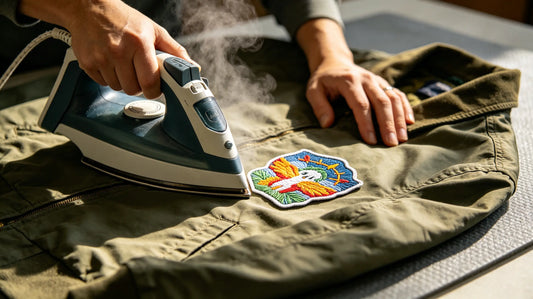
Iron-on (also called heat seal) backing is the most popular choice for DIY enthusiasts and casual users. It’s easy to apply, requires no sewing skills, and works with most common fabrics. This backing uses a heat-activated adhesive that melts when heated, creating a strong bond between the patch and the fabric.
Iron-On Backing Details: • How It Works: The backing has a layer of heat-activated adhesive. When you apply heat (from a household iron) and pressure, the adhesive melts and bonds the patch to the fabric. • Ideal Fabrics: Cotton, denim, canvas, and other natural fabrics. Avoid heat-sensitive fabrics (e.g., polyester, silk, leather) as high heat can damage them. • Pros: Quick and easy to apply (takes 10–15 seconds), no sewing required, cost-effective, and works for most casual apparel. • Cons: Less durable than sew-on backing, may peel over time with frequent washing, not suitable for heat-sensitive or heavy-wear items. • Application Tips: Use a medium-heat iron (no steam), place a thin cloth between the iron and the patch to avoid scorching, and apply firm pressure for 10–15 seconds. Allow the patch to cool completely before wearing or washing.
Pro Tip: When youcustom embroidered patches with iron-on backing, ask your supplier about low-heat adhesive options if you plan to use the patch on slightly heat-sensitive fabrics (e.g., light polyester blends).

2. Hook & Loop (Velcro-Style) Backing: The Tactical Standard
Hook & loop (often referred to as Velcro-style) backing is designed for items that require easy removal and swapping. It consists of two parts: a hook side attached to the patch and a loop side attached to the fabric. This makes it perfect for tactical gear, military uniforms, and team apparel that needs frequent patch changes.
Hook & Loop Backing Details: • How It Works: The hook side (attached to the patch) adheres to the loop side (sewn or ironed onto the fabric), creating a secure but removable bond. You can easily peel the patch off and reattach it as needed. • Ideal Fabrics: Tactical vests, helmets, backpacks, military uniforms, and any fabric that can accommodate the loop side (sewn or ironed on). • Pros: Easy to swap patches, reusable, secure bond when attached, perfect for tactical and military applications, works well with high-wear items. • Cons: Slightly more expensive than iron-on or peel & stick, requires attaching the loop side to the fabric (sewing or ironing), may collect lint over time. • Application Tips: Attach the loop side to the fabric first (sew-on for maximum durability, iron-on for convenience), then press the patch’s hook side onto the loop side to secure. Clean the loop side regularly to remove lint and maintain adhesion.
Pro Tip: When you order custom patches with hook & loop backing, request extra loop strips—this allows you to attach the patch to multiple items (e.g., a tactical vest and a backpack).

3. Sew-On (Plastic Backing) Backing: Maximum Durability
Sew-on backing is the most durable and long-lasting option for custom embroidered patches. It features a thin plastic backing that reinforces the patch, making it easy to sew onto fabric. This backing is ideal for heavy-wear items, leather, and fabrics that can’t withstand heat (e.g., silk, leather).
Sew-On Backing Details: • How It Works: The plastic backing adds structure to the patch, making it easy to stitch around the edges (or through the patch) to attach it permanently to the fabric. • Ideal Fabrics: Leather, biker vests, workwear, heavy-duty uniforms, and heat-sensitive fabrics (e.g., silk, polyester). • Pros: Maximum durability, permanent bond, works with all fabrics (including heat-sensitive ones), resistant to frequent washing and heavy wear. • Cons: Requires sewing skills (or a sewing machine), takes more time to apply than other backing types, not ideal for quick DIY projects. • Application Tips: Use a needle and thread that matches the patch’s edge color, sew around the perimeter of the patch (1/4 inch from the edge) for a secure hold. For leather, use a leather needle to avoid breaking the thread.
Pro Tip: When you custom embroidered patches for heavy-wear items (e.g., workwear, biker vests), always choose sew-on backing—it’s the only backing that can withstand constant use and frequent washing.

4. Peel & Stick (Self-Adhesive) Backing: Temporary & Fast
Peel & stick (self-adhesive) backing is the perfect choice for temporary use or items that can’t be sewn or ironed. It features a pressure-sensitive adhesive that sticks to most smooth surfaces, making it ideal for promotional events, trade shows, or temporary decorations.
Peel & Stick Backing Details: • How It Works: The backing has a removable paper liner—peel off the liner to expose the adhesive, then press the patch onto the desired surface to secure it. • Ideal Surfaces: Laptops, notebooks, hard hats, plastic, metal, and smooth fabrics (not recommended for rough or textured fabrics). • Pros: Extremely easy to apply (no heat or sewing required), temporary (can be removed without damaging surfaces), perfect for one-time events or temporary decorations. • Cons: Least durable backing type, not washable, adhesive may lose strength over time (especially in heat or humidity), not suitable for fabric that will be washed. • Application Tips: Clean the surface thoroughly before applying the patch to remove dirt and oil (this ensures better adhesion). Press firmly for 5–10 seconds to secure the patch. Avoid applying to rough or textured surfaces, as the adhesive won’t bond properly.
Pro Tip: When you custom patches for promotional events, choose peel & stick backing—it’s cost-effective, easy to distribute, and allows recipients to attach the patch to their preferred surface quickly.

Backing Type Comparison: Which Is Right for You?
To help you make the right choice, here’s a side-by-side comparison of the four main backing types, focusing on durability, ease of application, ideal use cases, and cost.
Backing Type Comparison Chart: • Iron-On: Durability (Medium), Ease of Application (High), Ideal Use (DIY apparel, casual jackets, hoodies), Cost (Low-Medium) • Hook & Loop: Durability (High), Ease of Application (Medium), Ideal Use (Tactical gear, military uniforms, team apparel), Cost (Medium) • Sew-On: Durability (Very High), Ease of Application (Low), Ideal Use (Heavy-wear items, leather, heat-sensitive fabrics), Cost (Low-Medium) • Peel & Stick: Durability (Low), Ease of Application (Very High), Ideal Use (Promotional events, temporary decorations, smooth surfaces), Cost (Low)
Key Takeaway: Choose iron-on for quick DIY projects, hook & loop for tactical gear, sew-on for maximum durability, and peel & stick for temporary use. When you custom embroidered patches, your supplier can help you select the best backing based on your project’s needs.
Common Backing Mistakes to Avoid
Choosing the wrong backing type or applying it incorrectly can lead to patches that peel, fall off, or get damaged. Avoid these common mistakes to ensure your patches stay secure and look great.
Common Backing Mistakes & Fixes: • Mistake 1: Using Iron-On Backing on Heat-Sensitive Fabrics: High heat can melt or damage polyester, silk, or leather. Fix: Choose sew-on backing for heat-sensitive fabrics. • Mistake 2: Skipping the Cloth When Ironing: Direct heat from the iron can scorch the patch’s threads or the fabric. Fix: Always place a thin cloth between the iron and the patch. • Mistake 3: Using Hook & Loop Backing on Rough Fabrics: The hook side won’t adhere well to rough or textured fabrics. Fix: Use sew-on backing for rough fabrics, or attach the loop side to a smooth fabric panel first. • Mistake 4: Applying Peel & Stick Patches to Dirty Surfaces: Dirt and oil prevent the adhesive from bonding. Fix: Clean the surface thoroughly before applying the patch. • Mistake 5: Overlooking Sew-On Backing for Heavy-Wear Items: Iron-on and hook & loop may peel over time with heavy use. Fix: Use sew-on backing for workwear, biker vests, and other high-wear items.

How to Choose the Right Backing: Step-by-Step Guide
Follow these simple steps to select the perfect backing type for your custom embroidered patches, ensuring it fits your fabric, use case, and durability needs.
Step-by-Step Backing Selection Guide: • Step 1: Identify Your Fabric: Determine what fabric or surface you’ll be attaching the patch to (e.g., cotton, leather, plastic, tactical gear). • Step 2: Consider Your Use Case: Decide if the patch is for permanent use (e.g., workwear), temporary use (e.g., promotions), or needs to be swapped (e.g., tactical gear). • Step 3: Evaluate Durability Needs: If the patch will be washed frequently or used heavily, choose a durable backing (sew-on or hook & loop). For casual or temporary use, iron-on or peel & stick works. • Step 4: Assess Your Skills: If you don’t know how to sew, avoid sew-on backing—opt for iron-on or peel & stick instead. • Step 5: Consult Your Supplier: When you custom embroidered patches, share your fabric, use case, and durability needs with your supplier. They’ll recommend the best backing type for your project.
Backing Tips for Specific Patch Uses
The best backing type varies depending on how you’ll use the patch. Tailoring your backing choice to your specific use case ensures your patch stays secure and functional.
Backing Tips by Use Case: • Casual Apparel (Jackets, Hoodies, T-Shirts): Iron-on backing is perfect—easy to apply and works with most casual fabrics. For extra durability, add a few stitches around the edges. • Tactical Gear (Vests, Helmets, Backpacks): Hook & loop backing is essential—allows for easy swapping of patches and stands up to heavy use. • Leather & Biker Gear: Sew-on backing is the only option—heat can damage leather, and adhesive won’t bond well to the surface. • Promotional Items (Trade Shows, Events): Peel & stick backing is ideal—quick to apply, temporary, and cost-effective for large quantities. • Workwear & Uniforms: Sew-on backing for maximum durability—withstands frequent washing and heavy wear.
Final Thoughts
Choosing the right backing type for your custom embroidered patches is key to ensuring they stay secure, look great, and fit your intended use. Whether you’re a DIY enthusiast, a tactical gear user, a business owner, or a team leader, there’s a backing type that’s perfect for your project. Iron-on is great for quick DIY projects, hook & loop for tactical gear, sew-on for maximum durability, and peel & stick for temporary use.
FAQ
Q:Can I use iron-on backing on polyester fabric?
A:It’s not recommended to use standard iron-on backing on polyester fabric. High heat from the iron can melt or damage polyester fibers. If you need to attach a patch to polyester, choose sew-on backing (most durable) or ask your supplier for a low-heat iron-on adhesive option. When you order custom embroidered patches for polyester fabric, mention your fabric type to get the right backing recommendation.
Q:Which backing type is most durable for custom embroidered patches?
A:Sew-on (plastic) backing is the most durable type for custom embroidered patches. It creates a permanent bond with the fabric, withstands frequent washing, and works with all fabric types—including heavy-wear items like workwear and biker vests. Hook & loop backing is also durable but is designed for removable use, while iron-on and peel & stick are less durable for long-term use.
Q:How do I apply iron-on custom embroidered patches correctly?
A:To apply iron-on patches correctly: 1) Preheat your iron to medium heat (no steam). 2) Place the patch on the desired fabric. 3) Cover the patch with a thin cloth to avoid scorching. 4) Apply firm pressure for 10–15 seconds. 5) Allow the patch to cool completely before wearing or washing. When you custom patches with iron-on backing, your supplier will provide detailed application instructions.
Q:Can hook & loop backing be used on leather?
A:Yes, hook & loop backing can be used on leather, but you’ll need to attach the loop side to the leather first. Since leather is heat-sensitive, avoid iron-on loop strips—instead, sew the loop side onto the leather using a leather needle and durable thread. Once the loop side is attached, the patch’s hook side will adhere securely and can be swapped easily. When you custom embroidered patches for leather, ask your supplier for sew-on loop strips.
Q:Are peel & stick patches washable?
A:No, peel & stick (self-adhesive) patches are not washable. The adhesive will lose strength when exposed to water and detergent, causing the patch to peel off. Peel & stick patches are designed for temporary use on smooth surfaces (e.g., laptops, notebooks) or one-time events. For washable patches, choose iron-on, hook & loop, or sew-on backing. When you order custom patches for washable items, avoid peel & stick backing.
Tags:
Previous
Custom Embroidered Patch Design Details: Tips to Avoid Mistakes & Boost Quality
Next
Bulk Custom Embroidered Patches: Cost Control, MOQ Optimization & Efficient Delivery Guide