Embroidery Patch Density Guide: High vs Low Stitch Density Pros & Cons (2026)
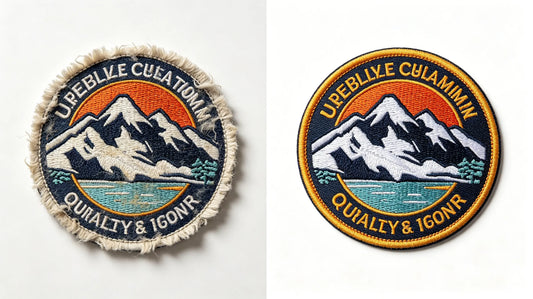
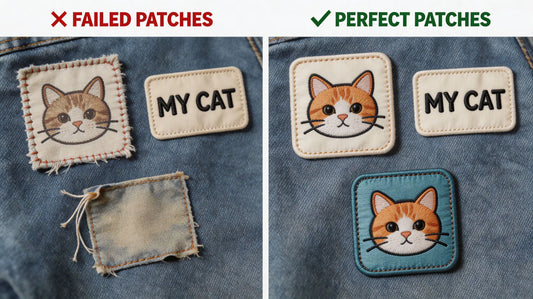
When comparing two custom embroidered patches with the same design, size, and color, you may notice a huge gap in texture and grade: one is full, smooth, three-dimensional, and high-end; the other is hollow, loose, with exposed base fabric and cheap-looking. The core factor causing this difference isembroidery stitch density.
Stitch density refers to the number of embroidery threads per unit area, which determines the filling degree, texture fineness, durability, and overall presentation of embroidered patches. It is the most hidden but critical standard to distinguish high-quality patches from inferior ones. Many low-cost merchants reduce stitch density to save thread costs, resulting in defective patch finishes. Before you order custom embroidered patches, mastering density selection rules can help you avoid shoddy products and match the most cost-effective craft for your scenario.
In this guide, we will comprehensively analyze the differences, advantages, disadvantages, applicable scenarios, and pricing logic of high and low stitch density patches, and summarize professional density matching schemes for different customization needs.
1. What Is Embroidery Patch Stitch Density?
Embroidery stitch density is the core technical parameter of patch production, representing the tightness and coverage of embroidery stitches on the patch base fabric. Industry-standard density is calculated by stitches per square centimeter and thread spacing, which directly controls the coverage rate of embroidery threads.
High-density embroidery adopts tight stitch arrangement with ultra-narrow thread spacing, achieving nearly 100% fabric coverage; low-density embroidery has sparse stitches with wider gaps, leading to partial exposure of the base fabric. Formal high-quality custom patches strictly control stitch spacing between 0.3mm to 0.6mm according to different pattern areas, balancing fineness and flatness perfectly. Density not only affects visual appearance but also determines the washing resistance, friction durability, and service life of patches.

2. High Stitch Density Patches: Premium Full & Delicate Texture
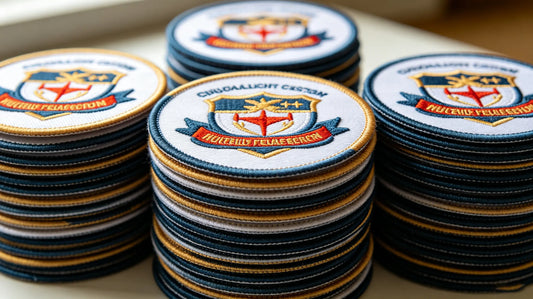
High stitch density is the premium craft for high-end custom embroidered patches, featuring dense and uniform thread arrangement, no gaps, no exposed base fabric, and full and saturated color layering. It is the standard configuration for high-quality commercial and team customized patches.
Core Advantages
First, the visual effect is superior. High-density stitches fully cover the base fabric, making colors more saturated and three-dimensional, with clear pattern edges and delicate texture, effectively upgrading the overall grade of patches. Second, the durability is greatly improved. Dense thread arrangement enhances friction and washing resistance, preventing thread loosening, falling off, and deformation after long-term wearing and repeated cleaning. Third, the detail restoration is more accurate. It can perfectly restore fine lines, small text, and complex pattern layers without missing details, suitable for high-precision logo customization. In addition, high-density patches have stronger overall integrity, not easy to wrinkle or bulge, with flatter fitting effect on clothes and bags.
Limitations & Cost Characteristics
The production cost of high-density patches is higher. Dense stitches consume more embroidery threads and take longer computer embroidery time, increasing production difficulty and labor costs, so the unit price is slightly higher than conventional density patches. Meanwhile, ultra-high density is not suitable for ultra-small patch sizes, which may cause thread stacking and hard patch surface, affecting wearing comfort.
Best Application Scenarios
High-end brand logo patches, corporate uniform batch customization, official team identification patches, high-precision pattern patches, long-term daily wearing patches, and merchandise decorative patches with high appearance requirements. It is the preferred craft for scenarios pursuing high grade and long-term durability.
3. Low Stitch Density Patches: Budget & Lightweight Practical Choice
Low stitch density is a conventional economical embroidery craft with sparse thread distribution and obvious gaps between stitches, partially exposing the base fabric. It is mainly used for low-budget, short-term use customization scenarios.
Core Advantages
The biggest advantage is low cost. Sparse stitches save raw material and time costs, with highly competitive pricing for bulk orders, suitable for large-scale low-budget activities. Secondly, the patch texture is lighter and softer. Low-density embroidery will not cause excessive thread stacking, making the patch thinner and more breathable, with better comfort on thin fabrics. In addition, low-density patches have lower stitching tension, not easy to cause fabric wrinkling, and are more friendly to ultra-thin and soft clothing materials.
Limitations & Defects
The appearance grade is insufficient. Exposed base fabric leads to dull color, weak three-dimensional sense, and obvious cheap texture, unable to present high-end visual effects. The durability is poor. Sparse stitches are prone to thread loosening, displacement, and falling off after friction and washing, with short service life. Fine details are easy to be lost, small text and complex lines will be blurred and incomplete, unable to restore design details accurately.
Best Application Scenarios
Short-term event promotional patches, temporary activity identification patches, low-budget large-batch custom orders, children's temporary decorative patches, and disposable scene matching patches. It meets basic use needs while controlling costs effectively.

4. Medium Standard Density: The Most Cost-Effective Universal Choice
In addition to high and low density, most daily conventional custom patches adopt medium standard stitch density, which is the most balanced and universal craft in the industry. It abandons the defects of low-density hollow exposure and high-density high cost, balancing appearance, durability, comfort, and cost performance perfectly.
Standard density patches have moderate thread tightness, basically covering the base fabric without exposed gaps, with uniform color and natural three-dimensional sense. The patch surface is flat and soft, not hard or bulky, suitable for long-term daily wearing. The price is moderate, cost-effective for bulk orders, and meets the quality requirements of most team, enterprise, and personal customization scenarios.
For most users who have no special ultra-high definition or ultra-low budget requirements, standard medium density is the best default choice, avoiding the cheapness of low density and the premium cost of ultra-high density.
5. Key Differences Comparison: High vs Medium vs Low Density
We sort out an intuitive comparison of three mainstream stitch densities to help you quickly distinguish and select:
Visual Texture: High Density (Full, seamless, high-end) | Medium Density (Balanced, natural, smooth) | Low Density (Sparse, hollow, cheap)
Detail Restoration: High Density (Ultra-fine, clear details) | Medium Density (Complete daily details) | Low Density (Blurred fine lines, missing tiny text)
Durability: High Density (Excellent, washable for years) | Medium Density (Good, daily durable) | Low Density (Poor, easy to loose threads)
Patch Thickness: High Density (Slightly thick, three-dimensional) | Medium Density (Moderate, flat) | Low Density (Thin, soft)
Cost Level: High Density (Premium price) | Medium Density (Cost-effective) | Low Density (Budget price)
Recommended Crowd: High-end commercial & long-term use | Daily team & personal customization | Short-term & low-budget activities

6. Professional Density Matching Rules by Scenario
To avoid inappropriate density selection affecting patch effect, we summarize zero-mistake matching standards for all mainstream scenarios:
Choose High Density If: You customize brand logo patches, high-end merchandise, long-term uniform patches, and designs with fine text and complex lines. Pursue perfect detail presentation and long-term wear durability, and have certain budget space for premium quality.
Choose Medium Density If: You need daily team uniforms, school club patches, outdoor casual decorative patches, and conventional personalized custom patches. It is the most balanced choice for most bulk orders with stable quality and high cost performance.
Choose Low Density If: You only need short-term event promotion, temporary activity identification, one-time decorative patches, and large-batch low-budget orders with no long-term durability requirements.
7. Common Density Mistakes & Practical Solutions
Many patch quality problems are caused by mismatched stitch density. We summarize high-frequency mistakes and targeted fixes:
Mistake 1: Ultra-fine design with low density
Consequence: Tiny text and fine lines are completely blurred and lost, the pattern is incomplete, and the patch loses recognition. Fix: Upgrade to medium or high density to ensure fine detail restoration and clear pattern edges.
Mistake 2: Ultra-small patch with excessive high density
Consequence: Too many threads stacked in a small area make the patch hard and stiff, affecting wearing comfort, and easy to bulge and deform. Fix: Appropriately reduce density for mini patches to balance fineness and softness.
Mistake 3: Long-term wearing patches with low density
Consequence: Sparse threads loosen and fall off after multiple washes and friction, resulting in patch damage and short service life. Fix: Adopt standard medium density or high density to improve durability.
Mistake 4: Blindly pursuing high density for all designs
Consequence: Unnecessary cost increase, redundant thread stacking for simple solid-color patterns, and no obvious improvement in visual effect. Fix: Match medium density for simple designs to control costs while ensuring quality.

8. How to Identify Patch Stitch Density Quality?
When receiving custom patches, you can quickly judge density quality through 3 simple methods to avoid inferior products:
Visual Observation: Check whether the patch surface is flat and full, with no obvious hollow gaps or exposed base fabric, uniform color distribution, and neat pattern edges.
Touch Inspection: High-quality density patches are smooth and solid without concave-convex hollow feeling, moderate hardness, not easy to deform by extrusion.
Detail Check: Zoom in to observe tiny text and fine lines, confirm no blur or fracture, complete and clear detail presentation.
Pro Tip: Reasonable stitch density matching is the key to high-quality embroidered patches. When you custom embroidered patches, clarify usage scenarios and quality requirements to select the most suitable density standard.

Final Thoughts
Stitch density is the invisible core standard that determines the texture, grade, and durability of embroidered patches. Low density corresponds to budget and short-term use, medium density balances quality and cost for daily universal scenarios, and high density represents premium quality and long-term high-standard presentation. There is no absolute best density, only the most scenario-matched one.
Blindly pursuing low-cost low-density patches will lead to poor appearance and insufficient durability; excessive pursuit of full high density for simple designs will cause unnecessary cost waste. Mastering professional density matching rules can help every custom order achieve perfect balance among appearance, quality, durability, and cost performance.
Whether it is personal DIY customization, team bulk uniforms, or brand commercial merchandise, reasonable stitch density configuration can maximize the value of custom patches, presenting delicate, full, and long-lasting high-quality effects.
FAQ
Q:What is the best stitch density for custom embroidered patches?
A:Medium standard density is the best universal choice for most custom patches, balancing appearance, durability, and cost. For high-end logos and fine detailed designs, choose high stitch density; for short-term low-budget events, low density is acceptable. You can get matched density patches when you order custom embroidered patches based on your needs.
Q:Do high-density patches last longer?
A:Yes. High stitch density patches have denser thread arrangement, stronger friction and washing resistance, not easy to loose threads or deform, and have far longer service life than low-density patches, ideal for long-term daily wearing.
Q:Will low-density patches look cheap?
A:Generally yes. Low-density patches have sparse stitches and exposed base fabric, resulting in dull colors, hollow texture, and lack of three-dimensional sense, which directly reduces the overall grade and looks less refined than medium and high-density patches.
Q:Does higher stitch density mean better quality?
A:Not absolutely. Ultra-high density on oversized simple patterns causes cost waste; excessive density on ultra-small patches leads to hard texture and poor comfort. The best quality comes from reasonable density matching based on design and size.
Q:Can stitch density affect patch washing resistance?
A:Absolutely. Dense high and medium stitch density fixes threads firmly, resisting multiple machine washes without loosening; sparse low-density stitches are easy to fall off and deform after washing, with poor durability.
Tags:
Previous
Why Do Custom Patches Fade & Bleed? Complete Color Fastness Guide (2026)
Next
15 Common Custom Patch Mistakes & How to Avoid Them Completely (2026)