The Ultimate Guide to Iron On Patch Application & Long Lasting Fix
Iron-on custom embroidered patches are the most convenient choice for daily DIY decoration. They require no complicated sewing tools and can be attached to all kinds of casual clothing quickly. However, many users encounter common troubles such as patches falling off, edge warping, glue peeling and loose stitching after short-term use. If you want your decorative patches to keep firm and neat for a long time, you need to grasp the standard sticking steps and correct fabric matching skills before you order custom embroidered patches.
Whether you are decorating personal casual wear, student uniform accessories, outdoor backpack decorations or family daily clothes, mastering scientific ironing methods can greatly extend the service life of patches. This complete guide will tell you the standard operation process, suitable fabric types, forbidden materials and daily maintenance skills, helping every user easily finish perfect patch pasting work.

1. Prepare Tools & Pre-Clean the Fabric
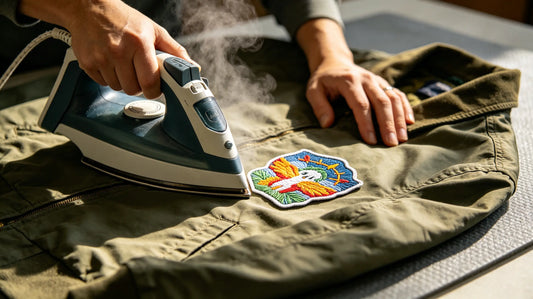
First of all, you need to prepare simple auxiliary tools before operation: household flat iron, clean cotton cloth, dry towel and scissors. It is not recommended to use steam iron with strong water vapor, because excessive moisture will destroy the hot melt adhesive on the back of patches, resulting in insufficient adhesion effect. Before formal ironing, you need to clean the surface dust, hair and stains of the pasted clothes to ensure the contact surface is flat and clean, which is the basic premise for firm pasting when you order custom patches.
2. Standard Iron-On Operation Steps
The standard iron-on operation steps are clear and easy to follow. First, place the patch flat on the designated position of the clothes, adjust the angle and position well, and fix it slightly to avoid deviation during ironing. Then cover a layer of clean thin cotton cloth on the surface of the embroidered patch, which can effectively prevent high temperature from scalding the patch surface thread color and avoid direct iron damage to the pattern. Adjust the iron temperature to medium heat level, do not use ultra-high temperature to prevent fabric shrinkage and patch deformation.
Slowly press the iron back and forth evenly on the covered cotton cloth, keep continuous pressing for 15 to 25 seconds for ordinary size patches, and properly extend the ironing time for large-size embroidered patches. After ironing one side, turn the clothes over and iron the back properly again, so that the hot melt adhesive can be completely melted and closely fitted with the fabric fiber, greatly improving the firmness. Do not pull or fold the clothes immediately after ironing, you need to place it flat and cool naturally for more than 30 minutes to let the adhesive fully solidify, so as to avoid edge warping when you use custom embroidered patches.

3. Choose Suitable Fabrics (Avoid Forbidden Materials)
Different fabrics have huge differences in applicable ironing ways. Jeans, canvas, cotton and linen fabrics are the most suitable materials for iron-on patches, with strong heat resistance and good adhesion effect, which are the mainstream matching choices for daily use. Thin chiffon, silk, nylon and elastic thin fabrics are not suitable for high temperature ironing, high temperature will easily lead to fabric damage, deformation and melting, users with such clothes are recommended to choose sew-on backing patches instead.

4. Daily Maintenance Tips for Long-Lasting Patches
In daily wearing and cleaning process, correct maintenance habits are also the key to keep patches firm. It is best to turn the clothes inside out and wash them gently by hand or choose soft washing mode of washing machine. Avoid long-term soaking and high-temperature drying, and do not use strong alkaline detergent to clean the position of patches. If individual patch edges appear slight peeling after long-term wearing, you can use low-temperature secondary ironing to re-fix them easily, without repeated replacement when you use custom patches.
5. Common Mistakes to Avoid
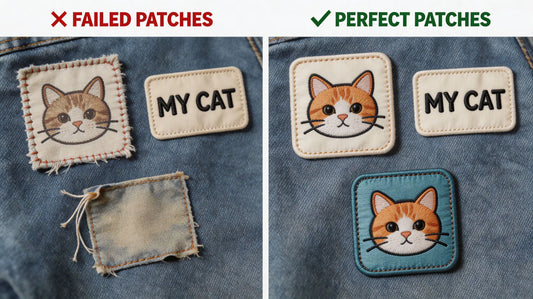
Many people ignore small details leading to patch failure. Do not repeatedly iron the same position for a long time, which will cause the hot melt adhesive to overflow and stain the clothes surface. Do not paste iron-on patches on clothes with too thick fluff, too smooth surface or waterproof coating, such surface cannot form effective adhesion force. For children’s clothes and frequent washing sportswear, it is suggested to properly sew the four corners of the patch after ironing, which can achieve double firm effect and is safer and more durable.

6. How to Remove & Replace Iron-On Patches
If you need to replace the old iron-on patch, you can use low-temperature ironing to soften the hot melt adhesive, and slowly tear off the patch along the edge after heating, which will not leave obvious glue marks and damage the original clothes fabric. Reasonable disassembly and replacement skills make DIY patch decoration more flexible and changeable, meeting different daily matching and style adjustment needs.
Final Thoughts
To sum up, correct ironing steps, reasonable fabric matching and scientific daily maintenance can make ordinary iron-on embroidered patches achieve ultra-long service life effect. It is simple, efficient and practical, suitable for all age groups and different usage scenarios. If you need to customize exclusive pattern iron-on patches of different sizes and styles, you can choose high-quality products with stable hot melt adhesive backing, and easily complete personalized clothing transformation when you order custom embroidered patches.

FAQ
Q:How long can high-quality iron on embroidered patches last normally?
A:Under correct pasting and gentle washing habits, formal high-quality iron-on patches can keep firm for more than one year. If often washed at high temperature and rubbed violently, the adhesion will be weakened faster. Choosing thickened hot melt adhesive backing styles will have better durability when you order custom embroidered patches.
Q:Can iron on patches be used on school uniforms and work uniforms?
A:Yes, cotton fabric uniforms are very suitable for iron-on patches, neat and beautiful after pasting, and will not affect daily wearing and management. It is recommended to choose low-key and regular pattern styles to meet uniform wearing regulations.
Q:What temperature is the most suitable for ironing custom patches?
A:Medium temperature is the safest choice, too high temperature is easy to burn threads and fabrics, too low temperature cannot melt the back adhesive completely, resulting in easy falling off.
Q:Is it necessary to sew iron on patches after pasting?
A:Daily casual wearing does not need sewing. If it is outdoor sports clothes, children’s clothes and frequently washed clothes, simple corner sewing can be added to enhance firmness.
Q:Why do my iron on patches always fall off after washing?
A:Mostly caused by insufficient ironing time, too low temperature or not cooling naturally after pasting. In addition, washing at high temperature and strong twisting will also accelerate peeling, you can re-iron to fix again when you use custom patches.
Tags:
Previous
How to Design Custom Embroidered Patches: A Beginner’s Guide to Perfect Designs
Next
How to Fix Peeling, Fraying & Damaged Custom Embroidered Patches